Premium Choice
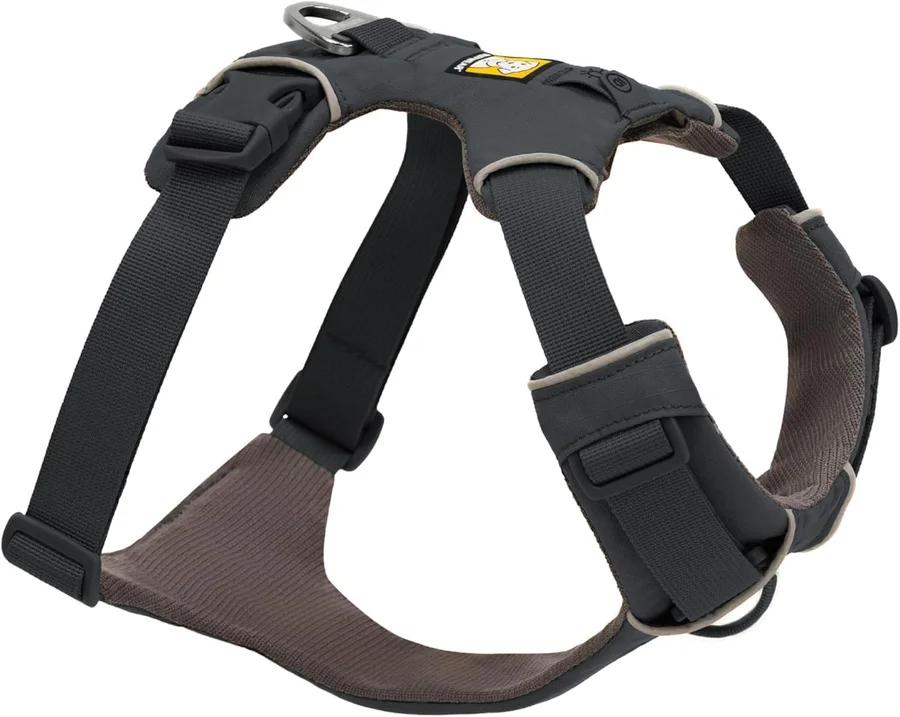
Ruffwear Front Range Dog Harness
Ruffwear Front Range pairs documented foam padding, reflective trim, four-point fitting, and clearly differentiated back and chest attachments in a broad everyday size range.

Some links on this page are affiliate links. We may earn a commission if you buy through them, at no extra cost to you. This never changes our research or which products we recommend.
Ruffwear Front Range pairs documented foam padding, reflective trim, four-point fitting, and clearly differentiated back and chest attachments in a broad everyday size range.
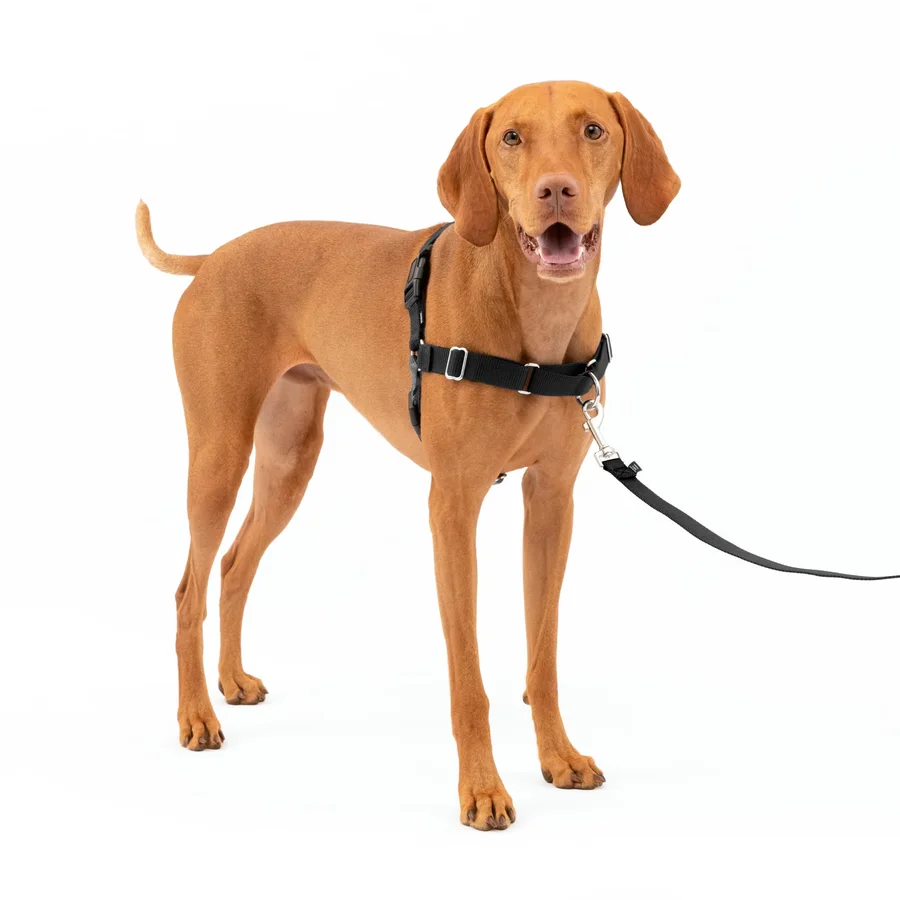
PetSafe Easy Walk concentrates on four-point fit and chest-led walking practice without charging for padding, handles, or activity features that a training-only buyer may not need.
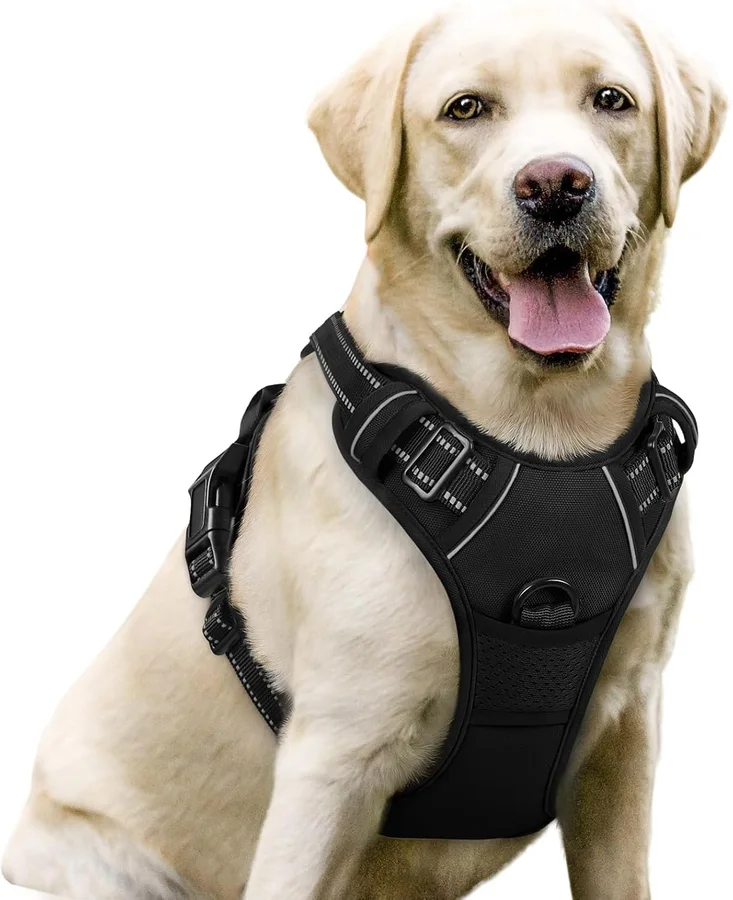
The Rabbitgoo Classic listing has exceptionally broad retailer visibility and combines front and back metal rings, four sliders, padding, reflectivity, and a control handle in one mainstream model.
Filter by feature:
An overhead walking harness made from polyester Oxford fabric with breathable mesh padding and reflective strips. It has two side-release buckles, four sliders split between the neck and chest, a metal chest ring for leash redirection, a metal back ring for ordinary walks or running, and a short top handle. Rabbitgoo permits the handle for brief lifting assistance over obstacles or into a vehicle, not as a full-body mobility sling. The line is sold in S-XL; measure both neck and chest rather than relying on breed examples. This two-strap model is not a tactical vest, vehicle restraint, or universally escape-proof.
Why we recommend it
It combines the attachment and adjustment features many owners want in one accessible everyday harness, while the exact linked model remains substantially lighter and simpler than a true tactical or mobility-support harness.
Pros
Cons
Best for
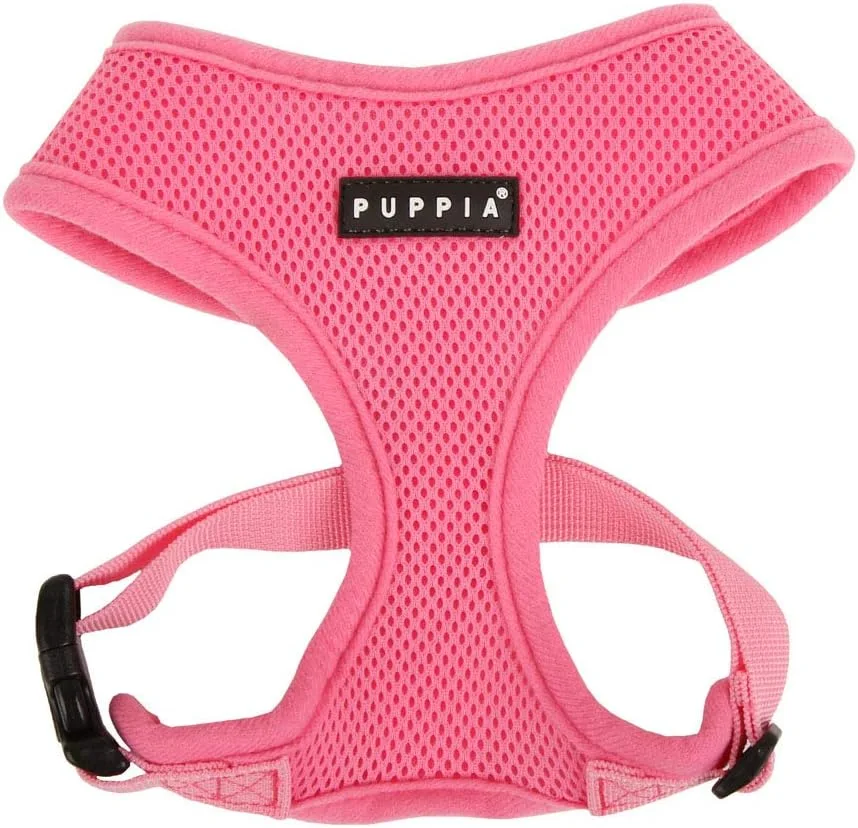
A lightweight over-the-head vest made from 100% polyester air mesh, with a padded fixed neck opening, one adjustable chest belt, one quick-release buckle, and a single leash attachment on the back. It is intended for everyday walking rather than front-clip leash training. Sizes run from XS through XXL, but Puppia cautions that larger labels do not necessarily fit large breeds; measure the base of the neck and chest behind the front legs, confirm the nonadjustable opening clears the head, and size up when between sizes.
Why we recommend it
The soft mesh and simple back-clip layout suit small and medium dogs that need light coverage, provided their head, neck, and chest all fit the comparatively limited adjustment geometry.
Pros
Cons
Best for
A minimal-coverage nylon-webbing training harness with four adjustment points, quick-snap shoulder and belly straps, a martingale-style chest loop, and one front leash attachment. Tension at the chest helps redirect a dog during a walk, but it does not train loose-leash behavior by itself or stop every dog from pulling. Petite through XL spans roughly 7-24 inches at the neck and 12-49 inches at the girth; PetSafe says weight is only an estimate, recommends sizing up between measurements, and describes this as a walk-only training tool that should be removed after the walk.
Why we recommend it
Its single chest connection and low-coverage design make the Easy Walk a focused leash-manners tool for owners who want redirection without the bulk of a padded vest.
Pros
Cons
Best for
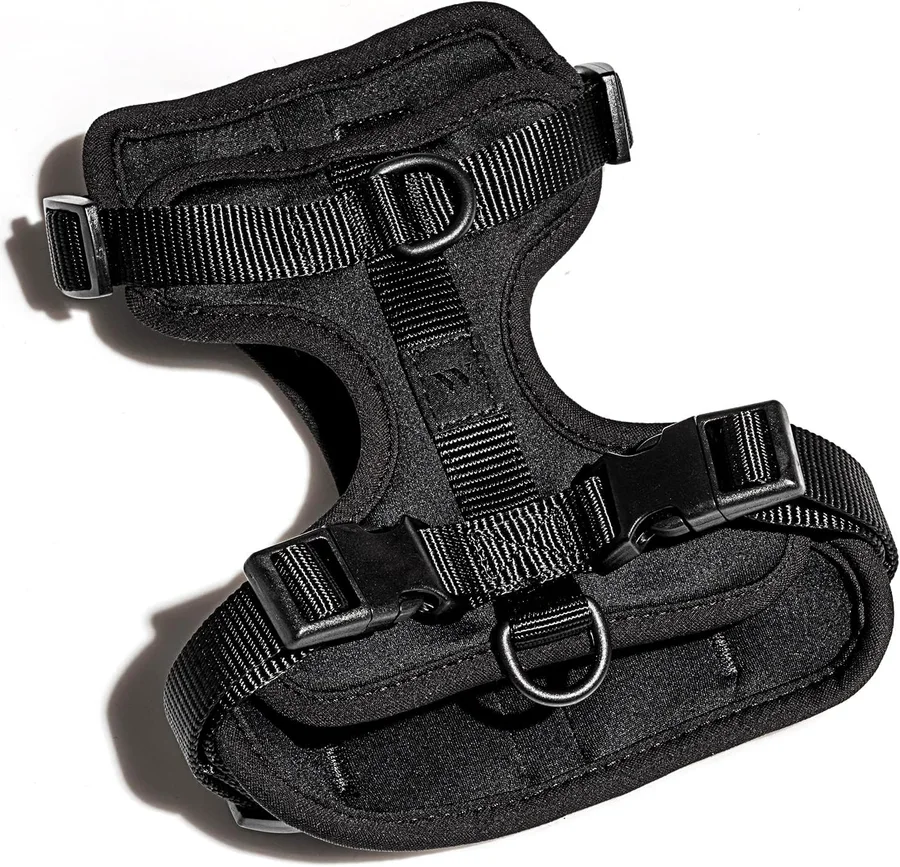
A cushioned everyday harness with a flexible stretch-poly body, nylon webbing, padding under the buckles, quick-snap neck and back closures, and adjustment at both neck and chest. It has three coated carbon-steel leash rings: two on the back and one at the chest for walk training. The range is XS-L; the linked XS fits an 8-11 inch neck and 12-15 inch chest, and Wild One recommends sizing up between ranges. No model-specific lifting, escape-resistance, reflective, or vehicle-crash rating is provided.
Why we recommend it
Wild One is the most flexible three-attachment option here for everyday walks, especially for owners who use a multi-snap leash and want a neck buckle instead of forcing the harness over the head.
Pros
Cons
Best for
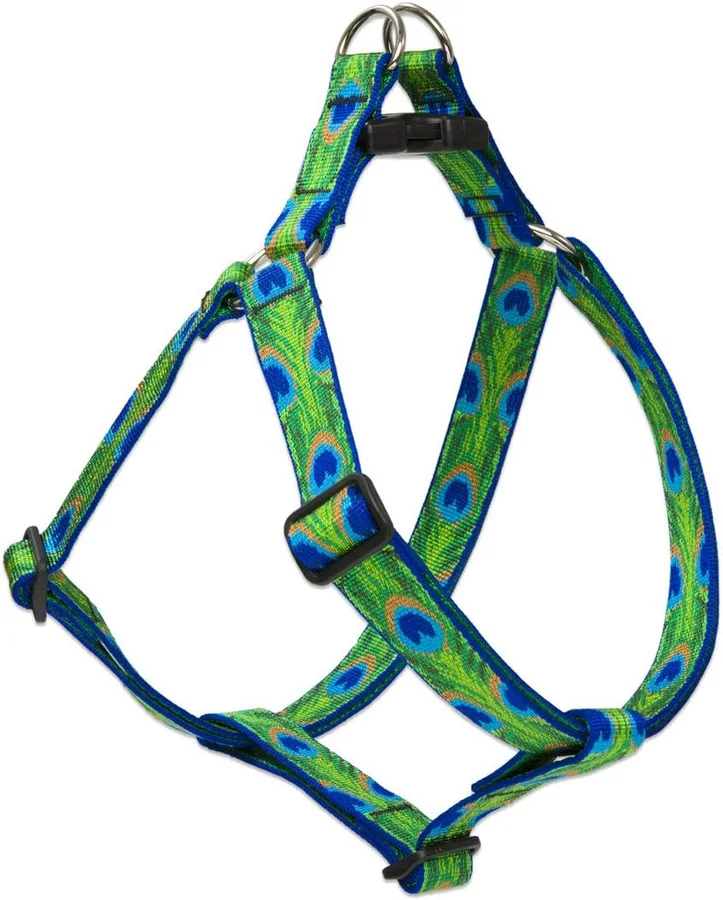
A wraparound step-in harness made from jacquard-woven nylon webbing with bar-tack stitching, welded leash hardware, and a side-release buckle on the back. The dog places one front paw in each opening, and the leash connects at a single back position beside the closure. The exact linked 1-inch Tail Feathers variant fits a 19-28 inch girth and is intended for medium dogs; measure snugly behind the front legs and add 5% for comfort. It is a walking harness, not a front-clip trainer or tie-out product.
Why we recommend it
This is the clearest traditional step-in option in the group for dogs that dislike overhead gear but will calmly lift each front paw, with unusually specific sizing for the linked variant.
Pros
Cons
Best for
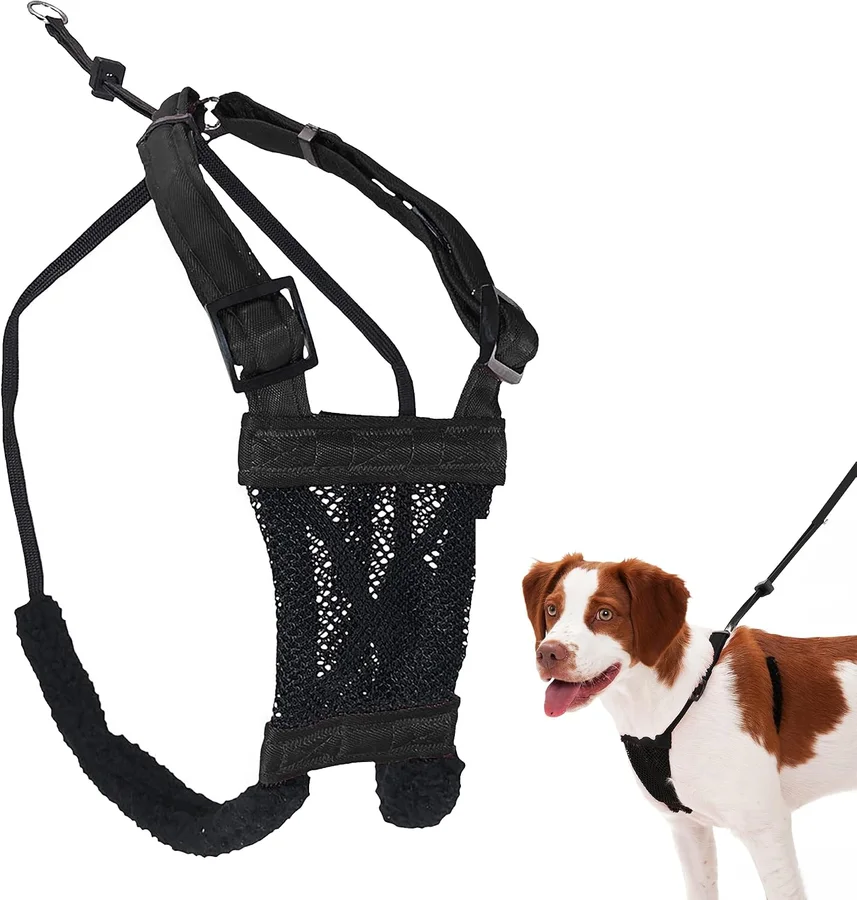
A one-piece walking harness made from weather-resistant nylon with an elastic mesh chest panel, padded restraint sleeves under the front legs, an adjustable cord lock on the back, and one metal back D-ring. It slips over the head and the legs pass through the sleeves; leash tension draws the restraint system in to reduce leverage rather than steering from a front clip. The linked medium fits a 12-17 inch neck and is listed for roughly 25-60 pounds. It is a walking and training aid, and outcomes still depend on fit, the individual dog, and training.
Why we recommend it
Sporn offers a distinct tightening-sleeve approach for moderate or heavy pullers whose proportions match it, but it should be chosen for that mechanism rather than mistaken for a front-attachment vest.
Pros
Cons
Best for
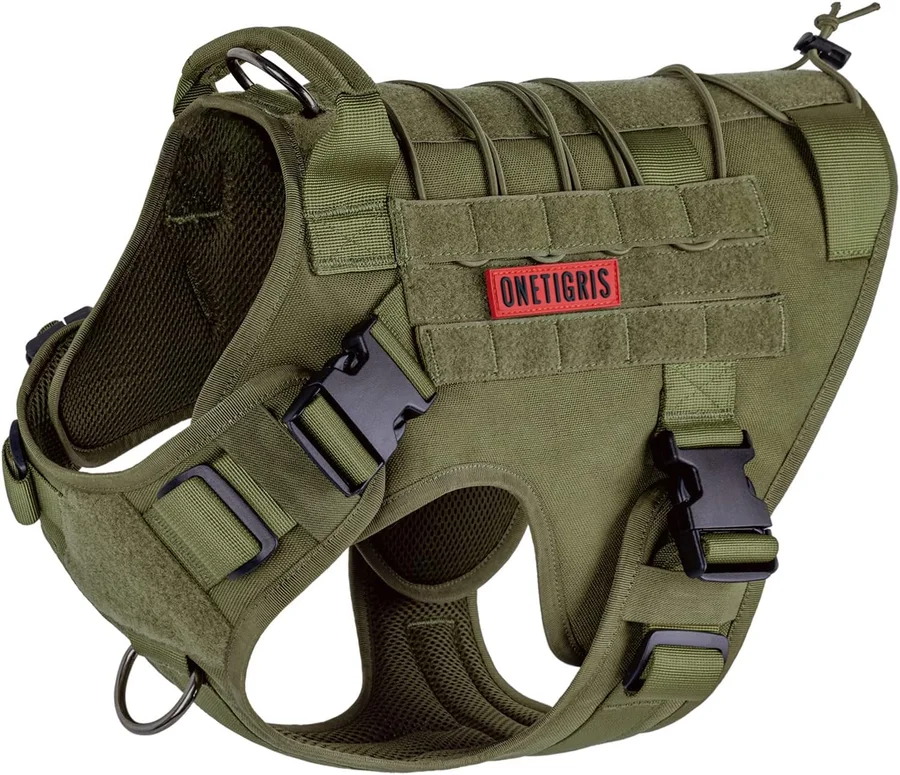
The current B08NP29ZGD listing identifies OneTigris's Go Adventure tactical harness with breathable, water-resistant construction, four quick-release buckles, adjustable neck, chest, and belly webbing, and no overhead fit. Front and back leash rings support training or ordinary walks; the top handle is documented for close control and helping a dog in or out of a vehicle. MOLLE rows and hook-and-loop panels accept light pouches or ID patches. No integrated reflective trim, vehicle-crash claim, full-body carrying permission, or universal escape-proof claim is documented.
Why we recommend it
It is the strongest match for owners who genuinely need MOLLE and patch space on walks, hikes, or training outings, provided they accept the extra coverage and the control-only handle limitation.
Pros
Cons
Best for
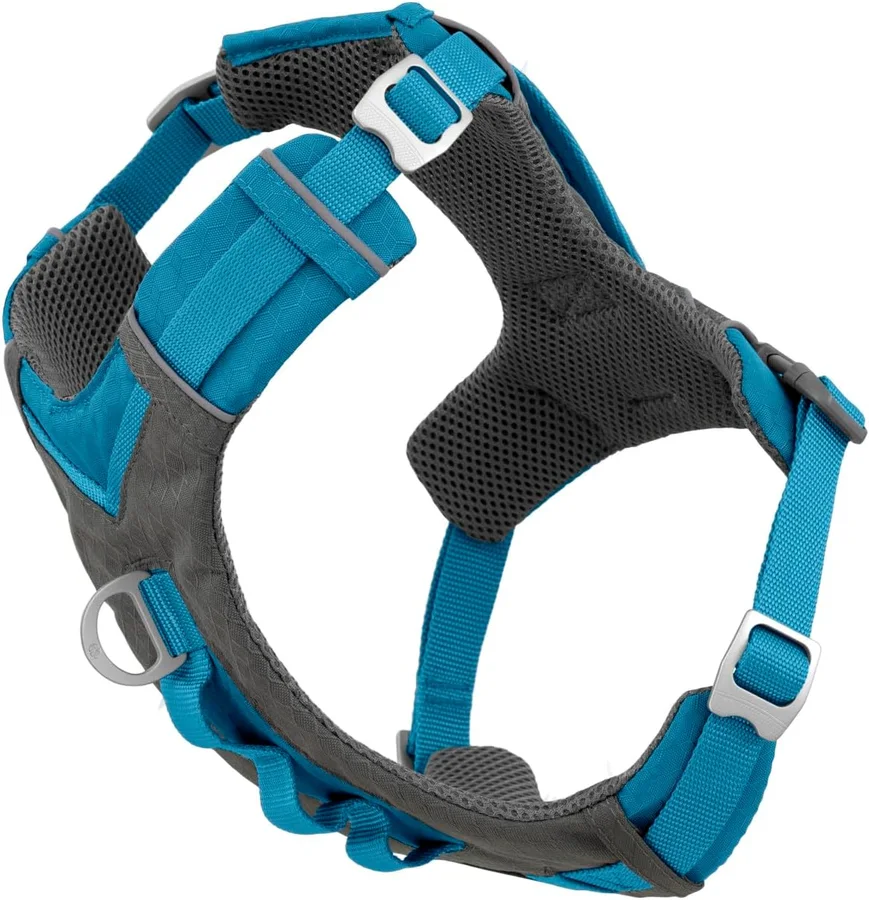
An active overhead harness with a ripstop-fabric outer, breathable mesh inner, wide padded chest plate, four neck-and-chest adjustment points, aluminum hardware, Nifco quick-release buckles, and reflective trim. It provides front and back leash attachments plus a back handle for extracting or assisting a dog over an obstacle. Kurgo sizes it from XS (9-13 inch neck, 12-18 inch chest) through XL (24-35 inch neck, 28-44 inch chest), with weight only a secondary guide. It is designed for walking, running, and hiking; Kurgo says this model is not intended as a car-restraint harness, and no harness is inherently escape-proof.
Why we recommend it
Journey Air is the clearest activity-specific choice here because its athletic cut, breathable construction, dual attachments, and assist handle are documented for running and trail use rather than inferred from a generic vest design.
Pros
Cons
Best for
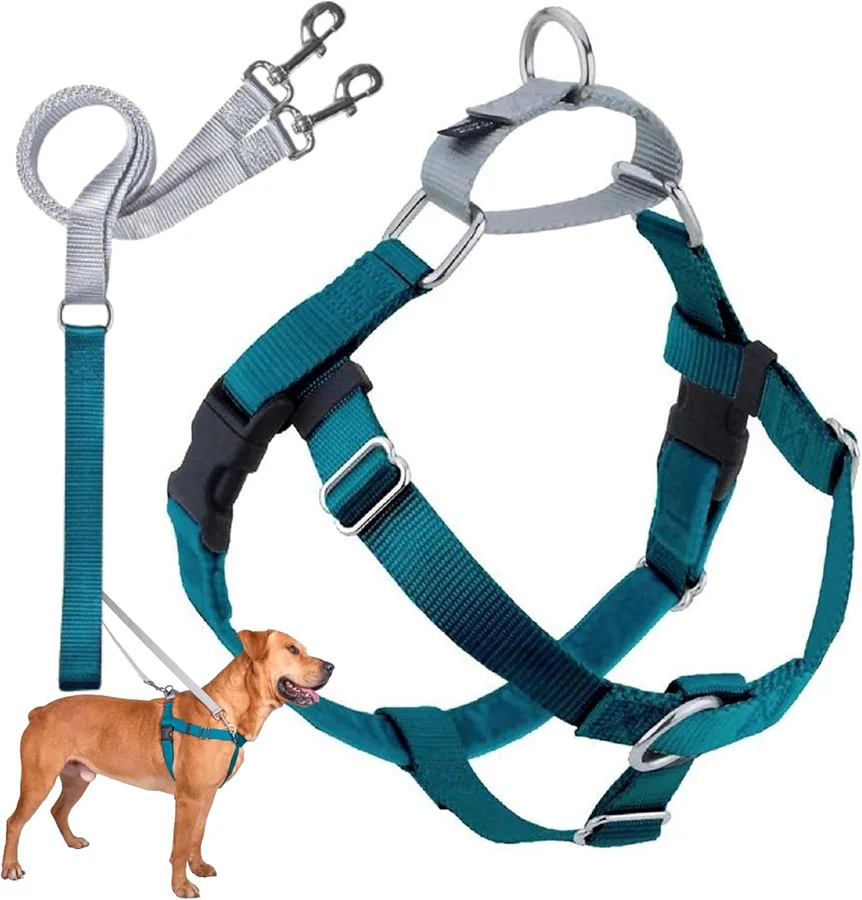
A nylon-webbing walking harness with four adjustment points, stainless-steel hardware, a Swiss Velvet-lined strap behind the front legs, a front O-ring, and a tightening control loop at the back. The linked Large set fits a 28-32 inch chest and includes a double-ended leash so both attachment points can be used together; choose the smallest listed range that contains the measured girth. It is a leash-training system, not a step-in tactical vest, lifting harness, vehicle restraint, or universal escape solution, and narrow-shouldered dogs still need careful reverse-fit testing.
Why we recommend it
The dual-ended leash and front-plus-martingale layout provide more nuanced walking control than a single attachment, while the velvet lining addresses a common rubbing point behind the elbows.
Pros
Cons
Best for
An everyday polyester harness with closed-cell foam padding across the chest and belly, reflective trim, two side-release buckles, and four adjustment points. The primary leash point is an aluminum V-ring on the back; the chest point is reinforced webbing for redirection rather than a metal ring. Current sizing runs from XXS at 13-17 inches through L/XL at 32-42 inches, measured around the widest part of the ribcage. It is built for walks and hikes, but it has no lift-assist handle, third anti-escape strap, or vehicle-restraint certification.
Why we recommend it
Front Range is the strongest premium everyday choice because its materials, padding, broad girth range, and clearly differentiated leash points are well documented without presenting it as specialist support or car-safety equipment.
Pros
Cons
Best for
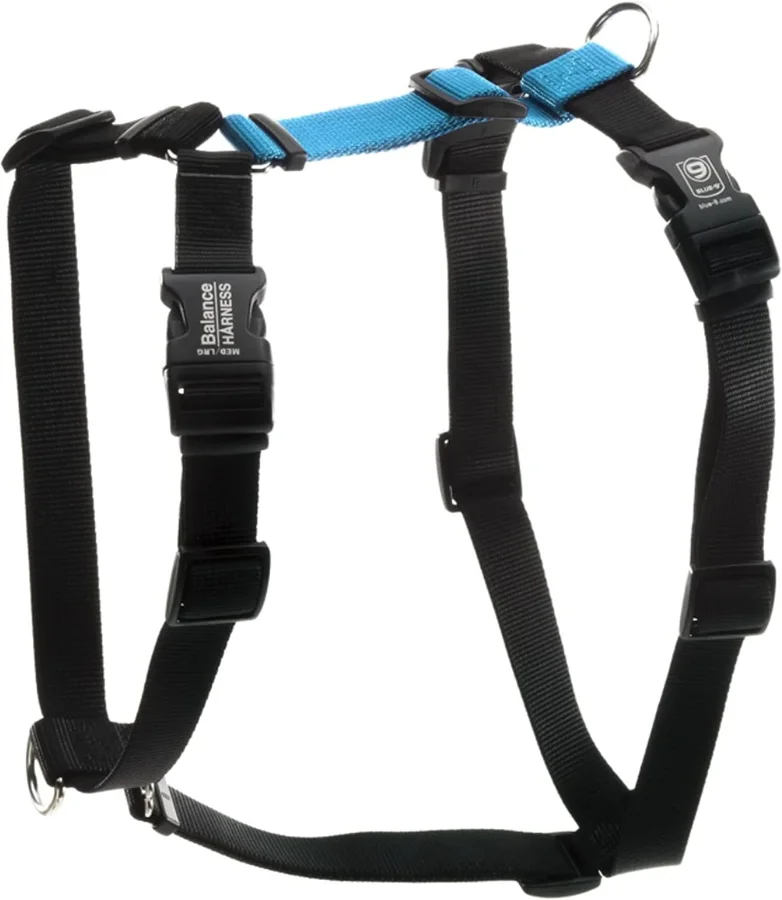
A low-profile harness made from washable nylon webbing with six adjustment points, a buckle at the neck, body buckles, and metal leash rings at both chest and back. The Y-shaped layout is intended to preserve shoulder movement during walking and obedience training, while the front ring can help manage pulling without guaranteeing it will stop. The current ribcage range spans about 13.5 inches in XS to 43.5 inches in L; the linked Medium covers 21-32 inches. Measure about two inches behind the elbow because the line runs slightly large, and do not treat its single girth band as universal escape protection or its back ring as crash-tested vehicle hardware.
Why we recommend it
Balance is the most adjustable low-bulk option in the list, particularly for dogs whose neck, torso length, and girth do not align in conventional padded vest sizes.
Pros
Cons
Best for
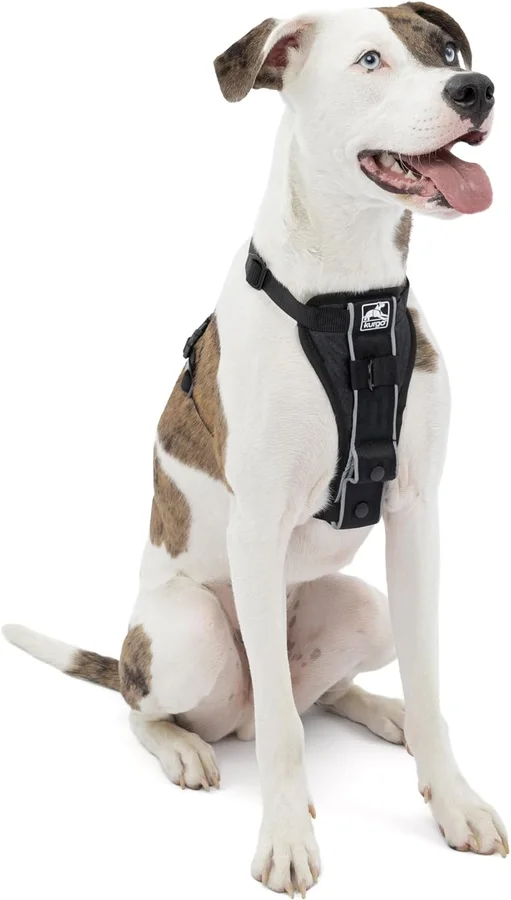
An overhead walking harness made with nylon webbing and ripstop fabric, a padded chest plate, reflective trim, plastic quick-release buckles, and five adjustment points. It has front and back leash attachments and includes a 10-inch seatbelt loop for basic in-car restraint. This exact ASIN is Kurgo's Quick Release walking model: the company's crash-test evidence for dogs up to 75 pounds applies to the separate all-steel Enhanced Strength Tru-Fit, not this harness or its included tether. The family runs XS-XL, roughly 9-35 inches at the neck and 12-44 inches at the chest; measure both because dogs whose neck and girth fall in different sizes may not fit securely.
Why we recommend it
It is a versatile daily harness for owners who also want an anti-distraction car tether, as long as they keep that containment function separate from model-specific crash protection.
Pros
Cons
Best for
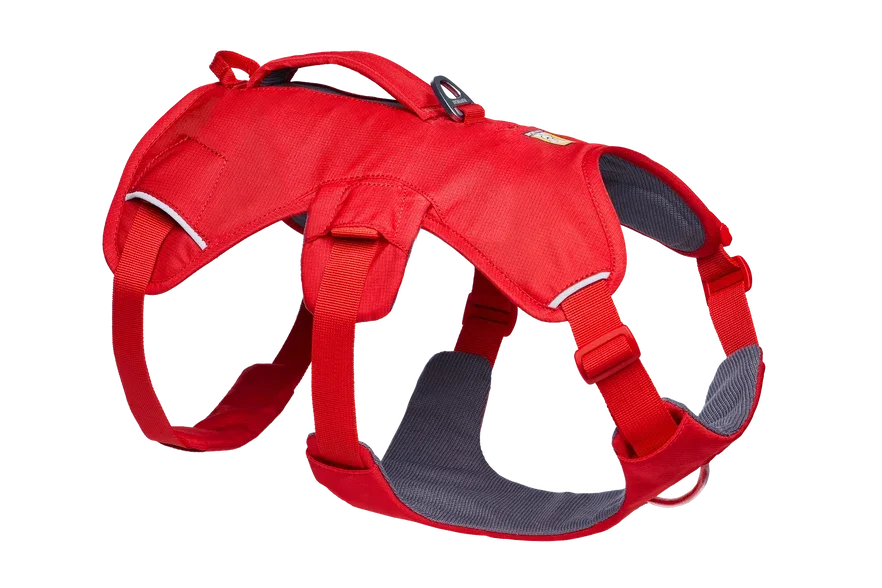
A five-point walking and lift-assist harness with a perforated foam back panel, reinforced handle, neck buckle, four adjustment points, and a belly strap behind the ribcage. Front and back leash attachments provide two handling options. Ruffwear explicitly permits the handle for balanced lift and assistance on technical terrain. The extra belly strap can improve security for dogs that back out of standard two-strap harnesses, but Ruffwear does not claim universal escape prevention or model-specific crash protection.
Why we recommend it
Web Master is the clearest documented option for owners who need both maker-approved lift assistance and five-point geometry for a dog that slips standard harnesses.
Pros
Cons
Best for
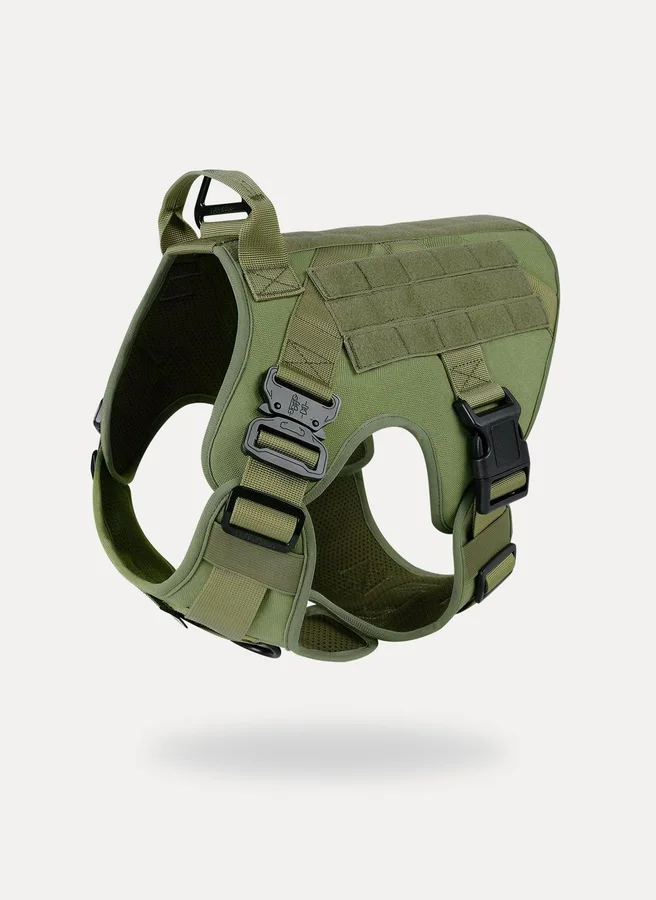
A two-piece tactical vest made from 1050D military-spec nylon with a ventilated mesh interior, four quick-release buckles, and no overhead fit. Hook-and-loop panels accept ID patches, while integrated straps carry compatible water bottles or light pouches. Front and back metal rings provide two leash attachment points. Rabbitgoo describes the model for medium to large dogs; measure neck and chest against the current chart. The maker does not document a lift handle, reflective trim, or escape-proof geometry for this model.
Why we recommend it
Mega Tactical fills the mid-tier MOLLE role with verified 1050D nylon, patch space, accessory straps, and a ventilated lining without borrowing claims from Rabbitgoo's ordinary walking harness.
Pros
Cons
Best for
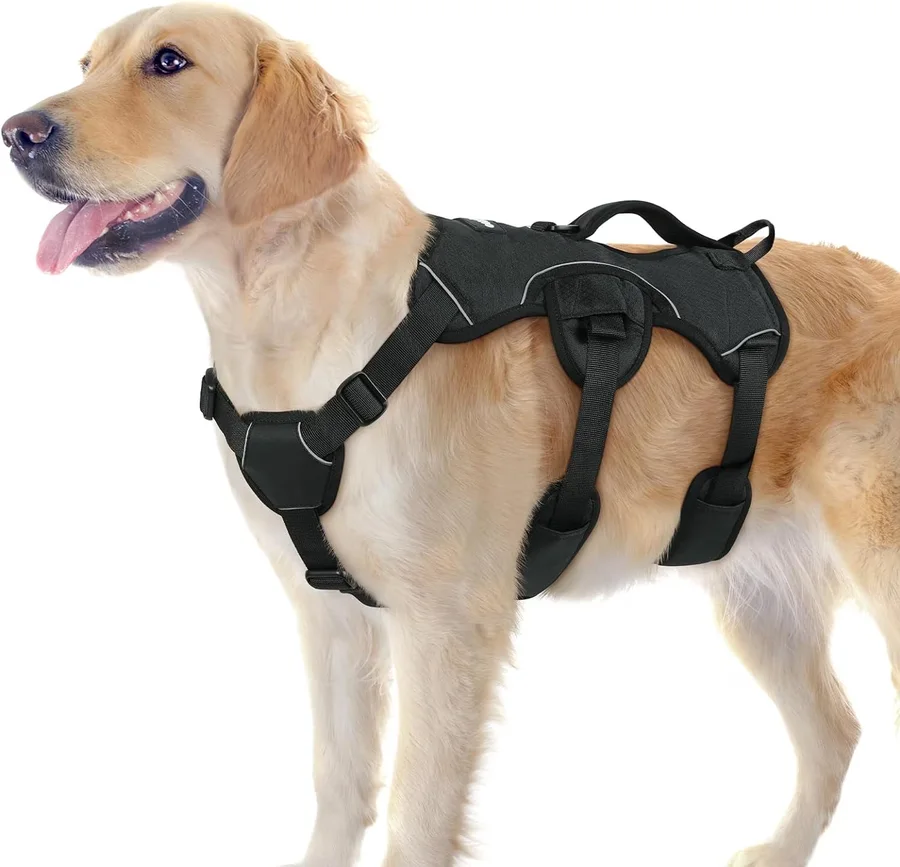
A full-body harness explicitly sold by Rabbitgoo as its Escape-Proof model. Three body straps extend coverage behind the ribcage, while five adjustment points—three around the neck and two around the chest and belly—let the handler fit the documented geometry. The padded body includes reflective material, a back leash attachment, and a top assistance handle. The extra strap and model-specific marketing support the escape-resistance tag, but they do not guarantee that every dog will remain contained; reverse-fit testing and a backup connection are still appropriate for a known flight risk.
Why we recommend it
This is the clearest current evidence-based escape-resistance addition because both the exact product name and its three-strap, five-adjustment construction support the tag instead of borrowing it from a conventional two-strap harness.
Pros
Cons
Best for
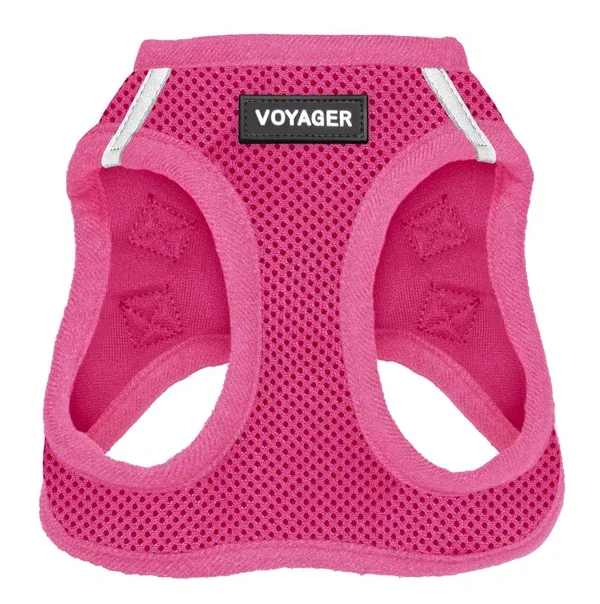
A current vest-style harness for cats and small dogs that the maker describes as 'step-in, clip and go.' The lightweight air-mesh body uses a hook-and-loop fastener, a side-release buckle, and paired back D-rings as three separate closure or attachment elements. Two reflective side bands return external light. Voyager also states that the shaped neckline is intended to reduce wriggling out, which supports an escape-resistance tag without implying a guarantee. Current chest ranges run from 10-11.5 inches in XXXS through 20.5-23 inches in XL; measure the chest rather than choosing by weight.
Why we recommend it
It adds a second genuine step-in design with unusually explicit manufacturer evidence for breathable mesh, reflective bands, layered closures, and neckline geometry intended to resist wriggling.
Pros
Cons
Best for