Premium Choice
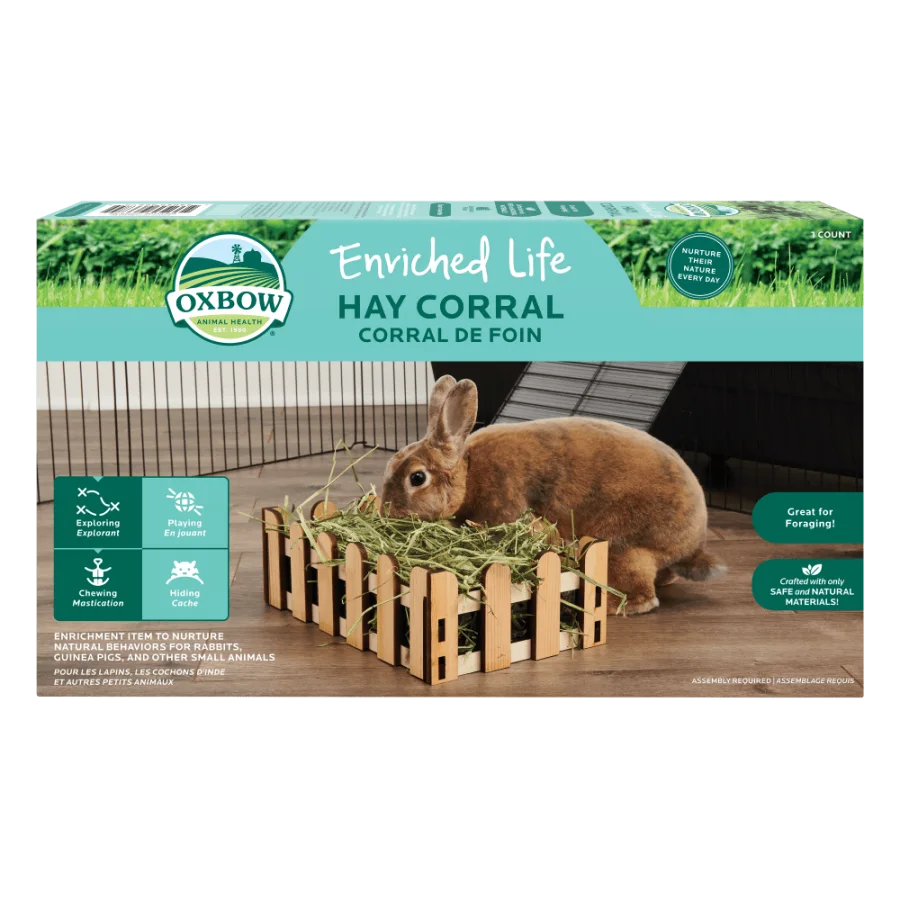
Oxbow Enriched Life Hay Corral
Oxbow's Hay Corral offers open hay access and modest scatter control without forcing a rabbit to pull hay through narrow wire spacing.
Compare products using researched specifications, features, and retailer information.
Last reviewed:

Overview
Rabbit bowls, bottles, and feeders look simple, but the right choice affects hydration, daily cleaning, hay access, litter-box habits, and whether measured pellets stay a measured supplement instead of a free-fed main course. We included heavy bowls, mounted crocks, a top-fill bottle, and hay-feeder styles because different rabbits create different problems: some flip dishes, some contaminate open water, and some waste hay unless the presentation changes.
Oxbow's Hay Corral offers open hay access and modest scatter control without forcing a rabbit to pull hay through narrow wire spacing.
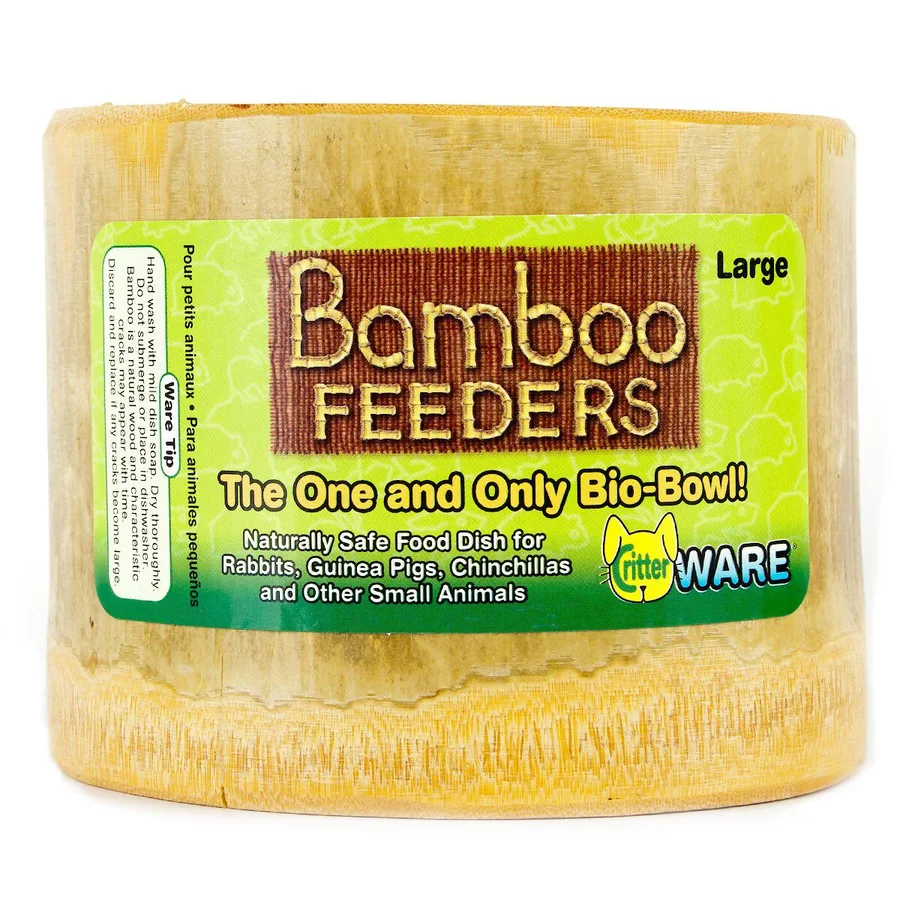
Ware's Bamboo Small Animal Bowl is a straightforward shallow dish for measured pellets when tip resistance is not the main problem.
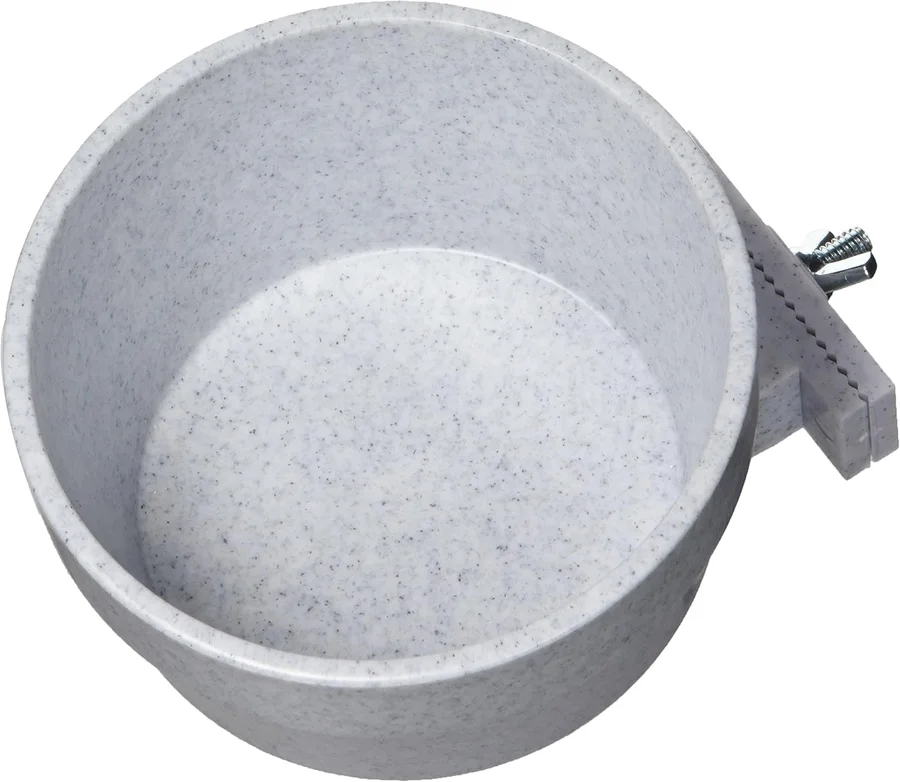
Lixit's Quick Lock Crock is a common answer for rabbits that keep tipping or contaminating floor bowls.
Add your pet for personalized picks.
Loading pet details...
Filter by feature:
A shallow small-animal bowl made from a bamboo-and-melamine blend. Its modest capacity is useful for measured pellets or a small serving of greens, and the smooth surface is simple to hand-wash. It is not chew-proof, so remove it if the rabbit persistently gnaws the rim and replace any bowl that becomes cracked or rough.
Why we recommend it
A compact value dish for measured pellets when a simple shallow bowl is more useful than a mounted system.
Pros
Cons
Best for
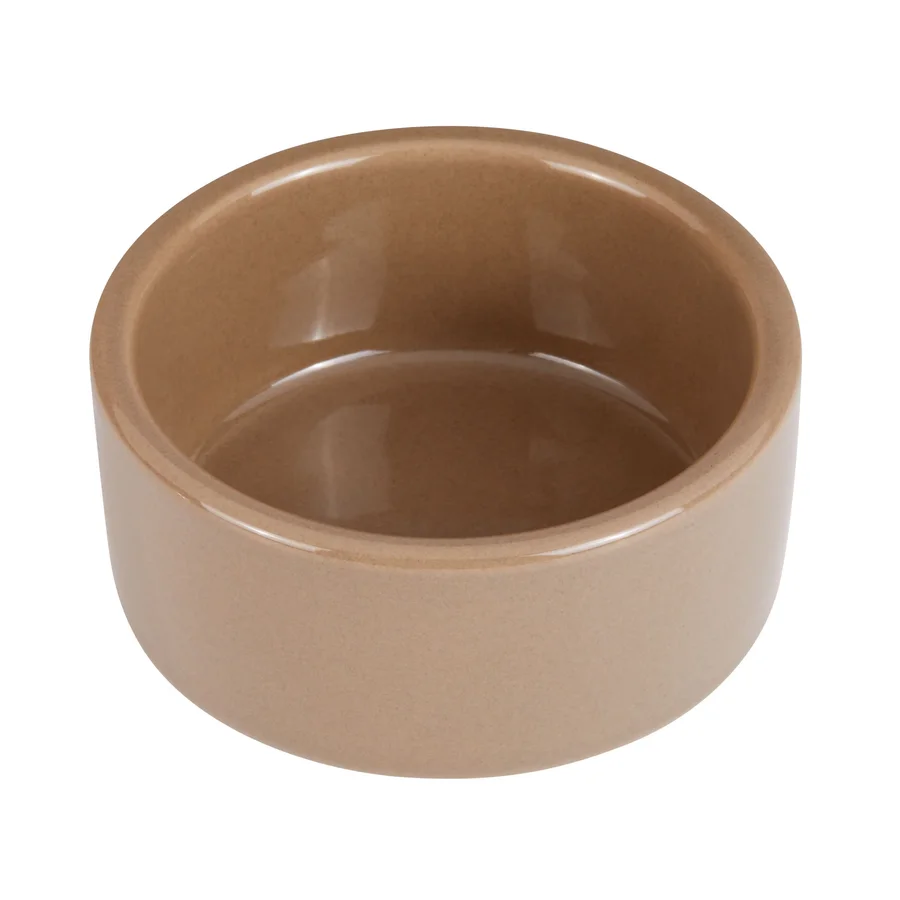
A stoneware bowl line that gives rabbits a heavier dish than thin plastic or light metal bowls. It is straightforward and easy to understand: choose the right size, wash it often, and use it for measured feeding rather than filling it with too many pellets. Confirm the current capacity because similar stoneware bowls are sold in multiple sizes.
Why we recommend it
A popular mainstream ceramic option when you want a sturdy bowl that is easy to replace locally or online.
Pros
Cons
Best for
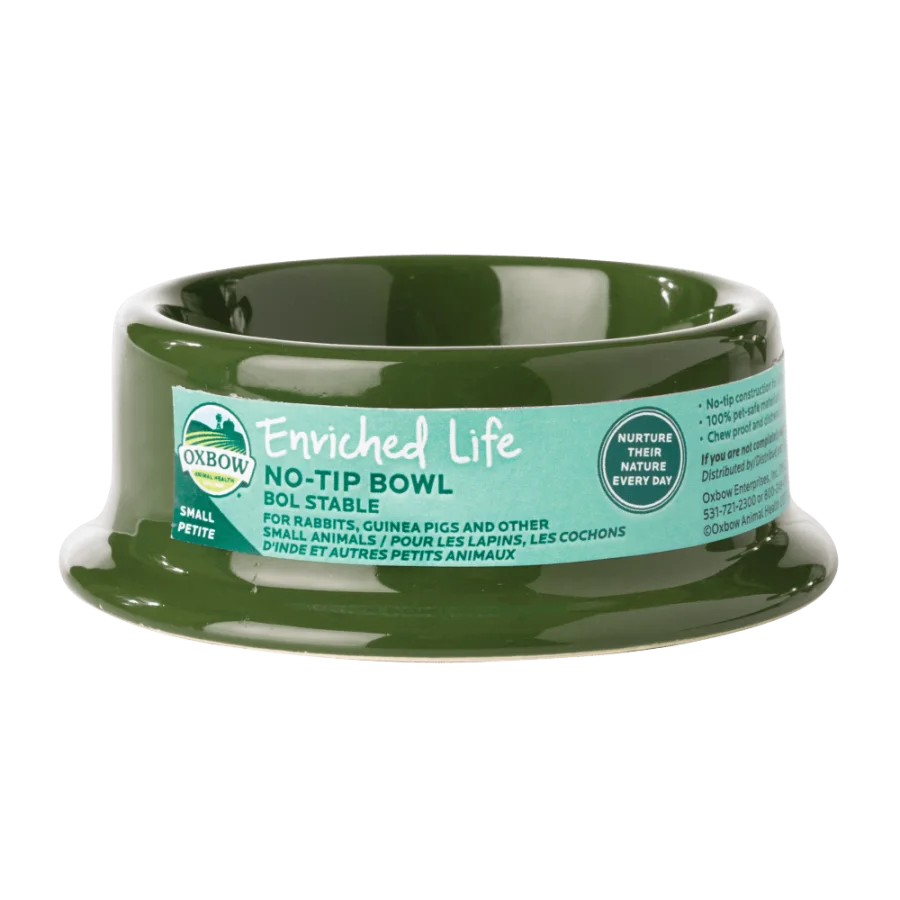
A rabbit-and-guinea-pig bowl with a weighty ceramic body and low, wide profile intended to resist casual tipping. It suits measured pellets or water when the selected size gives the rabbit comfortable face clearance. Ceramic can crack if dropped, so inspect the glaze and rim regularly and retire a damaged bowl.
Why we recommend it
The premium ceramic pick for owners who want a rabbit-oriented, low-profile bowl with more stability than light plastic.
Pros
Cons
Best for
A lock-on crock designed to mount to enclosure bars, which helps in setups where rabbits keep flipping or littering in floor bowls. Mounted bowls are not automatically superior, but they can keep pellets or water cleaner in very busy pens. Confirm the mounting fit against your enclosure bars before ordering.
Why we recommend it
A practical popular option when you specifically need a mounted bowl to outsmart a bowl-flipper or digger.
Pros
Cons
Best for
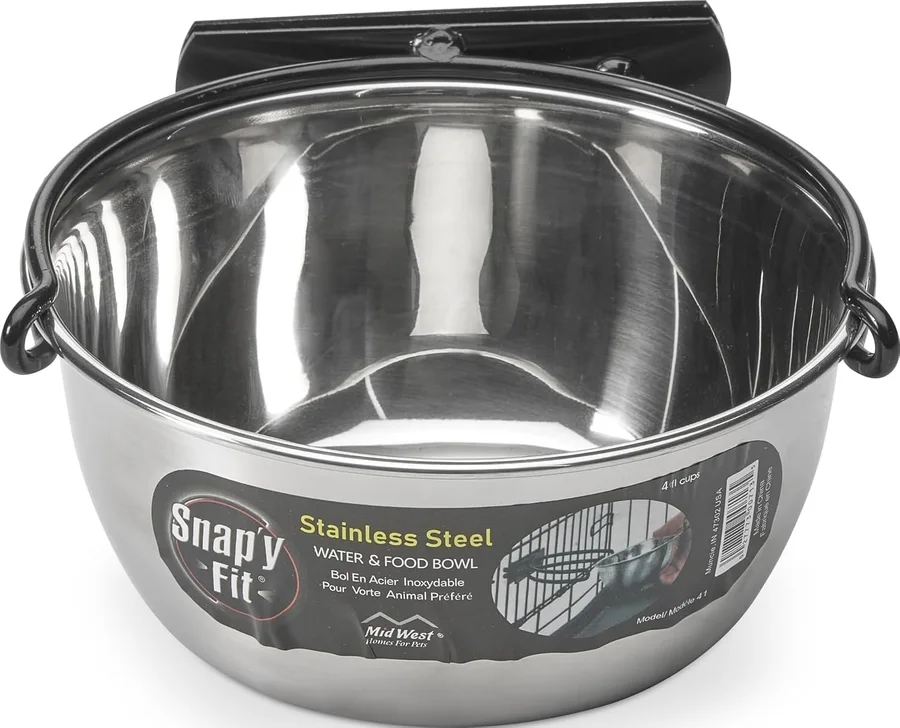
A stainless-steel lock-on bowl that removes easily for cleaning while still resisting casual flipping. It is especially useful in x-pen or habitat setups where a floor bowl keeps getting contaminated with hay and litter. Check the current size and bracket compatibility before buying several at once.
Why we recommend it
A strong value mounted bowl for rabbits whose floor dishes never stay clean or upright for long.
Pros
Cons
Best for
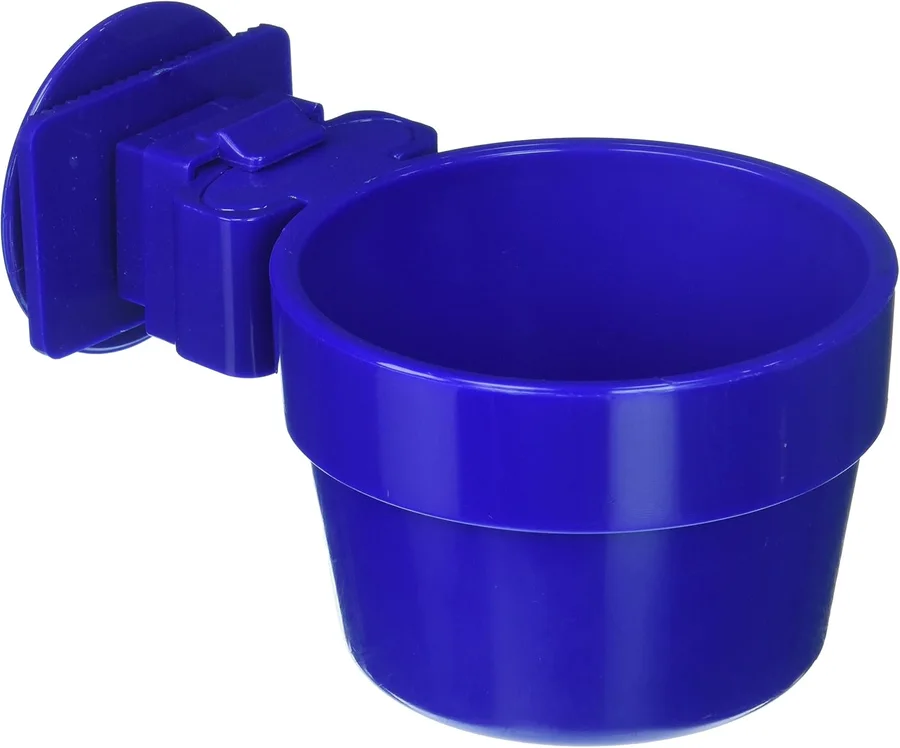
A plastic small-animal crock that slides onto a locking bracket attached to enclosure wire. The elevated mount can reduce casual flipping and litter contamination while allowing bowl removal for washing. Confirm the bracket fits the pen, keep it at a natural head height, and replace it if chewing leaves rough edges.
Why we recommend it
Useful for owners who want a removable mounted dish and need to stop a rabbit from tossing a floor bowl.
Pros
Cons
Best for
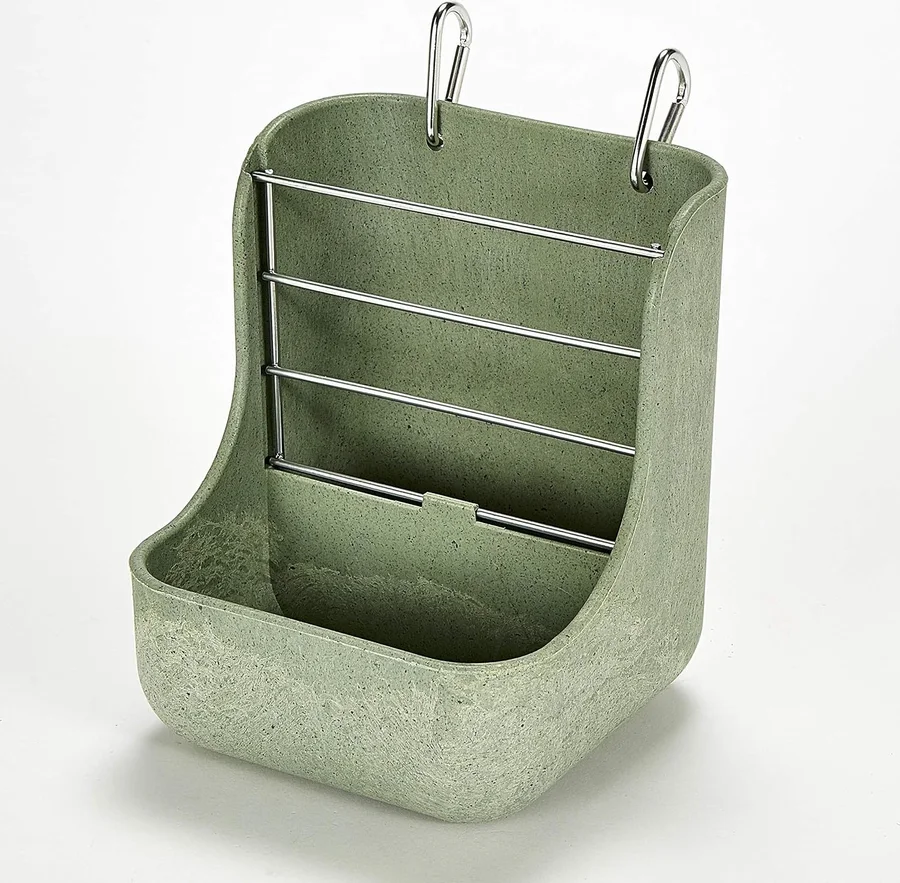
A combo-style feeder that puts hay and food access in one mounted station. These designs can help tidy a corner, but you still need to watch for awkward posture, head entrapment risk, and whether the rabbit simply prefers hay piled more loosely. Confirm the opening dimensions and mounting style on the current listing.
Why we recommend it
A practical all-in-one feeder for owners who want hay and pellet storage consolidated and are willing to evaluate actual rabbit comfort closely.
Pros
Cons
Best for
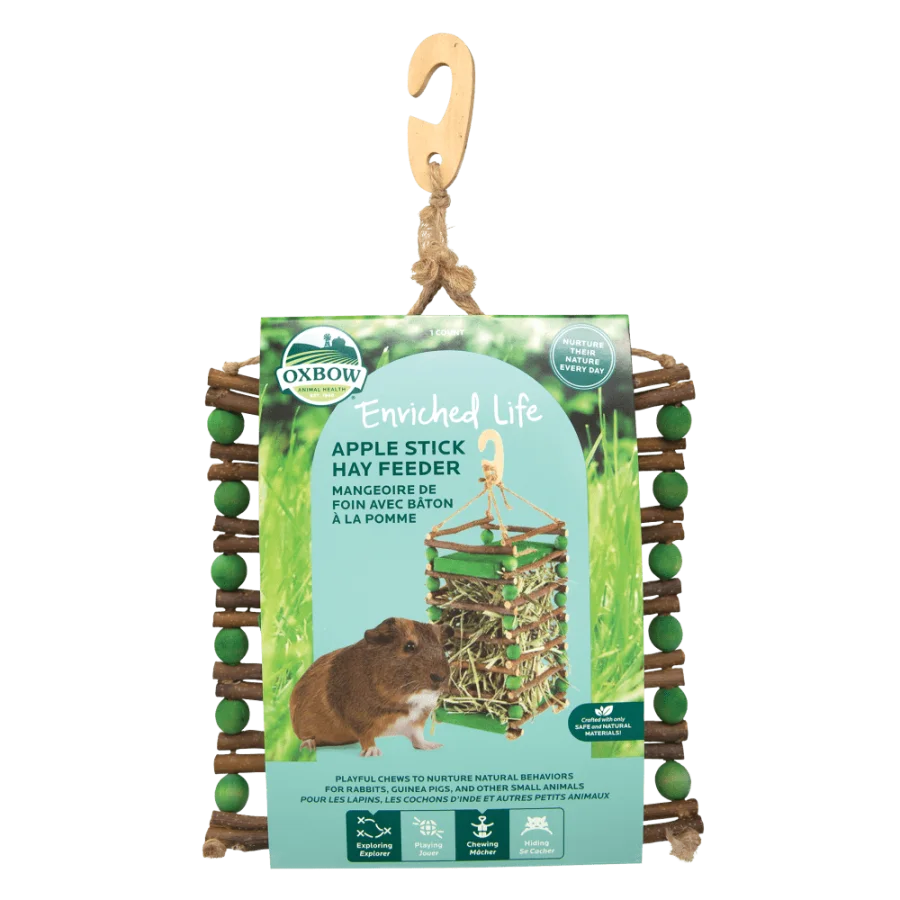
A rabbit-oriented hanging feeder made with apple sticks and untreated wood. It can hold a modest amount of grass hay while also offering chewable wood, but it should supplement rather than restrict generous hay access. Mount it securely at a comfortable height and inspect the feeder as the sticks wear down.
Why we recommend it
The premium hay-feeder choice for owners who want a rabbit-focused brand and are prioritizing daily hay presentation rather than only pellet bowls.
Pros
Cons
Best for
A floor-standing wooden corral that contains a loose pile of grass hay without forcing the rabbit to pull strands through a narrow wire opening. The open top makes refilling straightforward and may reduce some trampling, although scattered hay is still normal. Keep the wood dry, check it for splinters, and offer another hay pile if the rabbit eats less from it.
Why we recommend it
A premium open hay holder for owners who want modest scatter control without a restrictive wire rack.
Pros
Cons
Best for
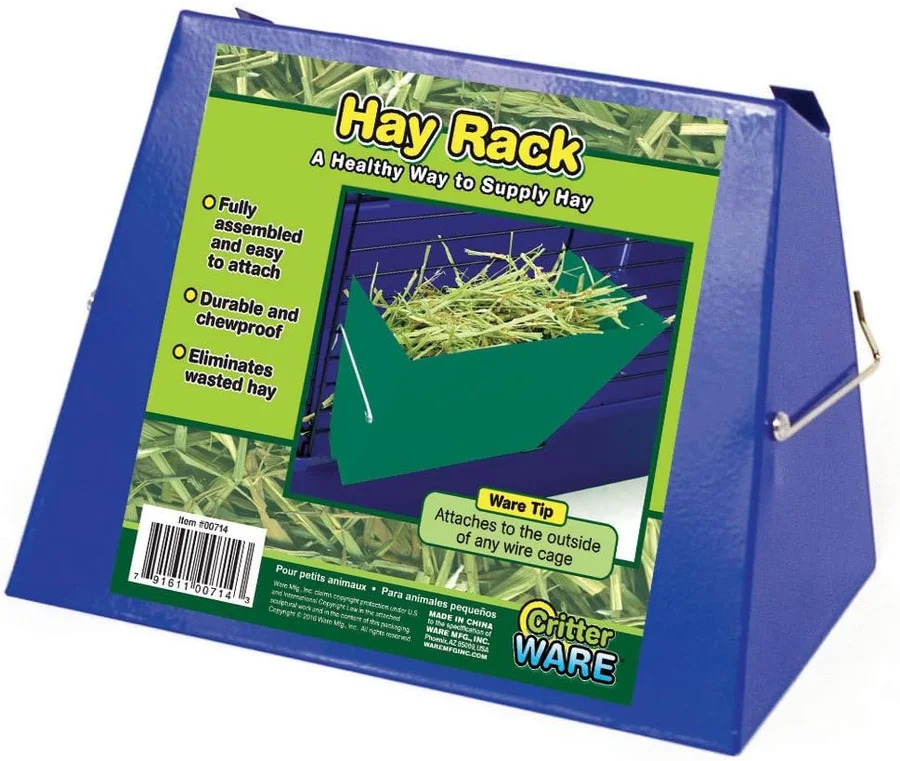
A straightforward hay-rack style feeder that is easy to add to a pen or habitat wall. It may help reduce some loose-hay scatter, but hay racks should never force the rabbit into an awkward neck angle or become a substitute for generous hay availability. Inspect attachment points and loaded stability after installation.
Why we recommend it
A value-oriented hay-rack pick for homes that want a simple dedicated hay holder without a full combo station.
Pros
Cons
Best for
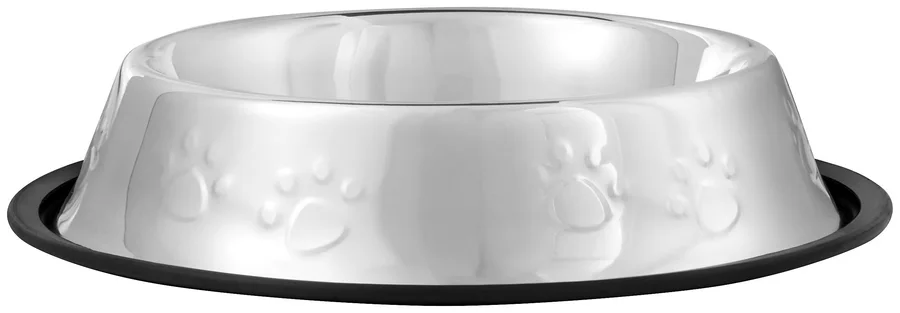
A freestanding stainless-steel bowl with a bonded rubber ring intended to reduce sliding. The smooth metal is easy to wash and the small sizes can work for measured pellets or water, but a determined rabbit may still lift or chew the rubber edge. Choose a shallow size that permits a natural drinking or eating posture.
Why we recommend it
A simple washable stainless option when a mounted crock is unnecessary but plastic is undesirable.
Pros
Cons
Best for
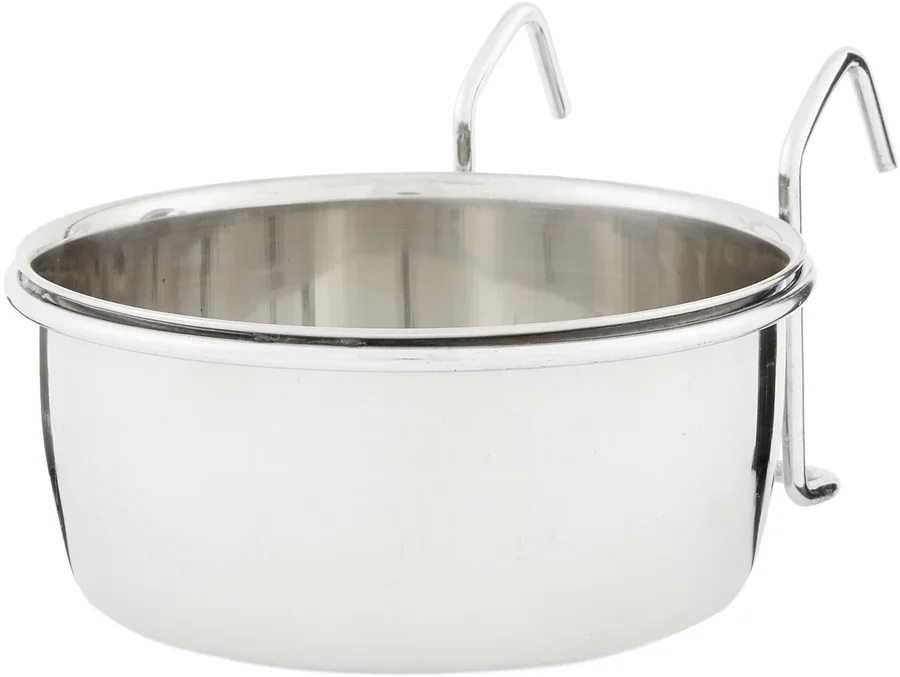
A stainless coop cup held by a wire clamp, allowing the bowl to sit above litter while remaining removable for cleaning. It can serve measured pellets or water if the clamp fits the pen securely. Check the hardware daily, avoid placing it too high, and stop use if the rabbit can reach or loosen sharp hardware.
Why we recommend it
A durable mounted stainless crock for pens where ordinary floor bowls are repeatedly tipped or contaminated.
Pros
Cons
Best for
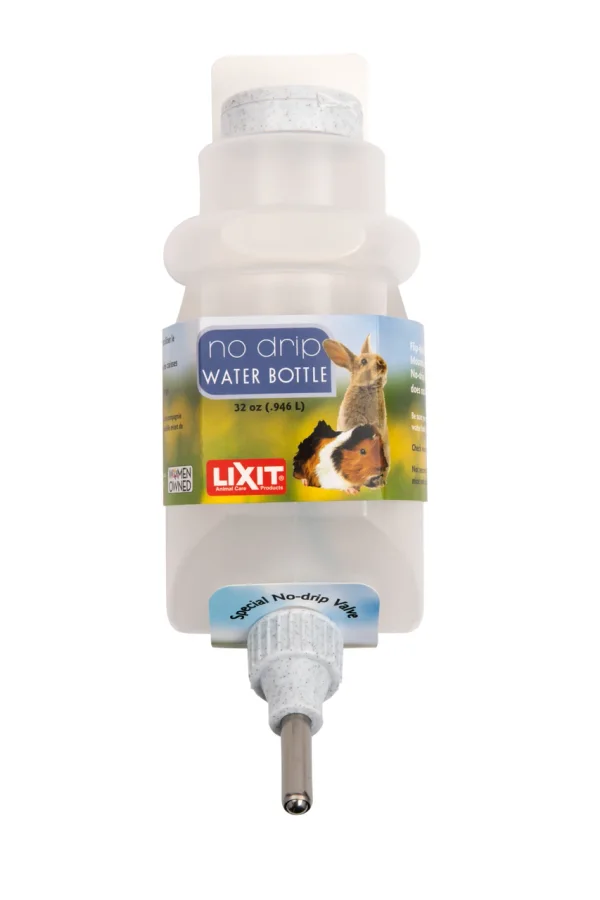
A 32-ounce cage-mounted bottle recommended by Lixit for rabbits and ferrets. Its flip-top lid allows refilling without removing the bottle, while a stainless-steel drinking tube, patented ball valve, flat back, and heavy-duty mounting spring support daily use.
Why we recommend it
The first dedicated water-bottle option in this comparison, with a top-fill design and exact manufacturer identifiers.
Pros
Cons
Best for
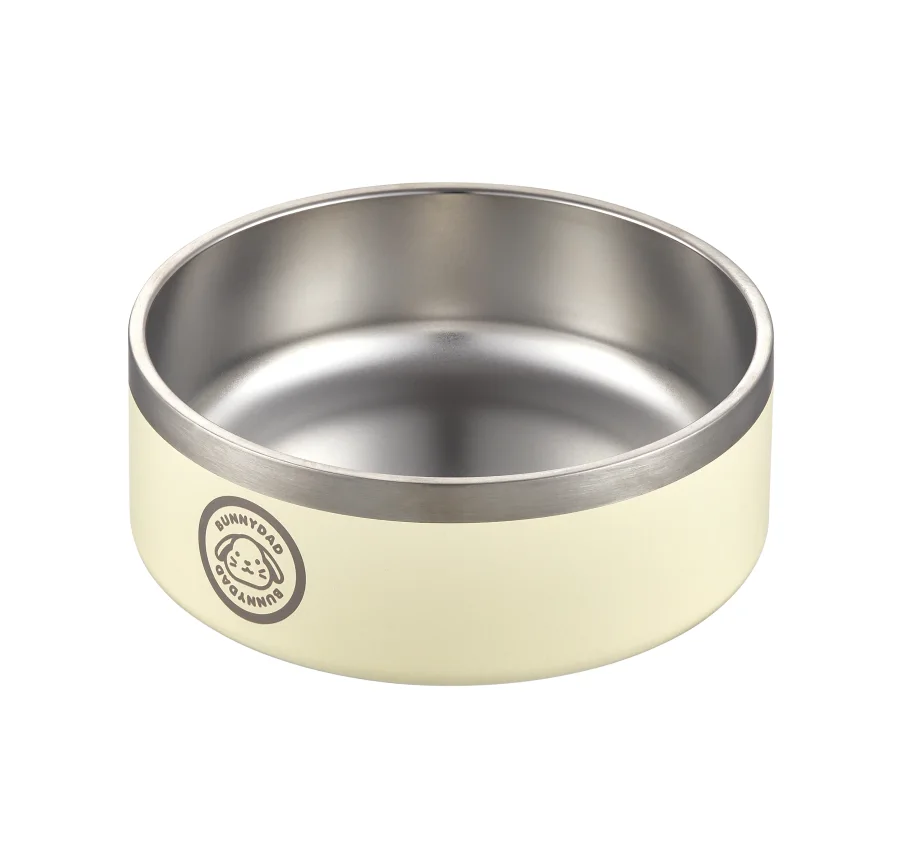
The Off-White Big-Sipper is a 40-ounce food-grade stainless-steel rabbit bowl with double-wall vacuum insulation and a rubber non-slip ring. Its broad open surface supports natural bowl drinking, while the rounded interior is intended for hand washing.
Why we recommend it
A rabbit-specific high-capacity open bowl for households that want more stability and water volume than a small crock.
Pros
Cons
Best for
Buying Guide
Start with the food or water itself. Pellets usually do best in a bowl sized for measured portions, while hay may be offered in or near the litter box, in a feeder, or in both places. Many rabbits naturally like to eat hay while eliminating, so a feeder should support that behavior rather than fight it.
For water, an open bowl supports a natural drinking posture and makes the water level easy to inspect. A mounted bottle can help in a setup where bowls are repeatedly contaminated or overturned, but its flow and mounting height must be checked every day. Some households provide both so a rabbit retains access if one source is blocked or soiled.
For bowls, weight and cleanability matter most. Heavy ceramic or stainless dishes can resist tipping and are easy to sanitize, while mounted crocks can help if your rabbit constantly throws bowls or fills them with litter. Any mounted container still needs a quick daily check to make sure the hardware is tight and the height feels comfortable.
Hay feeders deserve extra safety scrutiny. Openings should not trap the head, force a strange neck angle, or limit hay so severely that the rabbit eats less. Some rabbits prefer loose hay piles despite the mess, so a beautiful hay rack is not helpful if the rabbit avoids it.
A rabbit that suddenly eats or drinks less, leaves more food untouched, or produces fewer droppings needs prompt attention. Rabbits are prone to stress and GI stasis, so appetite changes should be treated as a health concern first rather than blamed on the container.
For most rabbits, a simple easy-to-clean bowl is enough because pellets should be a measured supplement. Feeder systems are more useful when you are solving a specific mess or tipping problem.
Either can work, and many homes use both. The important part is that hay stays abundant and easy to reach in the place your rabbit naturally likes to eat it.
Many rabbit caregivers prefer bowls because they support an open drinking posture and are easy to monitor. A securely mounted bottle can help when bowls are repeatedly contaminated or tipped, and some homes provide both. Wash either format daily and verify bottle flow every day.
Take appetite changes seriously. A rabbit eating less or producing fewer droppings should be evaluated promptly rather than simply switched to another bowl.
Methodology
Last reviewed:
Reviewed through 2026-08-28. We compared rabbit water containers, bowls, and feeders by capacity, stability, mounting, cleanup, likely rabbit comfort, hay-management usefulness, and how well they fit measured pellet feeding. We avoided treating tidy marketing photos as proof of better husbandry and instead focused on realistic daily use in pens and rabbit rooms. Prices and stock were excluded; exact capacities and identifiers are included only when verified on current product pages.
We may earn a commission through these links, at no extra cost to you. Terms of Service