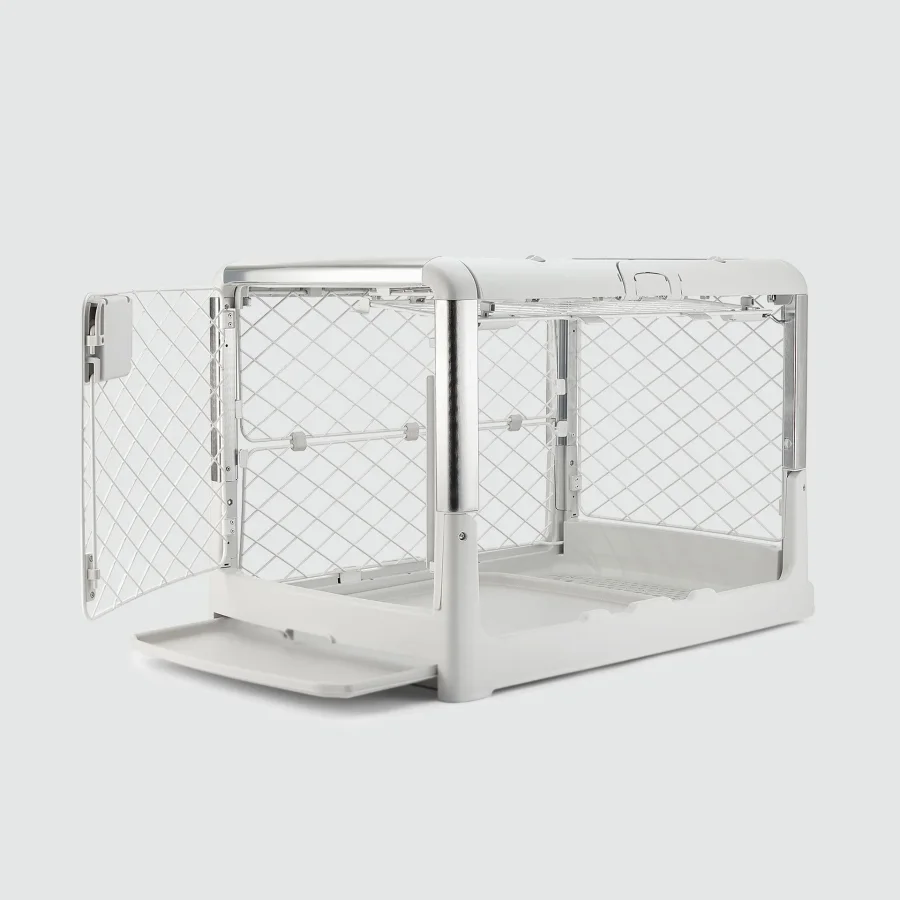
Premium Choice
Diggs Revol Collapsible Dog Crate
Revol offers the most complete combination of home-focused design, integrated folding, wheels, flexible access, and easy-clean components, with a corresponding premium price position.

Some links on this page are affiliate links. We may earn a commission if you buy through them, at no extra cost to you. This never changes our research or which products we recommend.
Revol offers the most complete combination of home-focused design, integrated folding, wheels, flexible access, and easy-clean components, with a corresponding premium price position.
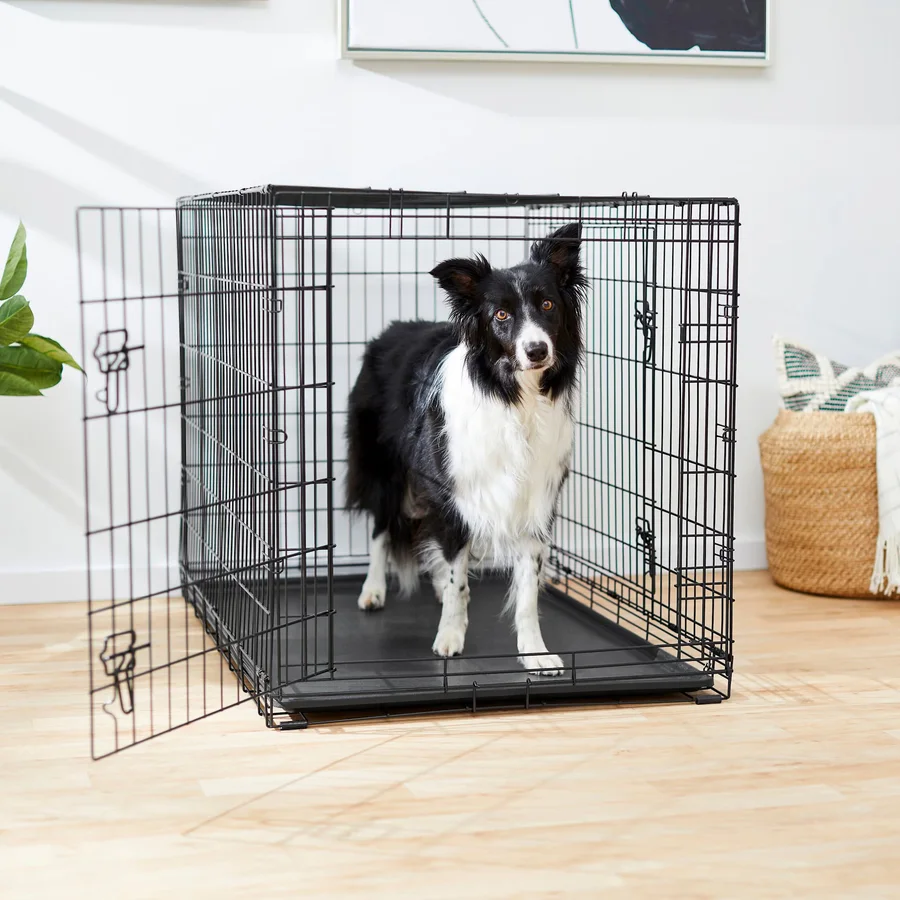
Frisco's standard Fold & Carry model includes two doors, a puppy divider, a removable pan, and fold-flat storage without requiring specialty-crate construction.
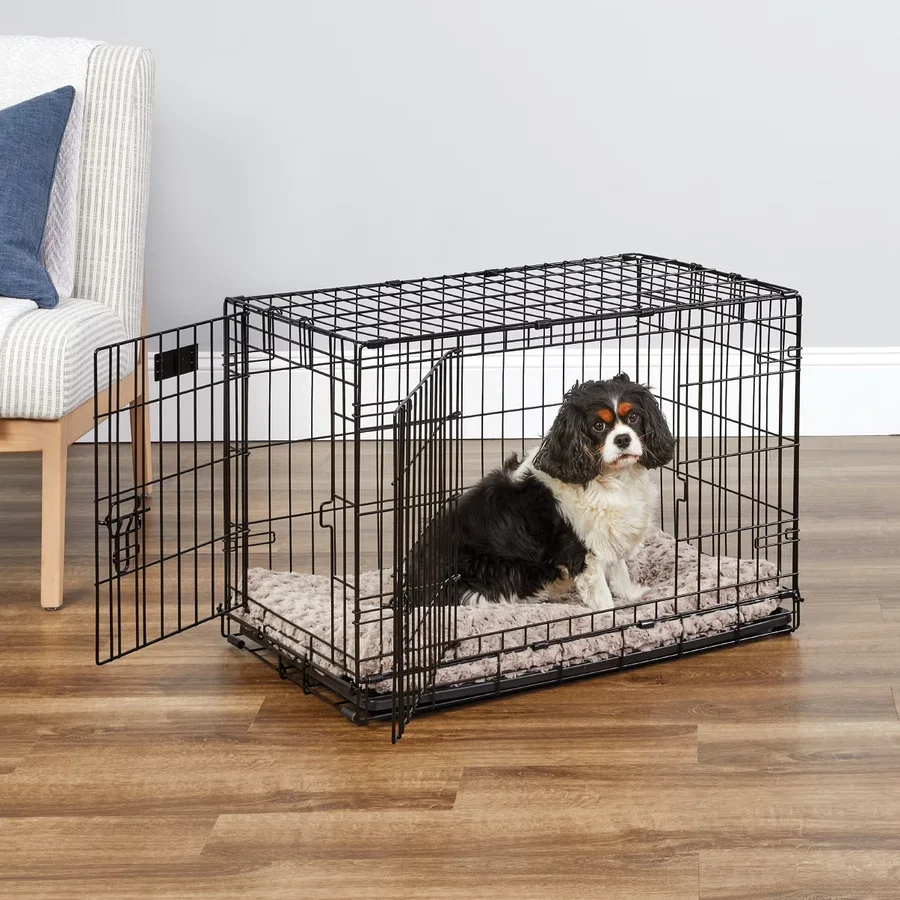
MidWest iCrate has broad size coverage and strong, long-running visibility through major pet retailers, making it a useful mainstream reference point for home wire crates.
Filter by feature:
A folding wire crate with front and side doors, a movable divider panel, and a removable plastic pan. It is designed as a practical home crate that can fold flat for storage or transport.
Why we recommend it
It covers the features most households need without moving into specialty-crate pricing, and its broad size range makes it a useful baseline recommendation for puppies and adult dogs.
Pros
Cons
Best for
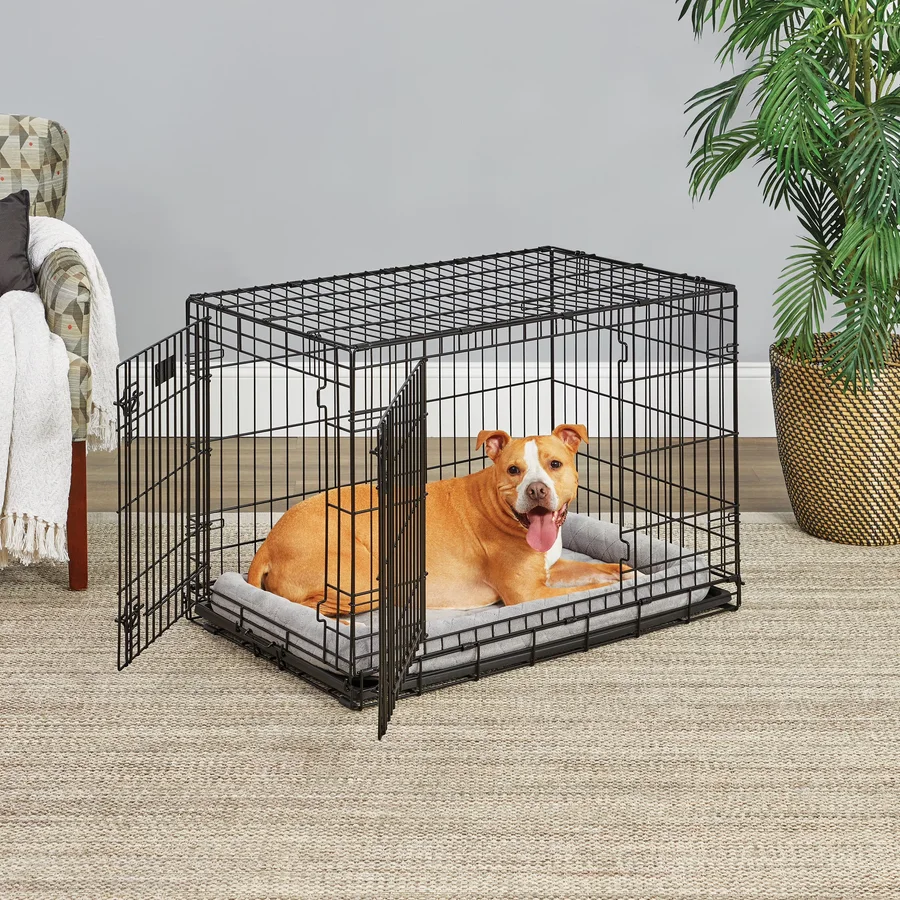
A double-door folding wire crate positioned above MidWest's lighter iCrate line, with a divider panel and removable pan. It is available in sizes suitable for small through large dogs.
Why we recommend it
The stronger home-crate construction and puppy divider make it a better fit than a basic wire crate for active dogs that do not require a specialized high-anxiety enclosure.
Pros
Cons
Best for
A mainstream collapsible wire crate with two doors, a divider panel, and a removable plastic base pan. Multiple size variants cover puppies and adult dogs across common breed sizes.
Why we recommend it
It offers the core features of a full-size home crate in a comparatively accessible package, making it the strongest value-oriented choice in this list when current local pricing is favorable.
Pros
Cons
Best for
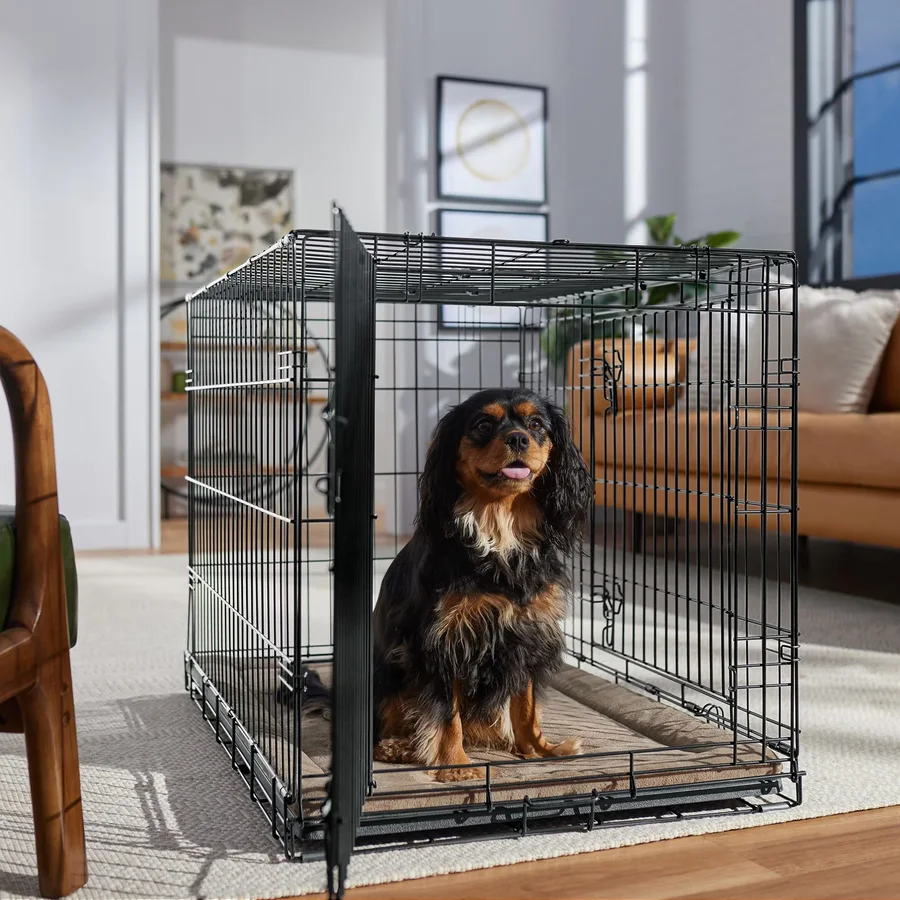
A thicker-wire version of Frisco's folding home crate with two doors, a divider panel, and a removable pan. It remains collapsible while adding more structure than the brand's standard Fold & Carry model.
Why we recommend it
This is a useful middle step for owners who want a sturdier conventional crate but do not need the weight, cost, or confinement level of a welded steel enclosure.
Pros
Cons
Best for
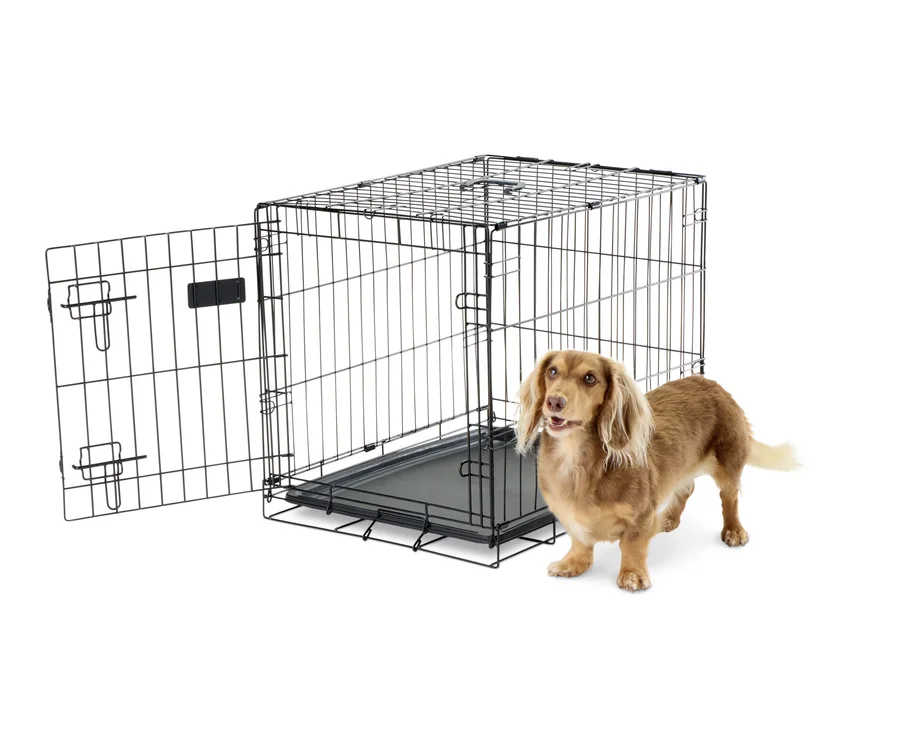
A compact single-door wire crate that folds for storage and includes a removable base pan. Its smaller configurations suit dogs that do not need the footprint of a large double-door crate.
Why we recommend it
It is a straightforward option for small dogs and limited spaces where a second door or a long list of accessories would add bulk without much benefit.
Pros
Cons
Best for
A premium collapsible home crate with built-in wheels and a carrying handle, multiple access points, and a removable tray. Its mechanism is designed to fold the crate without disassembling a conventional wire frame.
Why we recommend it
Revol combines a refined home-friendly design with unusually convenient folding and access features, making it the premium choice for owners who will use and move the crate frequently.
Pros
Cons
Best for
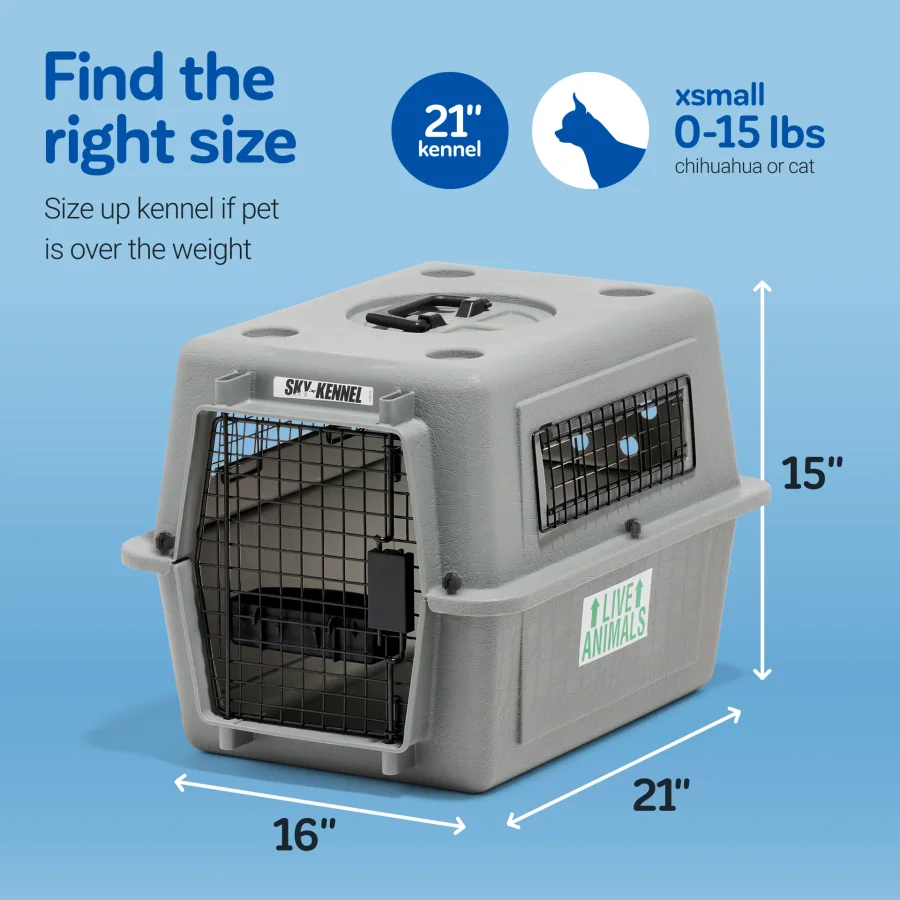
A rigid plastic travel kennel with a metal wire door and ventilation openings, offered in sizes from small through giant. Petmate markets it for air travel, but acceptance still depends on the airline, route, animal, and current regulations.
Why we recommend it
Its broad size range and established travel-oriented design make it the most versatile hard-sided option for owners preparing for checked or cargo transport after confirming carrier rules.
Pros
Cons
Best for
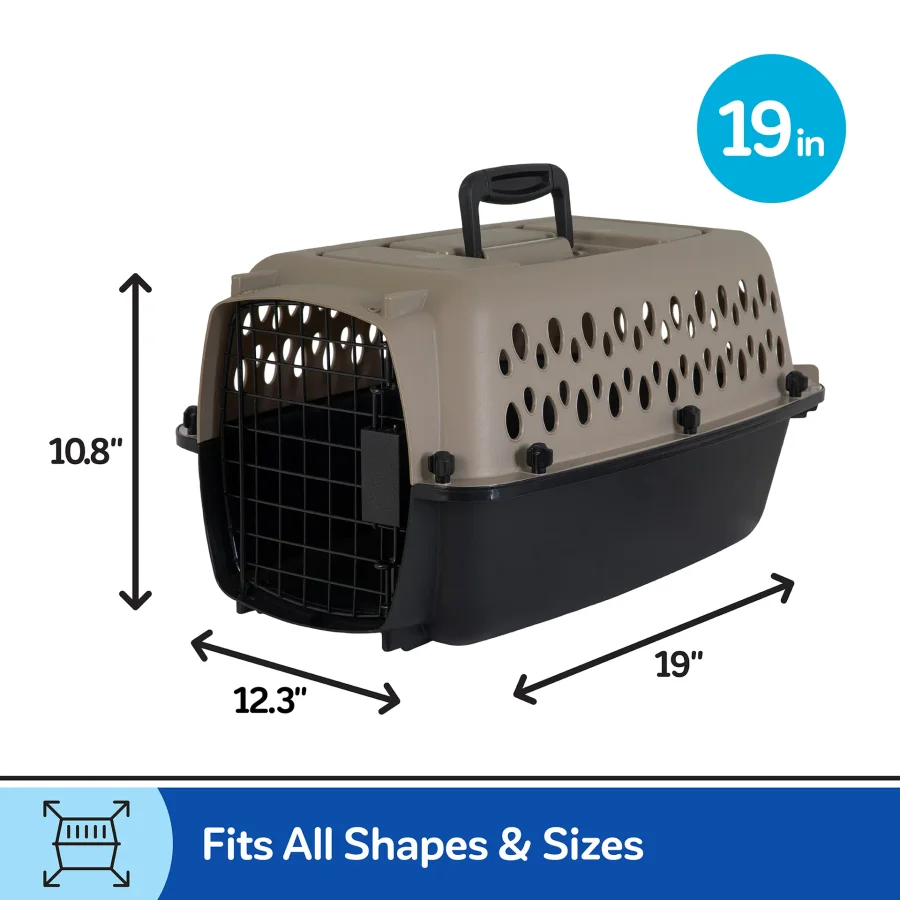
A two-piece rigid plastic kennel with a front wire door and side ventilation. It is sold in multiple sizes for home, road, and travel use, subject to the carrier's rules when flying.
Why we recommend it
Vari is a simpler rigid-shell alternative to the Sky Kennel for owners who need an easy-clean carrier and do not require every travel accessory bundled into the product.
Pros
Cons
Best for
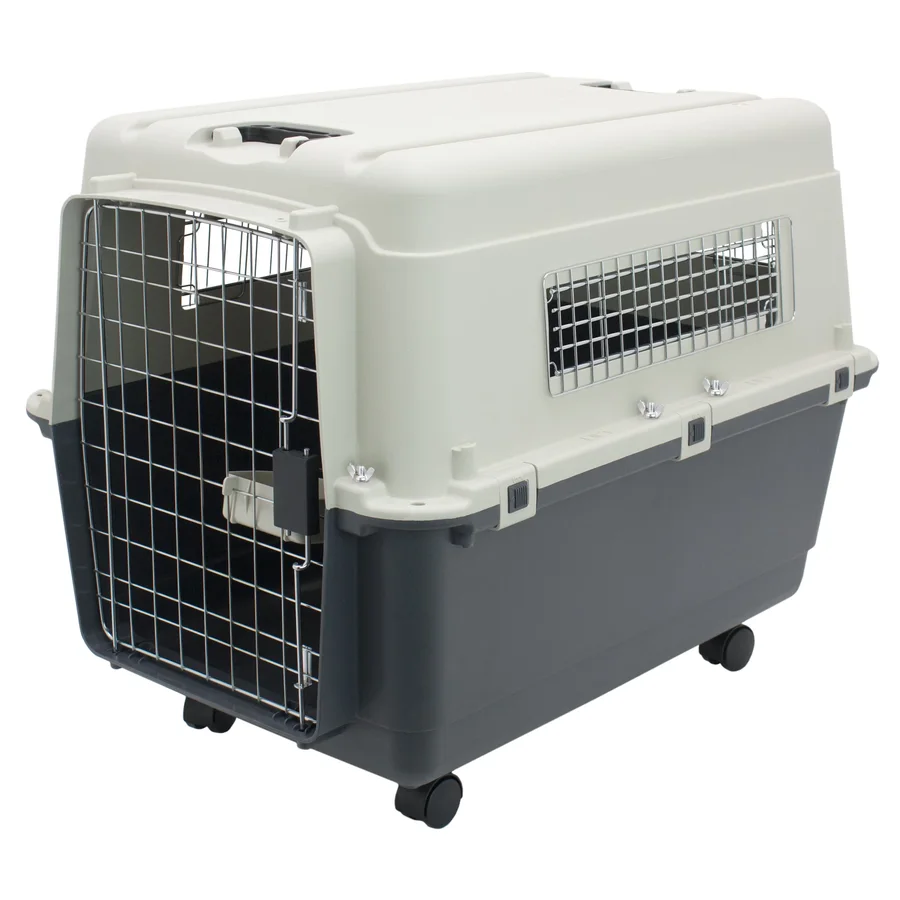
A rigid plastic kennel sold with removable wheels on selected sizes to make airport and terminal movement easier. It is marketed for airline use, although the operating airline makes the final acceptance decision.
Why we recommend it
The removable-wheel format addresses a practical problem with large travel kennels while retaining the rigid construction generally expected for checked or cargo transport.
Pros
Cons
Best for
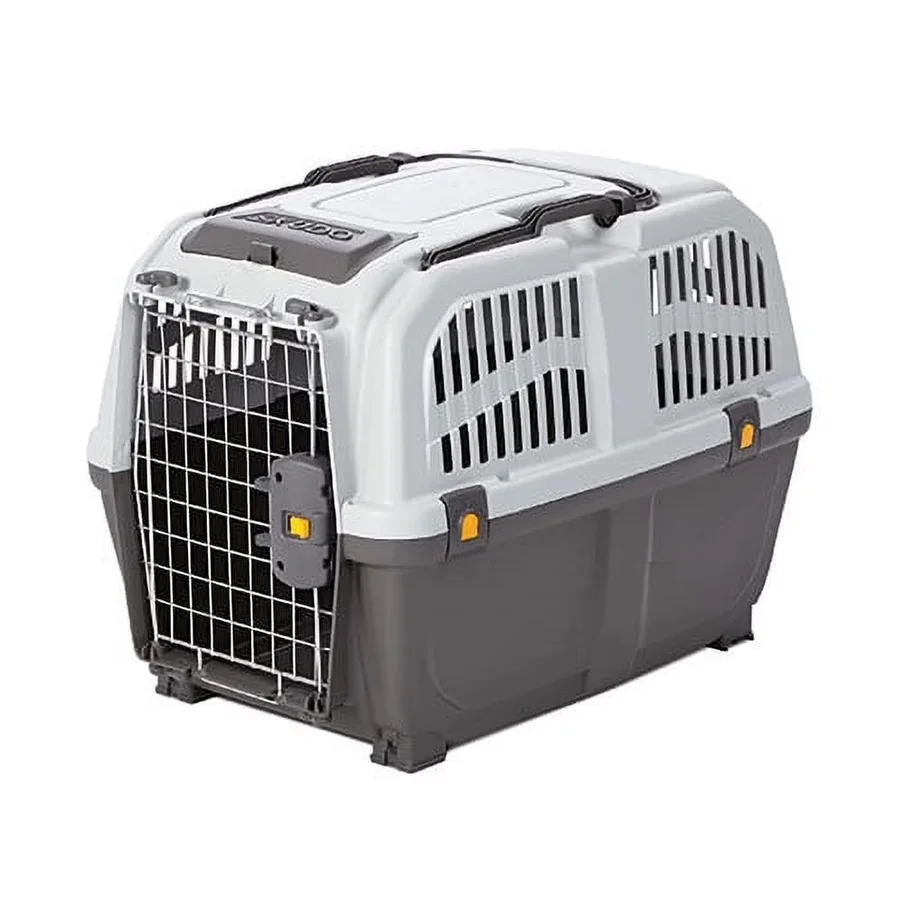
A European-designed rigid plastic carrier distributed by MidWest in a range of sizes, with a metal grid door and ventilated shell. The exact accessories and airline suitability vary by size and market.
Why we recommend it
Skudo adds a widely distributed European-style hard carrier to the list and offers intermediate sizes that may fit dogs poorly served by a single North American kennel range.
Pros
Cons
Best for
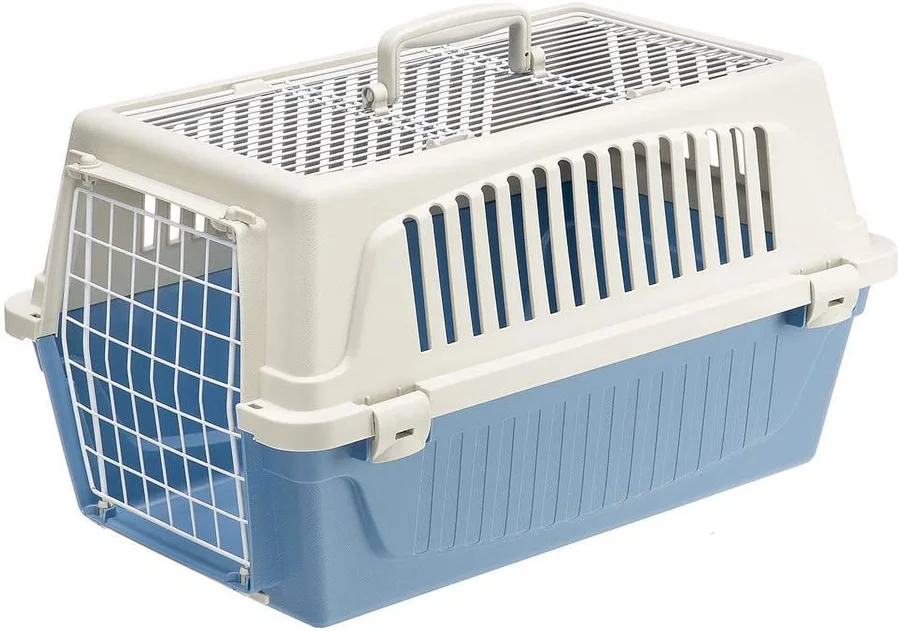
A compact rigid plastic carrier for cats and small dogs with a front door and a top-loading opening. Its removable upper section and smooth interior support easier loading and cleaning.
Why we recommend it
The top opening is useful for small dogs that are awkward to guide through a front door, while the European brand presence improves the category's relevance outside a purely US product set.
Pros
Cons
Best for
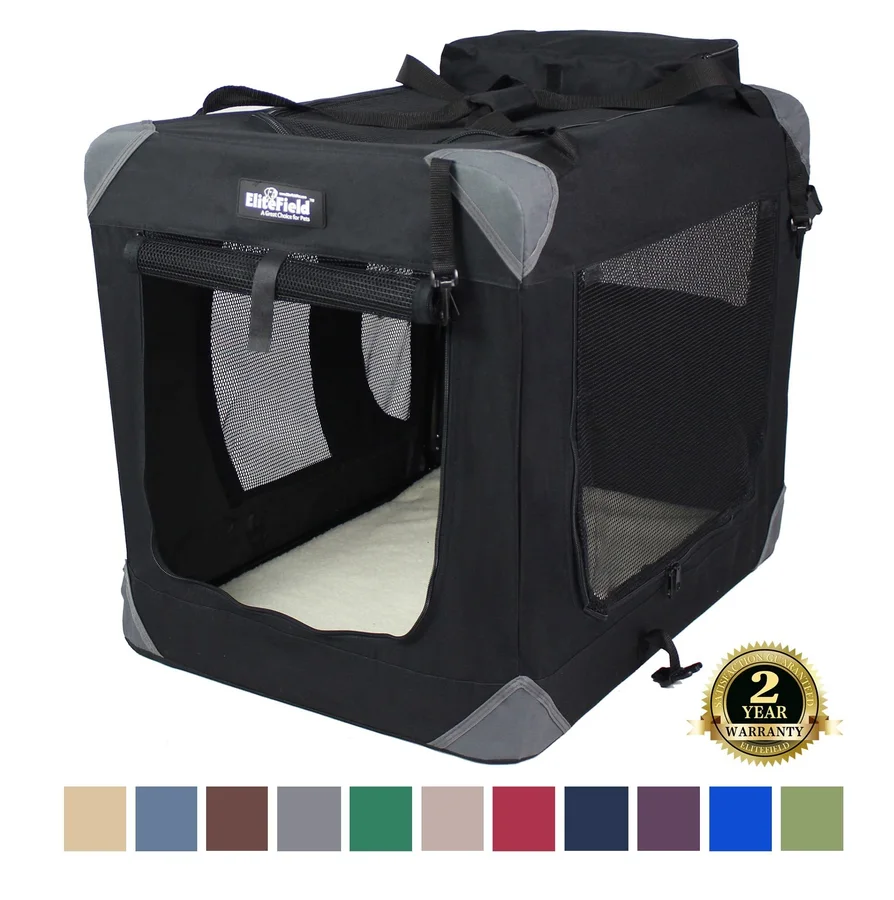
A folding soft-sided crate with a steel-tube frame, three mesh access panels, and fabric storage pockets. It is intended for supervised travel, events, camping, and destination use with crate-trained dogs.
Why we recommend it
Its broad size selection, three-door access, and established market presence make it the most broadly useful soft crate for calm dogs whose owners prioritize portability.
Pros
Cons
Best for
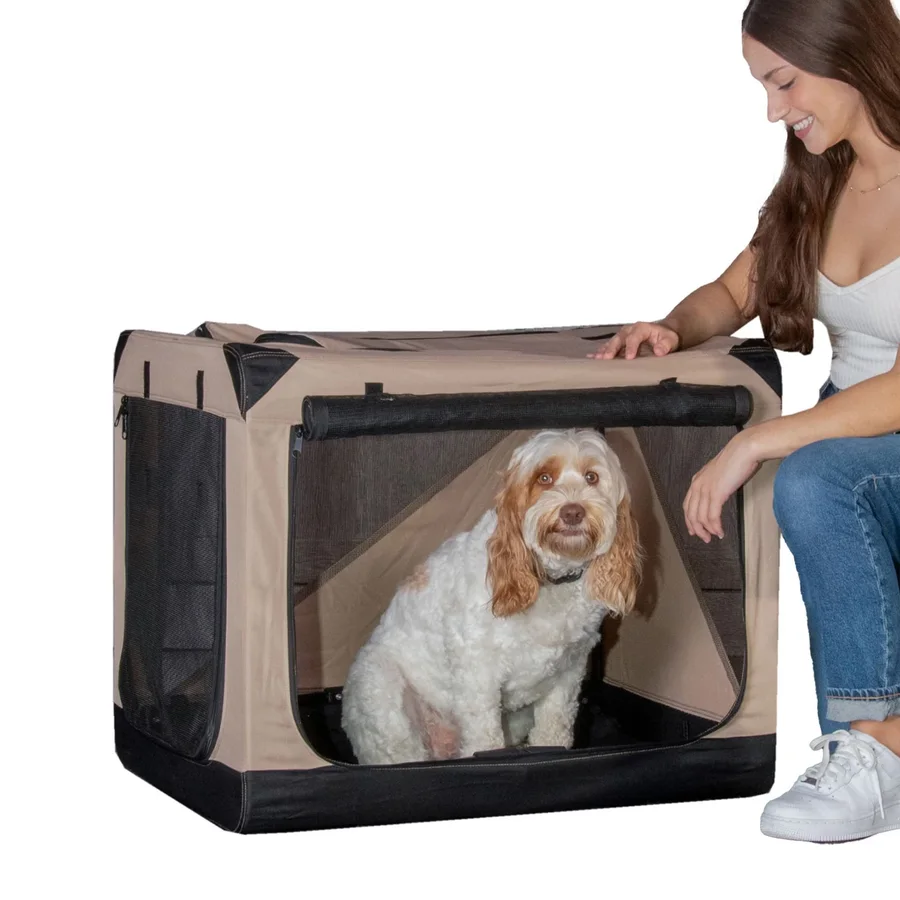
A three-door soft crate built around a folding steel frame, with mesh panels and a water-resistant interior liner. It folds without the multi-step pole assembly used by some fabric crates.
Why we recommend it
The integrated frame and liner make it a more structured soft-crate option for owners who want fast setup and easier cleanup at a destination.
Pros
Cons
Best for
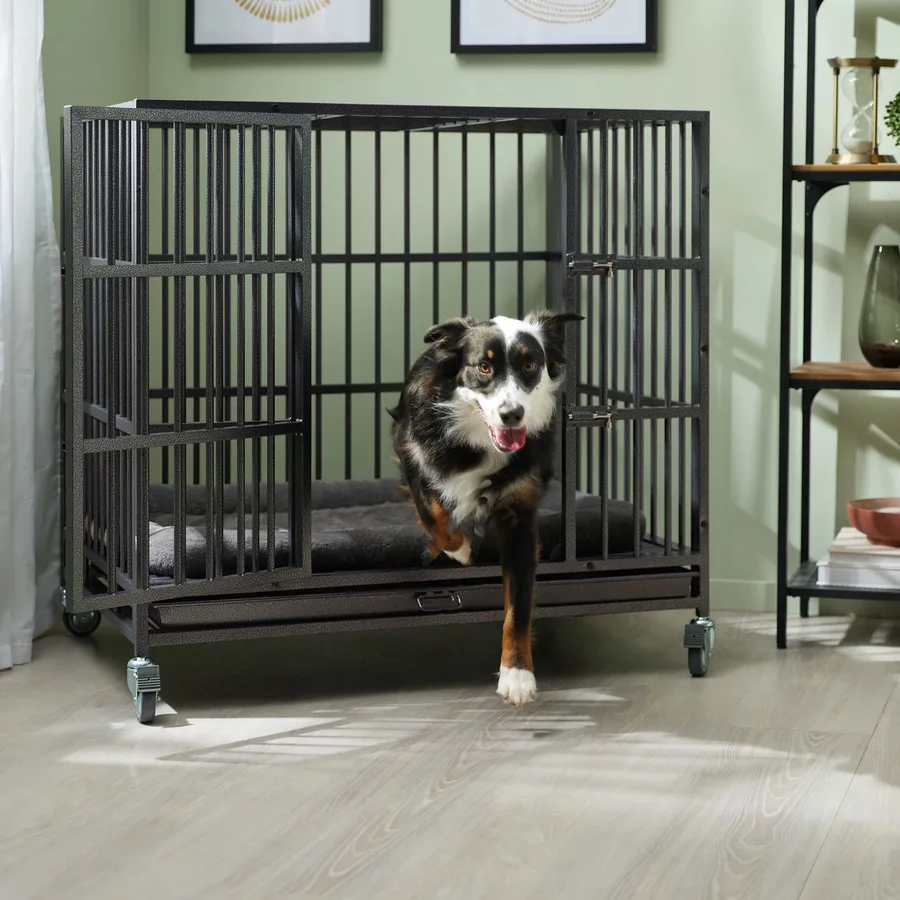
A welded steel home crate made with heavy-gauge tubing, a removable tray, and rolling casters. It is substantially more rigid and heavier than folding wire crates.
Why we recommend it
It provides a more substantial containment structure for large or powerful dogs that have outgrown standard wire crates, without claiming that any enclosure is escape-proof.
Pros
Cons
Best for
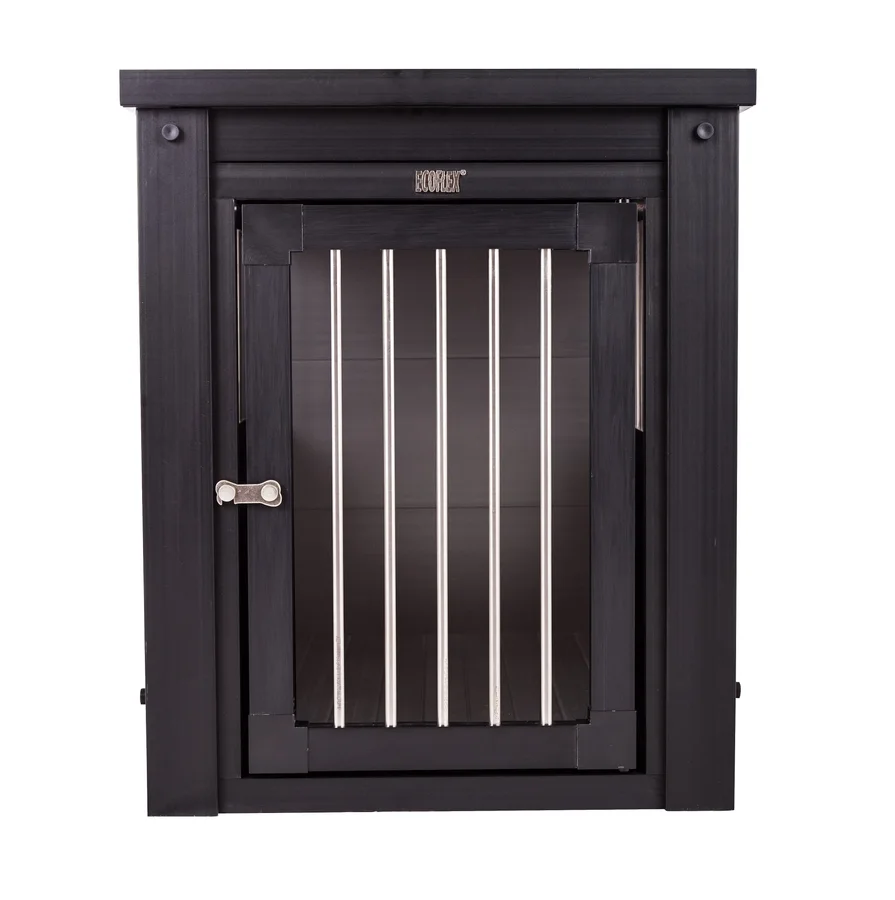
A furniture-style crate made from ECOFLEX wood-plastic composite panels with a metal-bar door and an end-table top. It is intended to blend into indoor living spaces rather than function as a portable travel kennel.
Why we recommend it
It is one of the most visible furniture-crate lines and offers a wipe-clean composite alternative to painted wood for calm dogs that already accept confinement.
Pros
Cons
Best for
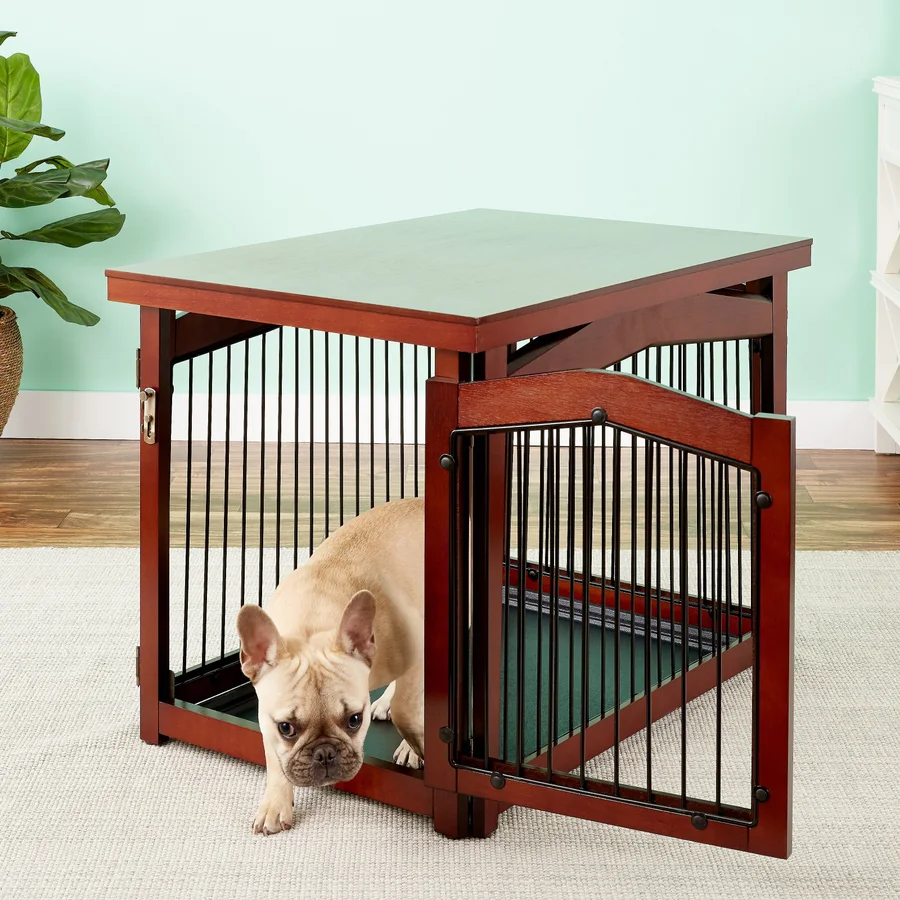
A furniture-style wire-and-wood enclosure that can be configured as a dog crate or unfolded into a freestanding gate. It includes a removable plastic tray for the crate configuration.
Why we recommend it
The convertible gate function gives it more utility than a conventional end-table crate for households that sometimes need to block a doorway or create a visual boundary.
Pros
Cons
Best for
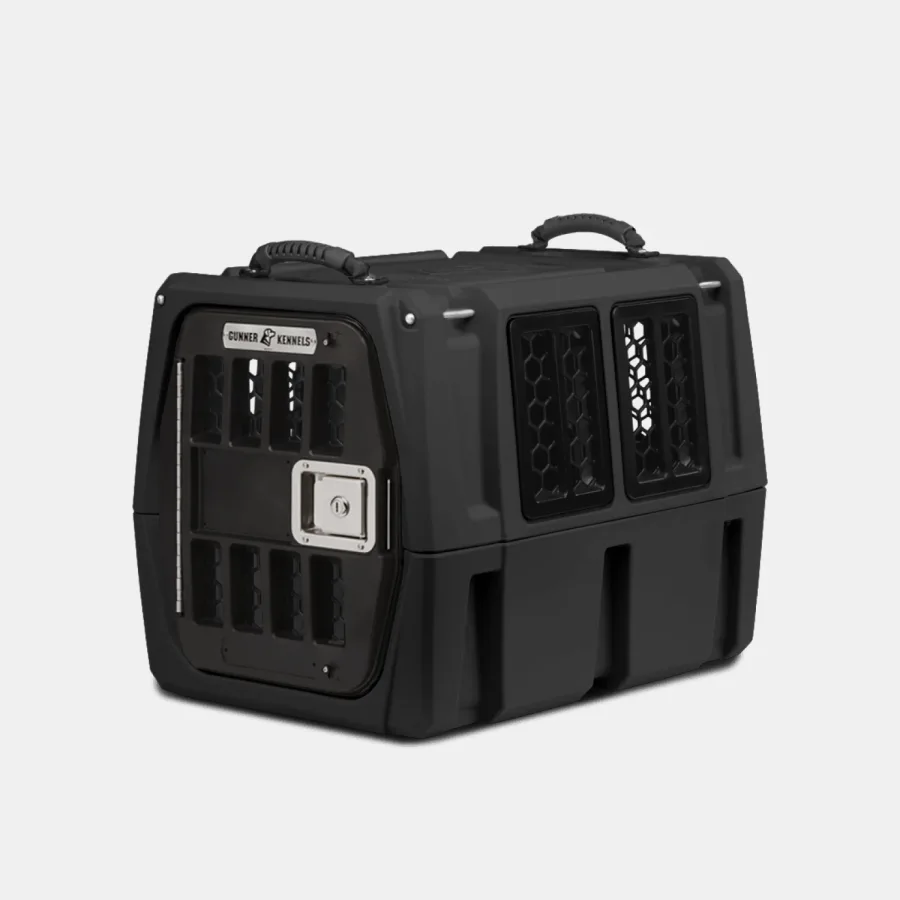
A premium rotomolded hard-shell kennel sold in Small, Medium, Intermediate, and Large sizes for vehicle and road-trip use. Gunner states that the G1 received a five-star crash-test rating from the Center for Pet Safety and backs it with a lifetime warranty; those are manufacturer-published claims rather than testing performed by BestAnything. The shell uses ventilation slots, carrying handles, and a metal door. It is not presented here as an airline kennel, and buyers should confirm the measured dog, vehicle space, tie-down method, and current model instructions before travel.
Why we recommend it
It fills the premium road-travel role with a rotomolded shell, four size options, a manufacturer-published crash-test claim, and a lifetime warranty without implying airline acceptance.
Pros
Cons
Best for
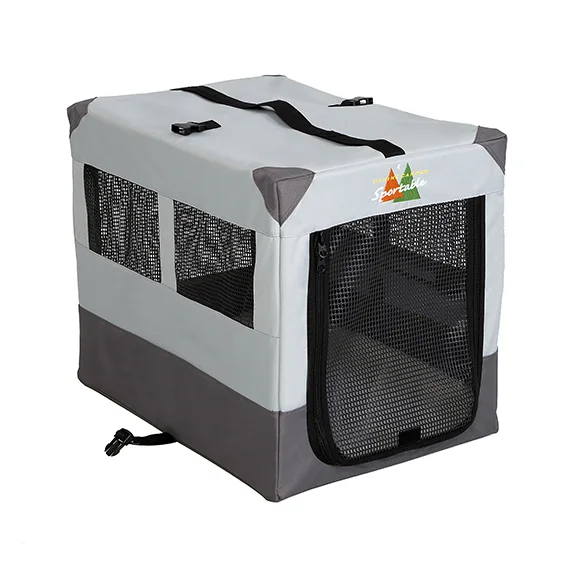
A soft-sided travel crate with a folding steel frame, stability U-wire, ventilated mesh windows, a large zippered mesh door, water-resistant fabric, snap-lock straps, and an included synthetic sheepskin pad. MidWest says it sets up in seconds and folds flat for storage and travel. It is intended for calm, crate-trained dogs at supervised destinations; mesh, fabric, and zippers are not appropriate for chewing, panic, or repeated escape attempts. The current manufacturer page does not establish airline acceptance.
Why we recommend it
It fills the value soft-crate role with a documented folding frame, ventilation, included pad, and simple single-door layout.
Pros
Cons
Best for
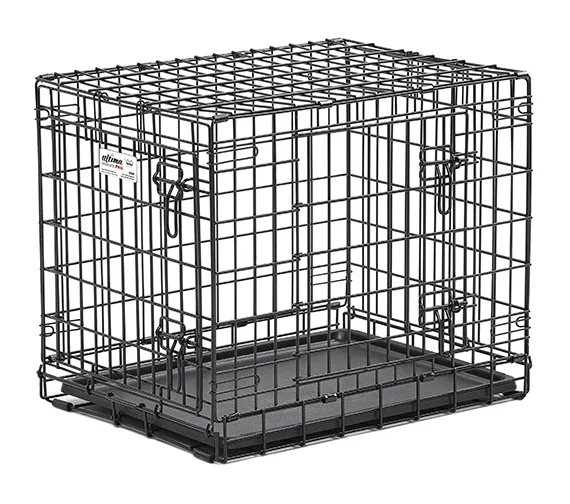
A professional-gauge folding steel crate with front and side doors, slide-bolt latches, low thresholds, large door openings, a removable leak-proof pan, detachable carry handles, and a no-tools fold-flat design. The heavier wire construction places it between standard folding crates and welded rolling cages: it adds structure while retaining portability. It is not crash-tested vehicle protection, and heavy-duty wording does not make any crate escape-proof or appropriate for an animal panicking in confinement.
Why we recommend it
Ultima Pro fills the mainstream heavy-duty role with professional-gauge steel, double-door access, and an easy-clean pan while remaining foldable.
Pros
Cons
Best for