Premium Choice
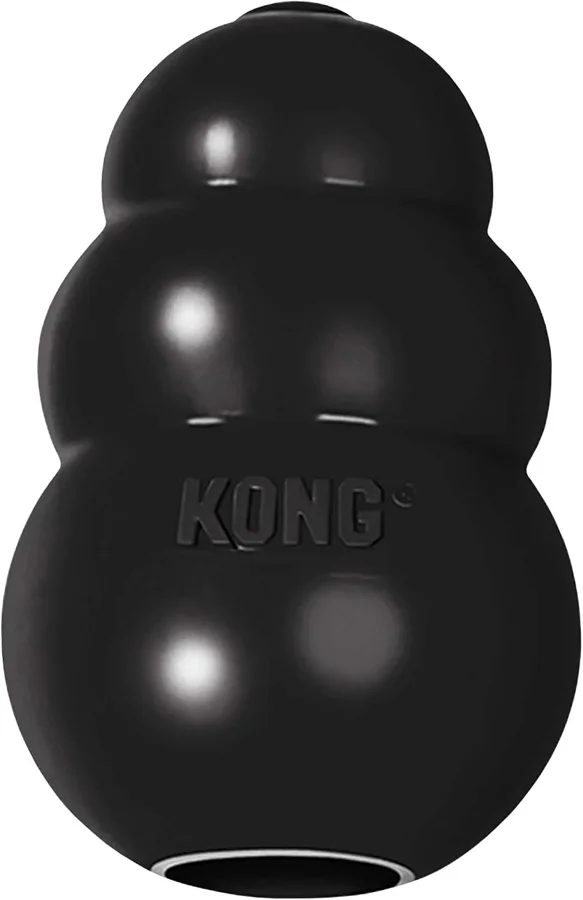
KONG Extreme Dog Toy
KONG Extreme combines supervised chewing, erratic-bounce fetch, and food stuffing in one natural-rubber design, with five manufacturer size bands and explicit inspection guidance.
Some links on this page are affiliate links. We may earn a commission if you buy through them, at no extra cost to you. This never changes our research or which products we recommend.
KONG Extreme combines supervised chewing, erratic-bounce fetch, and food stuffing in one natural-rubber design, with five manufacturer size bands and explicit inspection guidance.
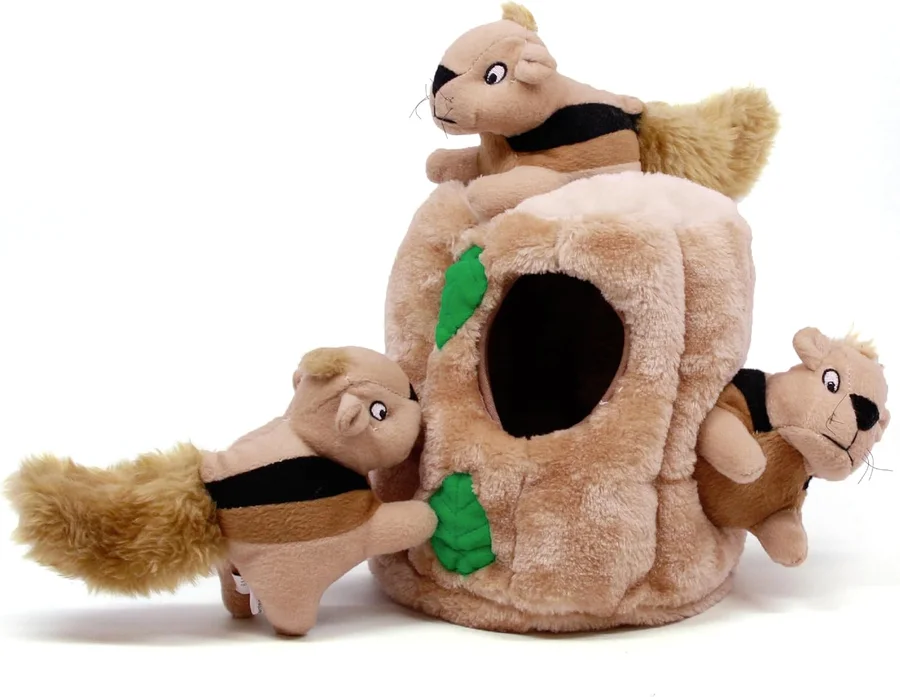
Hide A Squirrel combines supervised hide-and-seek, squeaky plush play, and fetch, while available replacement characters can keep an intact outer puzzle in use.
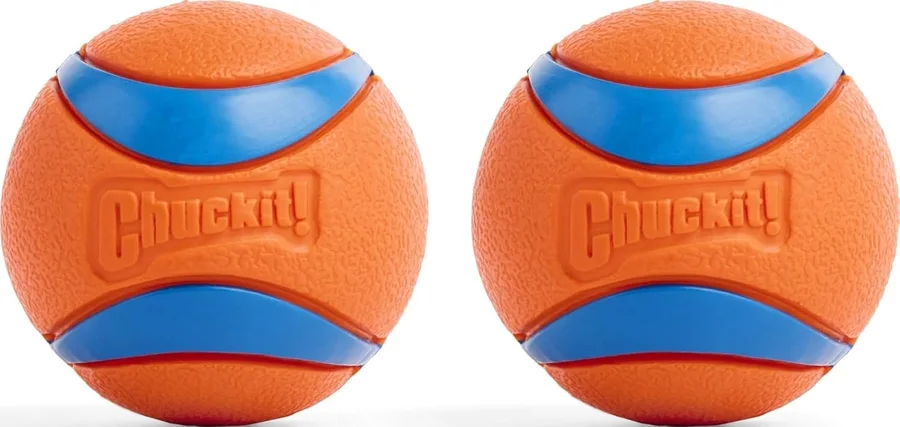
Chuckit Ultra Ball has long-running visibility through major retailers and a broad launcher-compatible size system, making it a mainstream reference point for supervised fetch on land or water.
Filter by feature:
A natural-rubber toy designed by KONG for determined chewers, with an erratic bounce and a hollow center that can be filled with food or treats.
Why we recommend it
It covers more play styles than a single-purpose chew toy by combining chewing, food stuffing, puzzle use, and unpredictable-bounce fetch.
Pros
Cons
Best for
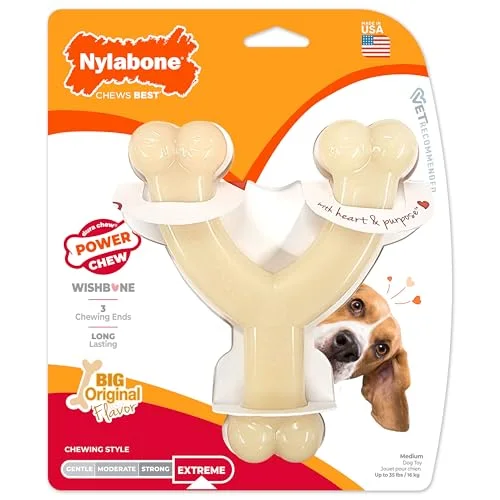
A non-edible nylon chew toy with a three-ended wishbone shape that gives dogs several gripping and chewing angles. Nylabone positions this Power Chew model for strong chewers and sells it in size-specific versions.
Why we recommend it
Its simple, easy-to-hold shape and widely available size options make it a practical value choice for dogs that prefer sustained chewing over fetch or food-dispensing play.
Pros
Cons
Best for
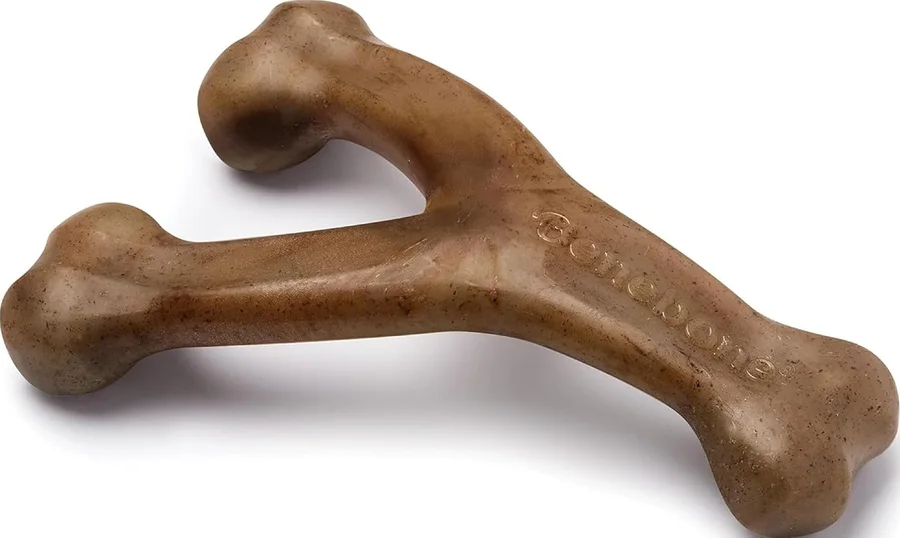
A hard, non-edible nylon chew made with real bacon and shaped into three curved prongs. Benebone offers the Wishbone in five weight-based sizes and intends it for supervised chewing by dogs with strong, healthy teeth.
Why we recommend it
Its curved body and deep prong grooves give dogs several paw-friendly gripping angles, making it a practical alternative when a dog prefers a flavored hard chew to rubber or food-dispensing toys.
Pros
Cons
Best for
A plush hide-and-seek puzzle with squeaky characters that can be stuffed into the outer trunk, removed by the dog, or used separately for supervised fetch.
Why we recommend it
The reusable outer puzzle and separate squeaky characters support multiple supervised play patterns without requiring a complicated setup.
Pros
Cons
Best for
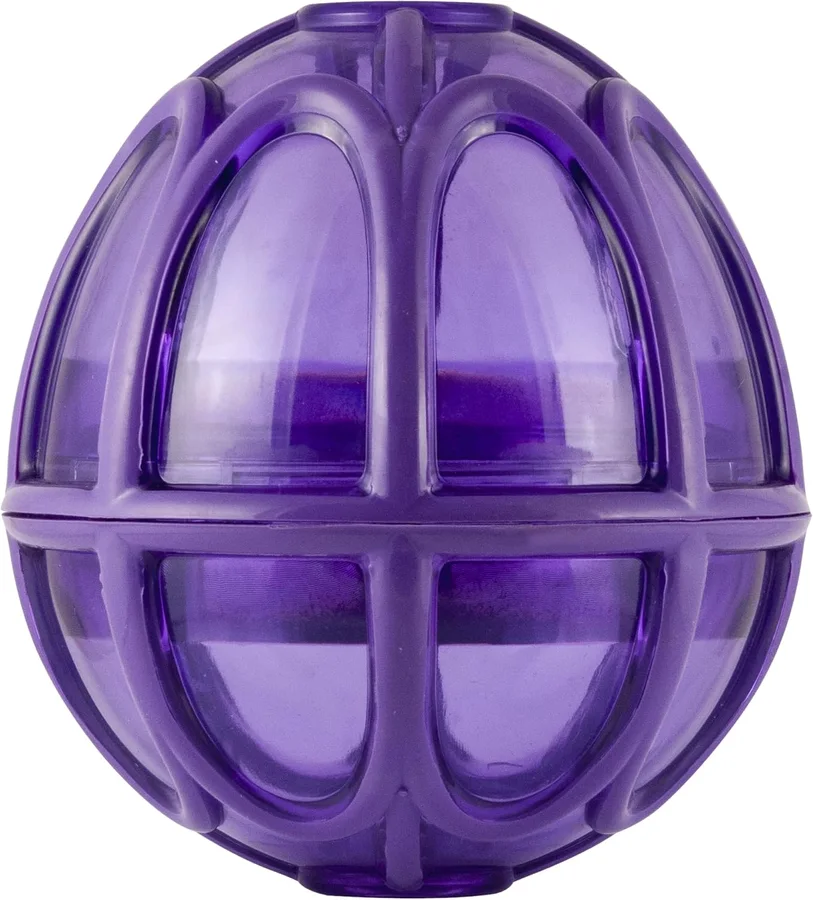
A hard, egg-shaped food dispenser that twists apart for filling and releases kibble through PetSafe's flexible Treat Meter prongs as it rolls. It comes in under-20-pound and over-20-pound sizes holding about 2 and 3.5 cups respectively.
Why we recommend it
The meal-sized capacity and roll-to-dispense action make it useful for dogs that eat dry food quickly, while the trim-to-adjust prongs let owners match the opening to their kibble once they know the needed flow.
Pros
Cons
Best for
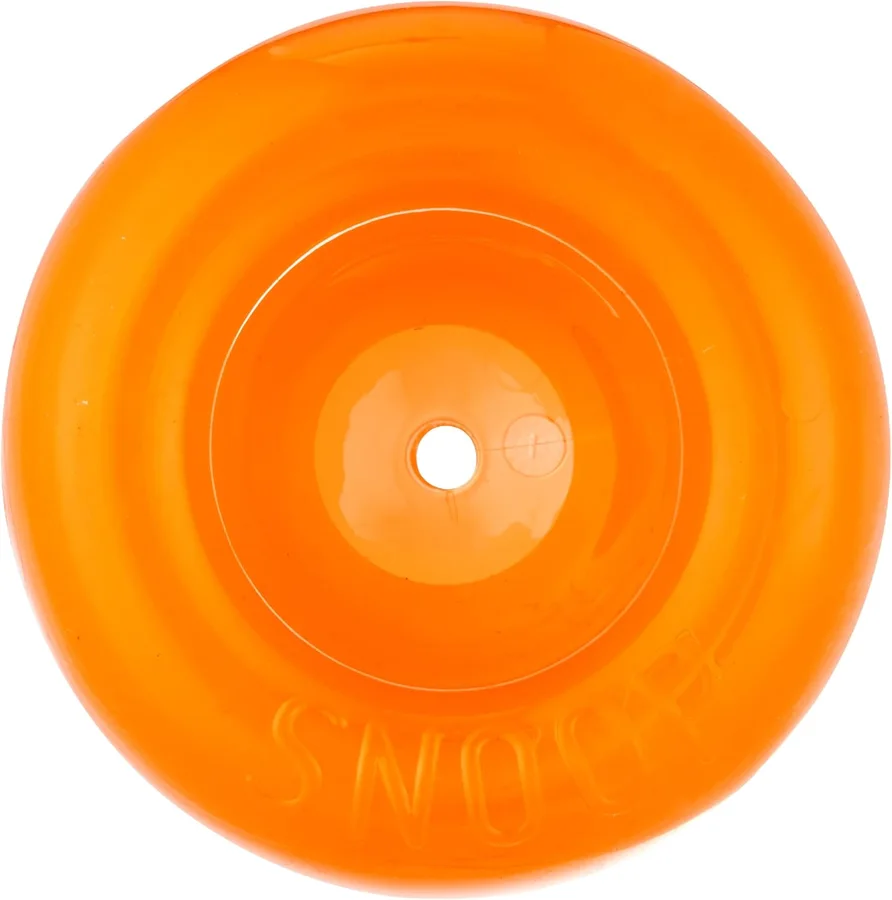
A translucent, mint-scented 5-inch TPE dispenser with a flexible outer wall and a deep inner crevice. Owners invert the opening to add treats, then dogs nose and paw the Snoop so rewards work through the recessed exit.
Why we recommend it
Its soft-sided dispensing action is quieter and less rigid than a hard plastic roller, and an optional 2.5-inch Nook insert can add difficulty after a dog understands the basic puzzle.
Pros
Cons
Best for
A bright rubber fetch ball with a textured surface, thick core, high bounce, and enough buoyancy for water retrieval. The linked medium two-pack is 2.5 inches in diameter and is marketed for dogs weighing 20 to 60 pounds.
Why we recommend it
It is the strongest all-around fetch choice here because it works with medium Chuckit launchers, remains visible outdoors, and transitions from field play to supervised water retrieval without becoming a dedicated chew toy.
Pros
Cons
Best for
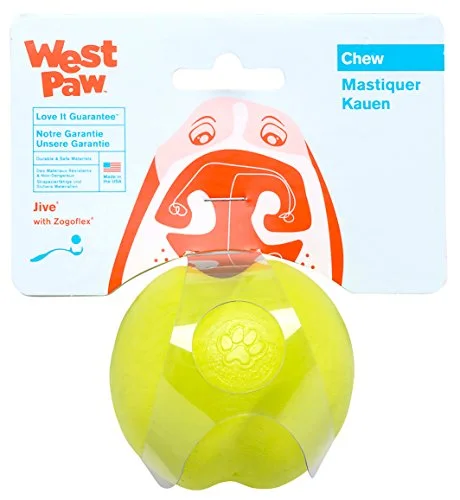
A dense, solid fetch ball molded from West Paw's proprietary Zogoflex material. Its grooved shape creates an irregular bounce, and the ball floats, is recyclable through the brand's program, and can go on the dishwasher's top rack.
Why we recommend it
Jive is a premium fetch option for owners who want a heavier, non-tennis-ball format with unpredictable movement and straightforward cleaning, provided the selected diameter is safe for the dog's mouth.
Pros
Cons
Best for
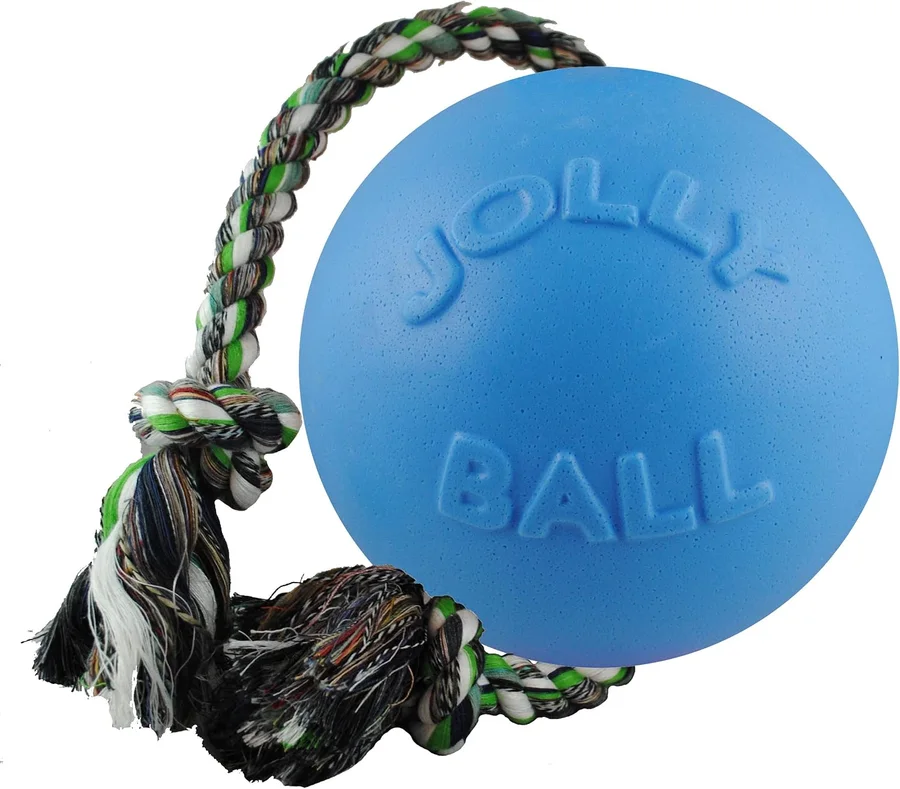
A flexible JollyFlex ball threaded with an easy-grip rope for kicking, carrying, throwing, tugging, and water retrieval. It comes in 4.5-, 6-, and 8-inch sizes and is designed to float and retain its shape even if the ball is punctured.
Why we recommend it
The sliding rope gives people and dogs a handling point that a plain large ball lacks, making Romp-n-Roll especially useful for supervised outdoor games that rotate between chase, tug, and swimming.
Pros
Cons
Best for
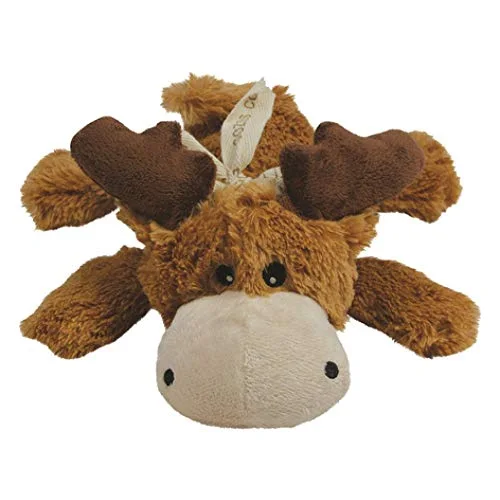
An extra-large plush moose with a built-in squeaker, an added fabric layer, and less stuffing than many conventional plush toys. KONG positions the Cozie line for cuddling, gentle indoor play, and light fetch rather than determined chewing.
Why we recommend it
Marvin offers a larger comfort-toy format without the bulk of a fully packed plush, and the squeaker gives gentle players an interactive feature while the minimal stuffing limits, but does not eliminate, potential mess.
Pros
Cons
Best for
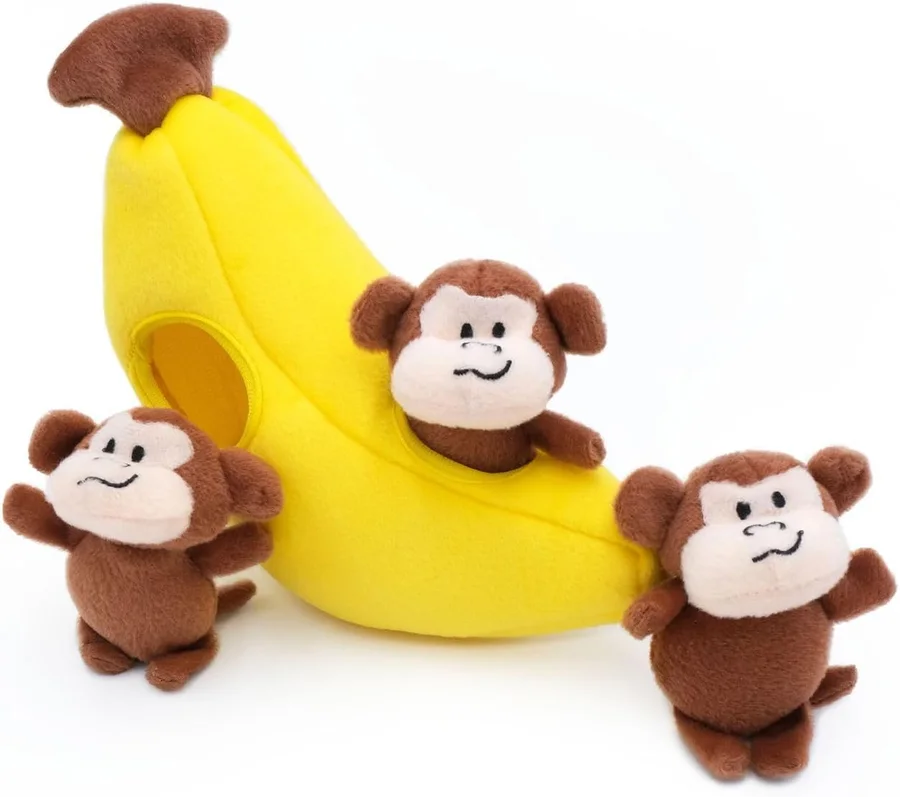
A soft hide-and-seek set with three small squeaky monkey Miniz tucked into a machine-washable plush banana. The outer burrow can be reset repeatedly and, while intact, refilled with compatible ZippyPaws Miniz.
Why we recommend it
It gives small and medium dogs a compact alternative to larger plush burrows, with three separate squeakers and a reusable housing that supports short, supervised search-and-remove sessions.
Pros
Cons
Best for
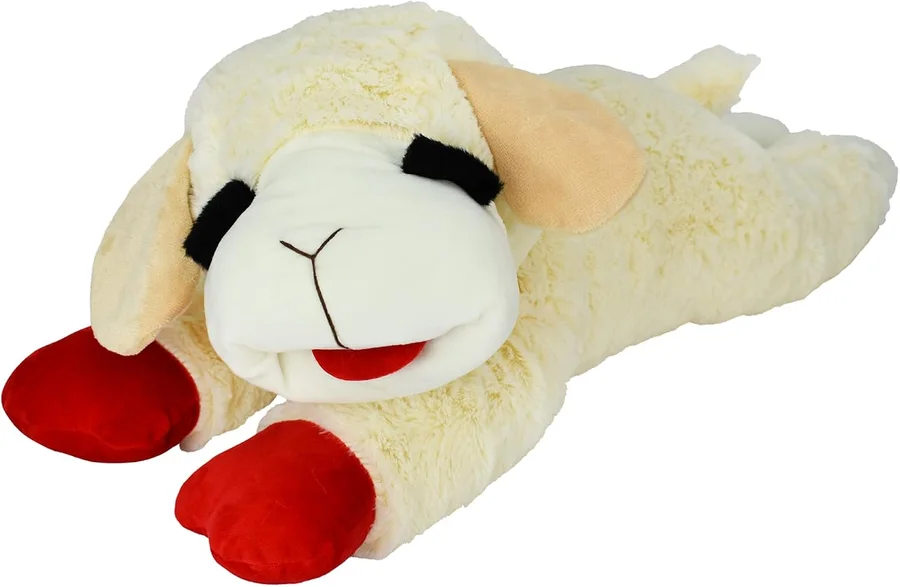
The linked Jumbo version of Multipet's officially licensed Lamb Chop is a 24-inch stuffed plush with a soft exterior and internal squeaker. It is sized for large dogs that enjoy carrying, cuddling, or gentle squeaky play.
Why we recommend it
Its oversized, lightweight shape gives gentle large dogs a plush they can carry or rest against, filling a comfort-toy role that the smaller puzzle characters and dense fetch balls do not.
Pros
Cons
Best for
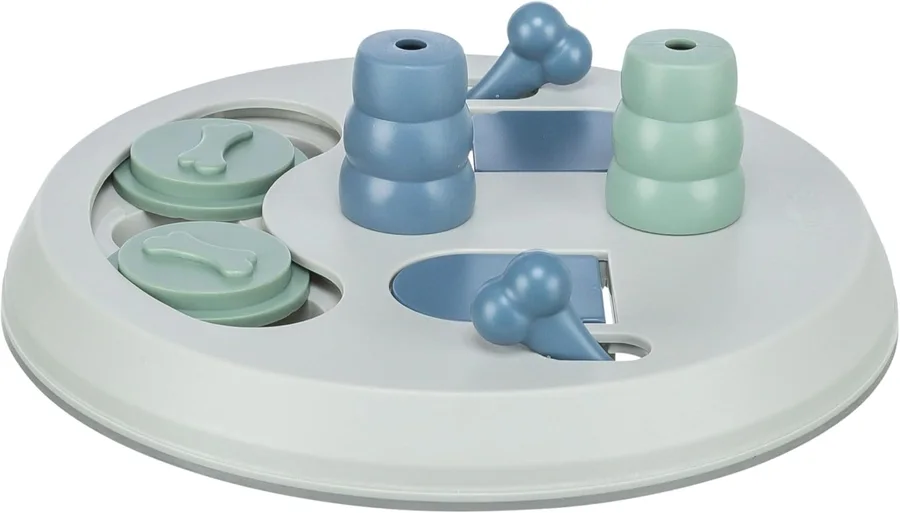
A 9-inch, Level 2 plastic treat board with seven hiding compartments operated by lifting cones, flipping lids, and sliding covers. A rubber rim limits movement on the floor, and the board is dishwasher safe after the removable pieces are secured.
Why we recommend it
Flip Board introduces several distinct actions in one compact puzzle, making it a useful step up for dogs that understand simple treat cups but are not ready for a large advanced game.
Pros
Cons
Best for
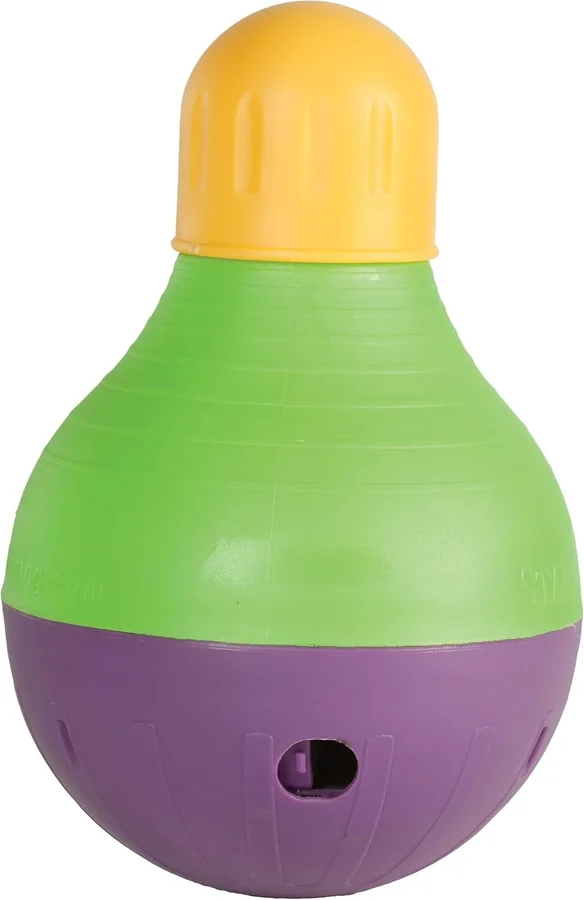
A weighted, anti-slip dispenser that returns upright as a dog paws and nudges it. Two internal chambers and adjustable top and bottom openings control how dry kibble or small treats move through the toy, which comes in small and large sizes.
Why we recommend it
Bob-A-Lot offers more difficulty control than fixed-hole rollers, and its weighted wobble keeps the dispenser moving without requiring a ball-shaped toy that can disappear as easily under furniture.
Pros
Cons
Best for
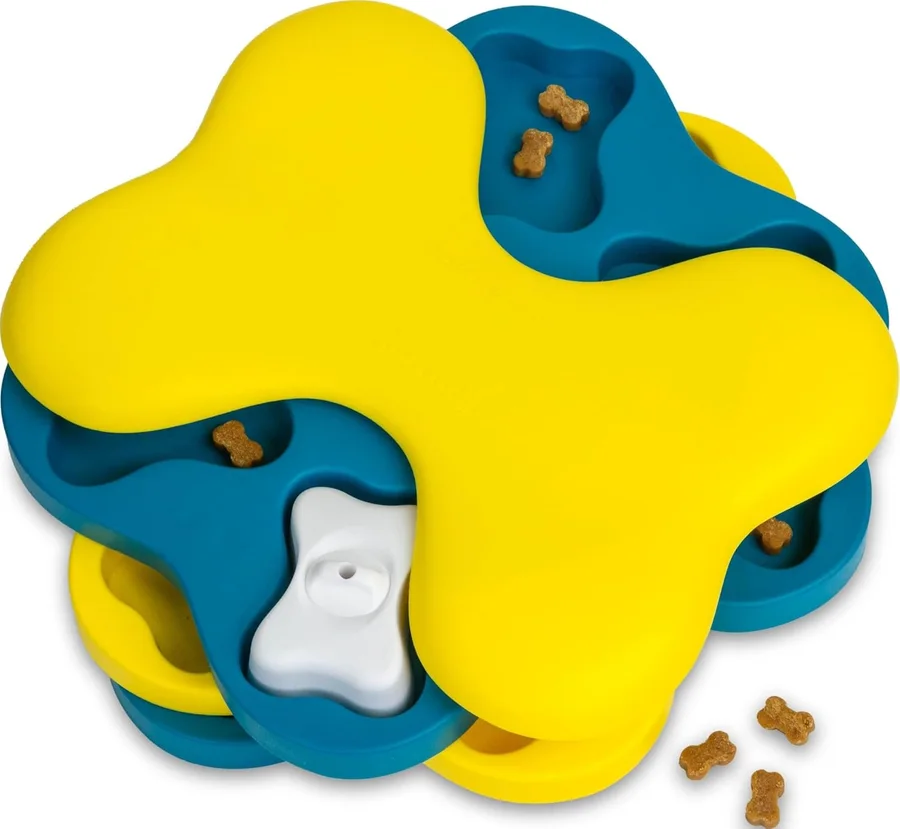
A Level 2 treat puzzle with three rotating layers, twelve food compartments, and three removable bone-shaped covers. Dogs spin each tier and lift the covers to reveal up to about half a cup of dry food or treats.
Why we recommend it
The rotating tiers create a different hand-and-nose action from a flat slider board, while the optional covers let owners introduce the puzzle in stages and add difficulty after the dog learns to spin it.
Pros
Cons
Best for