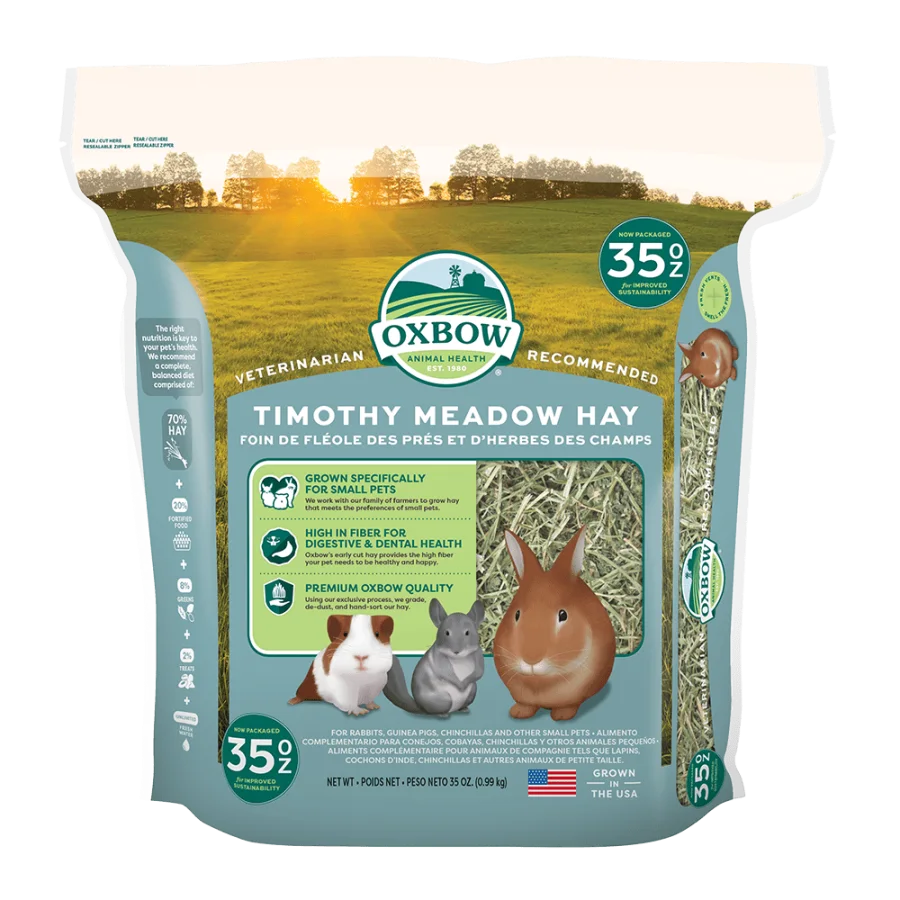
Premium Choice
Oxbow Timothy Meadow Hay
A straightforward timothy forage with verified 35-ounce, 84-ounce, and 9-pound sizes.

Some links on this page are affiliate links. We may earn a commission if you buy through them, at no extra cost to you. This never changes our research or which products we recommend.
A straightforward timothy forage with verified 35-ounce, 84-ounce, and 9-pound sizes.
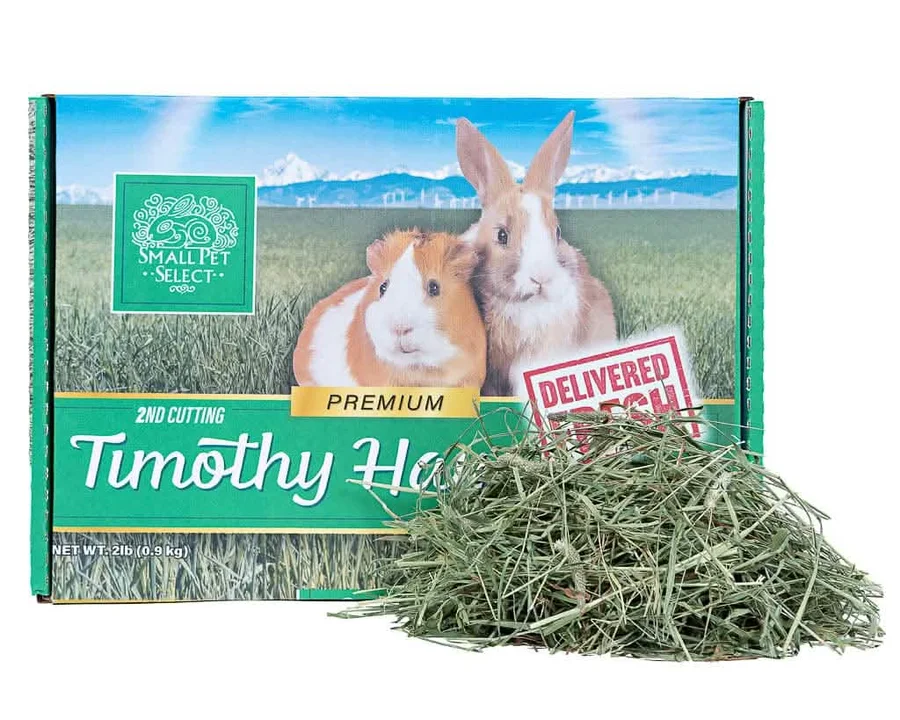
Six second-cut box weights make it easy to match consumption without guessing.
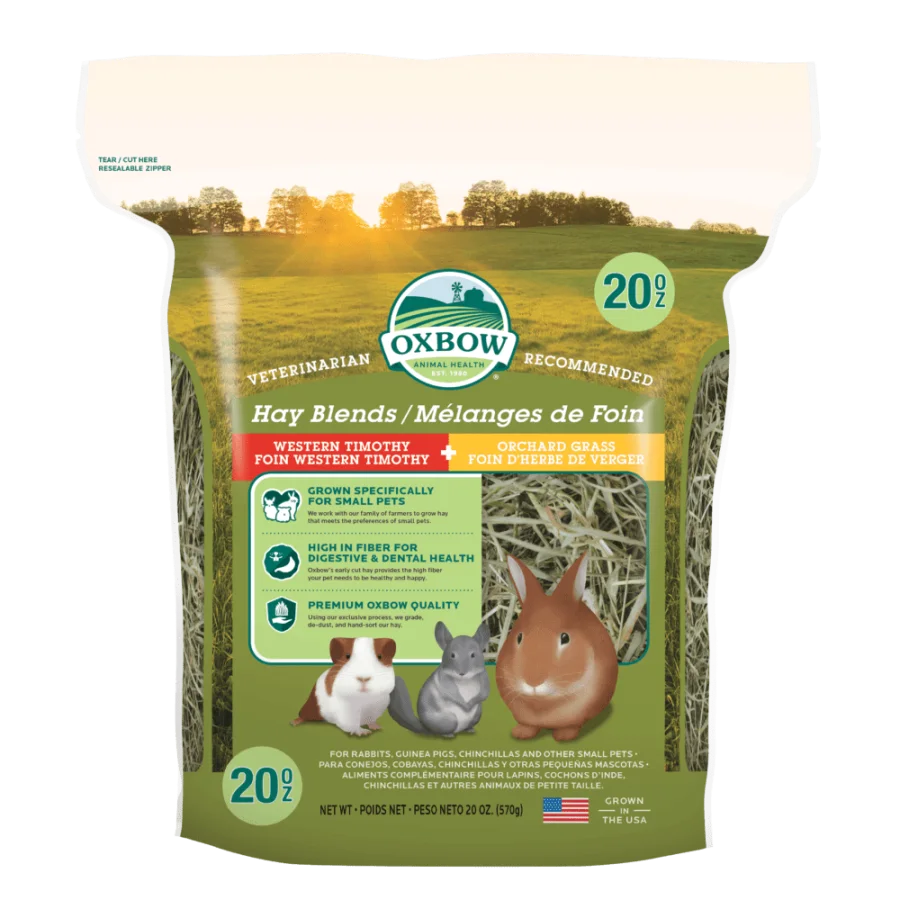
A widely available timothy-orchard blend that adds texture without sugary mix-ins.
Filter by feature:
Straight timothy grass hay offered by Oxbow in 35-ounce, 84-ounce, and 9-pound packages. It is an everyday long-strand forage for rabbits, guinea pigs, and other herbivores, not a compressed treat or complete pellet.
Why we recommend it
A clearly labeled timothy forage with several verified package sizes.
Pros
Cons
Best for
Second-cut timothy with a medium balance of leaves, soft stems, and flower heads. The direct listing offers 2-, 5-, 10-, 20-, 25-, and 40-pound boxes; buy only a size that will stay dry and fresh in your home.
Why we recommend it
The broad verified box-size range makes this a practical delivered timothy option.
Pros
Cons
Best for
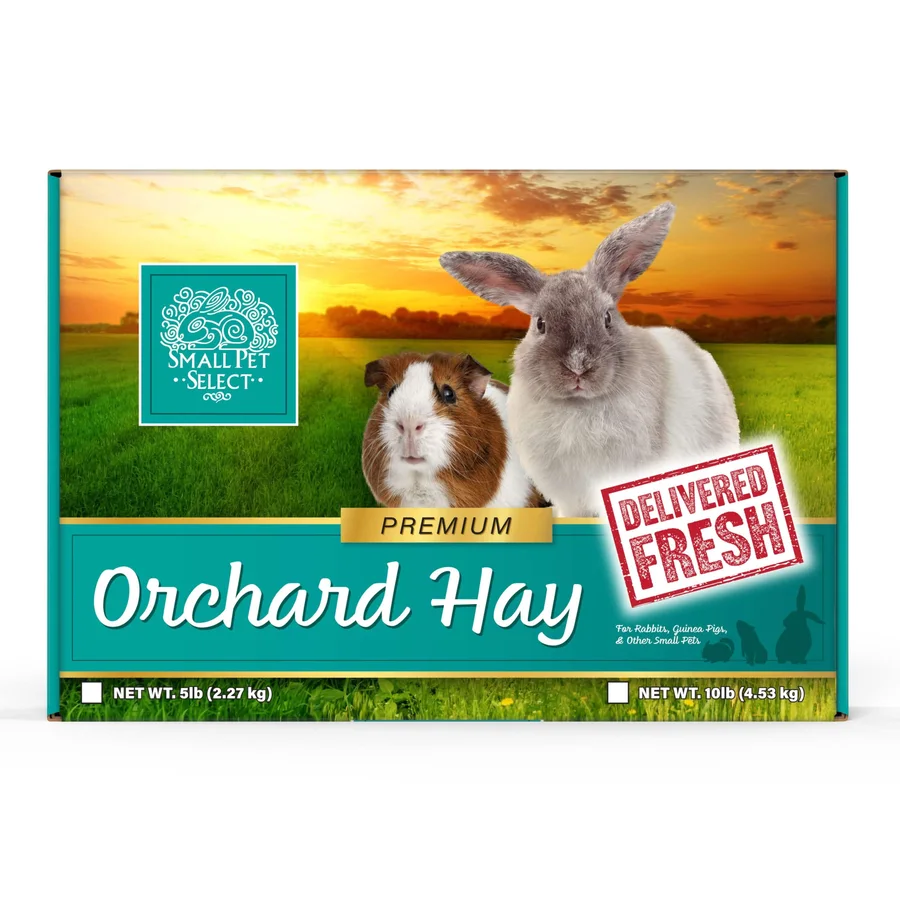
Straight orchard grass hay packed in 2-, 5-, 10-, 20-, and 40-pound corrugated boxes. The manufacturer positions it as a softer grass-hay alternative and notes that some timothy-allergic people prefer handling orchard hay.
Why we recommend it
A verified orchard-only option with useful bulk sizes and resealable box storage.
Pros
Cons
Best for
A two-grass blend of western timothy and orchard grass in verified 20-, 40-, and 90-ounce packages. It provides mixed stem and leaf textures without adding fruit, seed, or sugary treat pieces.
Why we recommend it
An easy way to introduce orchard texture without abandoning familiar timothy.
Pros
Cons
Best for
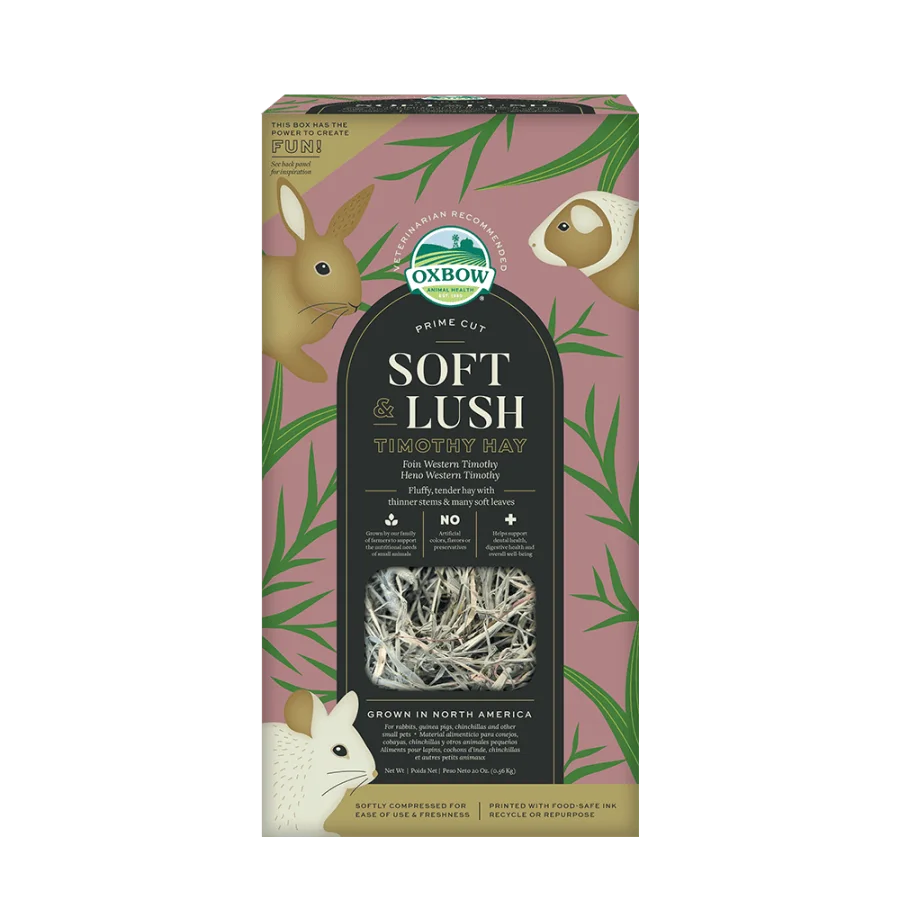
A softer, leaf-forward timothy grass hay sold in 20-, 40-, and 80-ounce bags. Oxbow lists timothy grass hay as the ingredient and a guaranteed maximum crude fiber of 32 percent; it remains forage for daily feeding rather than a low-fiber treat.
Why we recommend it
A verified softer timothy format for rabbits that leave coarse stems behind.
Pros
Cons
Best for
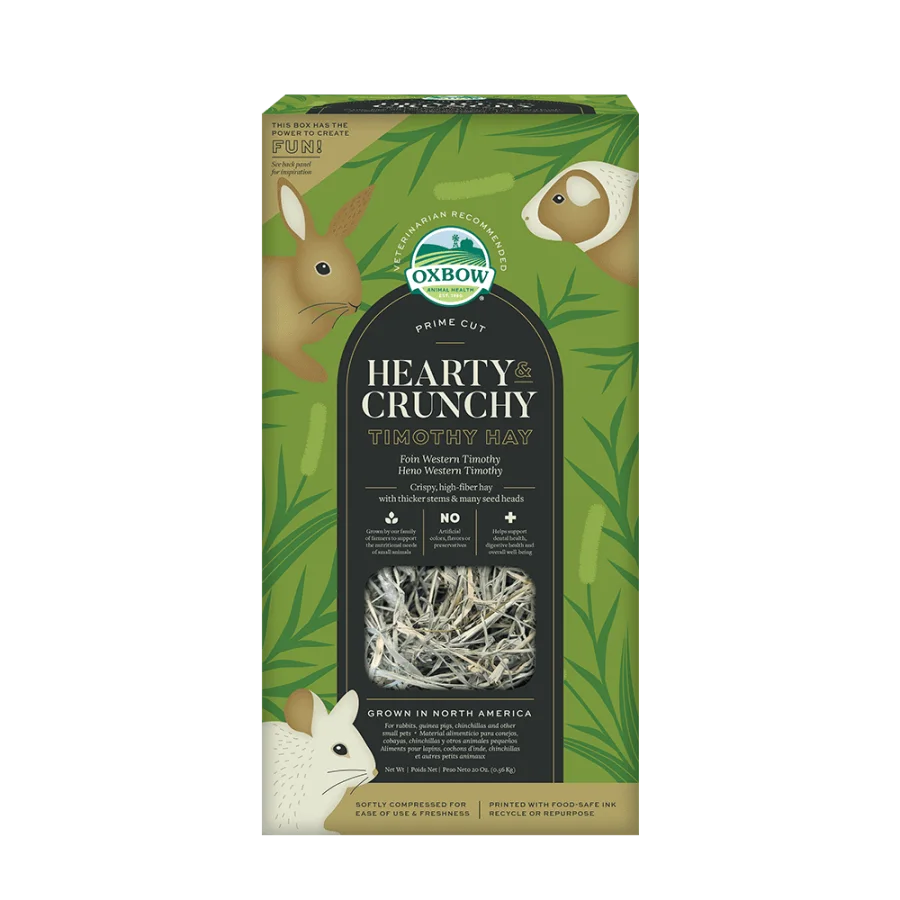
A coarse, stem-forward timothy grass hay offered for rabbits that prefer crunchier forage. The product is a distinct texture choice within Oxbow's Prime Cut line, not a claim that every rabbit should prefer first-cut-style stems.
Why we recommend it
A useful contrast to soft timothy when a rabbit enjoys sturdy stems and seed heads.
Pros
Cons
Best for
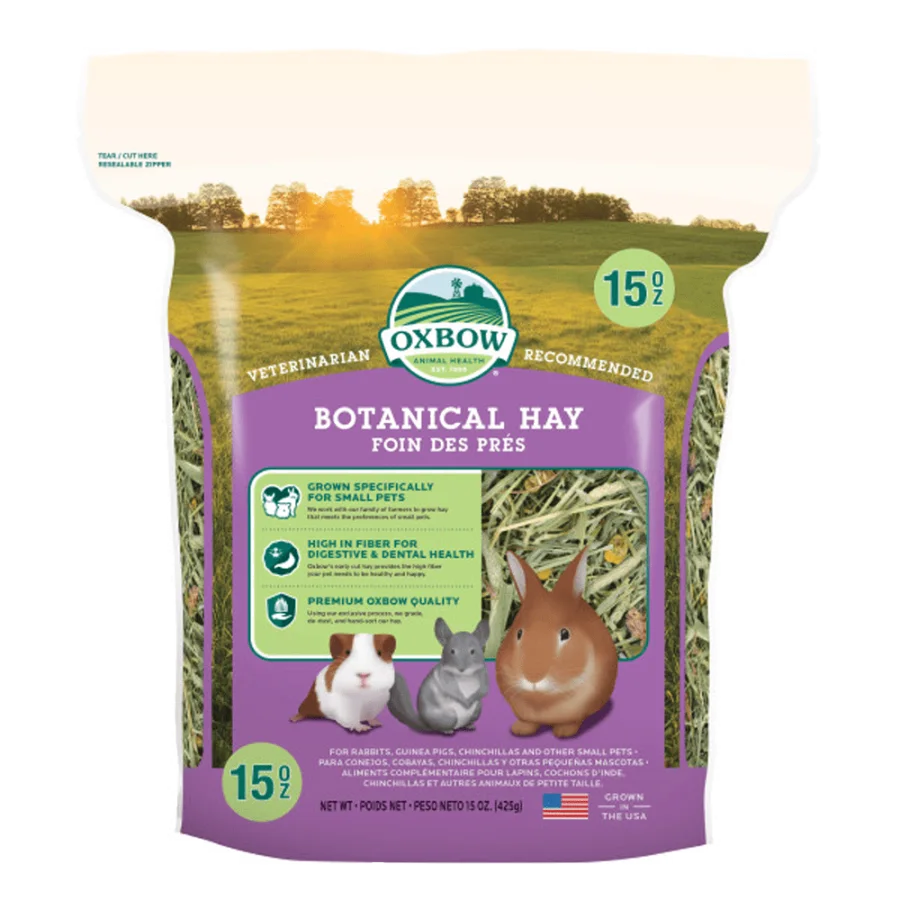
Western timothy grass hay blended with chamomile, lavender, lemon balm, and red-clover herbs. The verified 15-ounce package is best used to add aroma and variety alongside a rabbit's regular unlimited grass hay.
Why we recommend it
A clearly disclosed botanical blend for occasional forage rotation without fruit pieces.
Pros
Cons
Best for
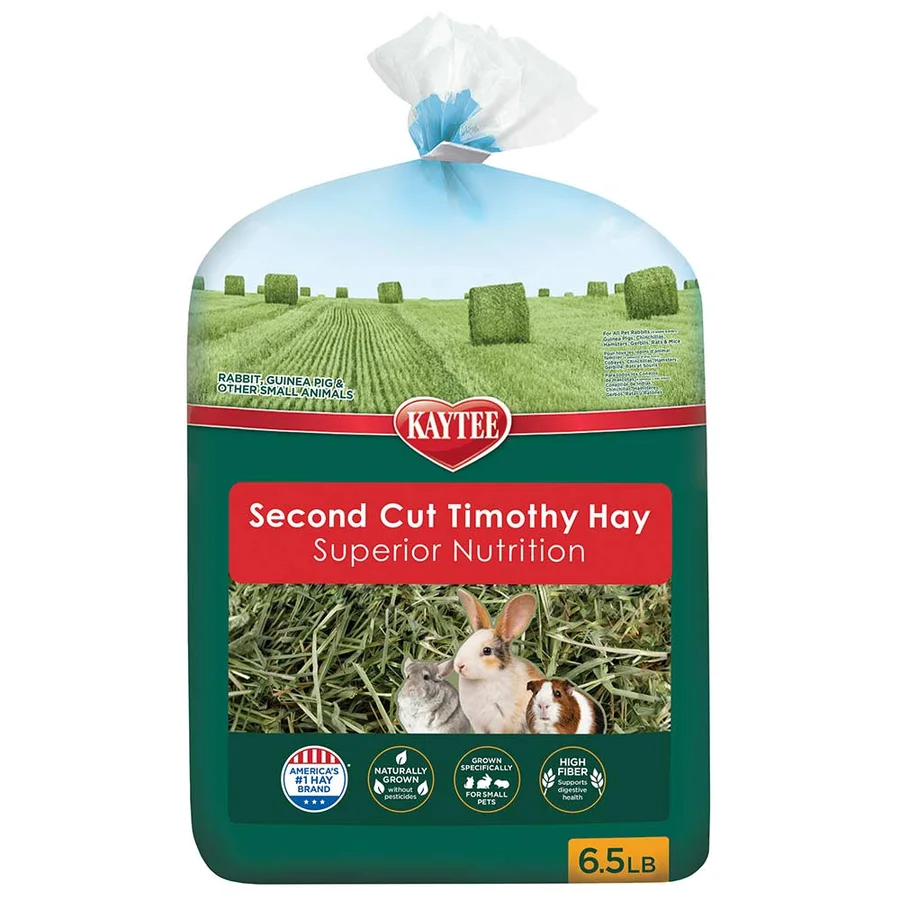
Long-strand second-cut timothy selected for a softer leaf-to-stem balance than Kaytee's first cut. It is everyday grass forage for rabbits and other small herbivores, with the same need for a freshness and moisture check on every bag.
Why we recommend it
A mainstream second-cut counterpart to Kaytee's coarser first-cut product.
Pros
Cons
Best for
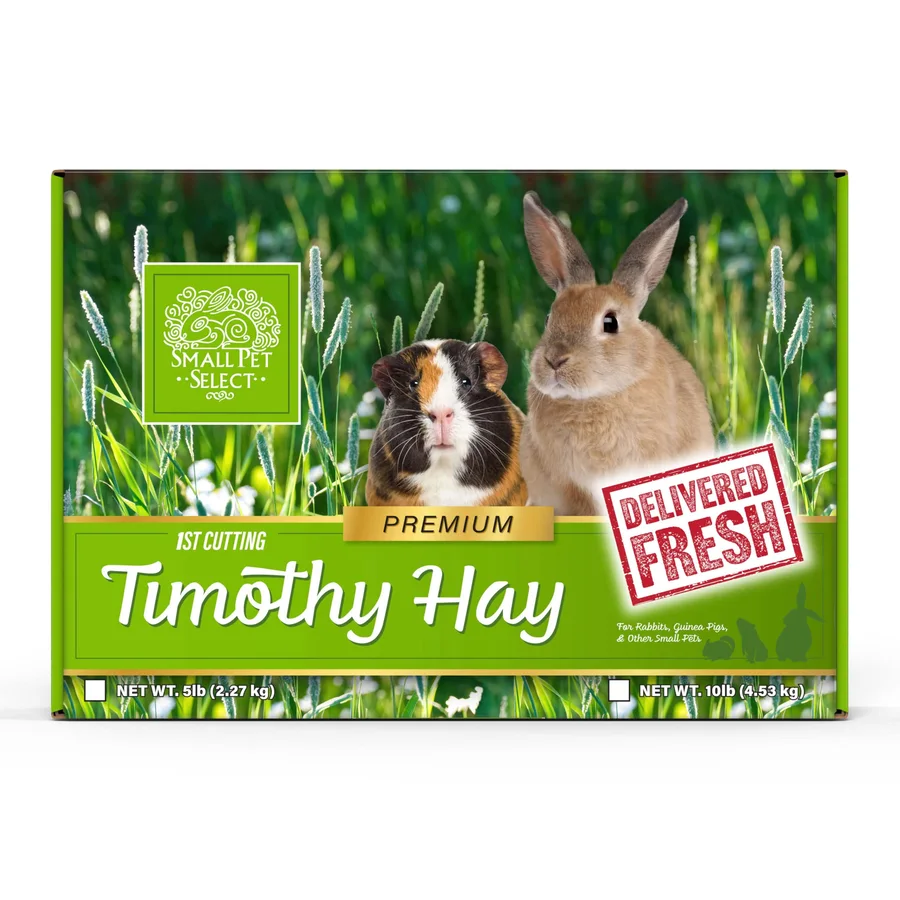
Coarse first-cut timothy with more stems and flower heads than later cuts, sold in 2-, 5-, 10-, 20-, and 40-pound boxes. The maker recommends dry, ventilated storage in the original box or another breathable container.
Why we recommend it
A stem-forward timothy with verified bulk formats and clear storage guidance.
Pros
Cons
Best for
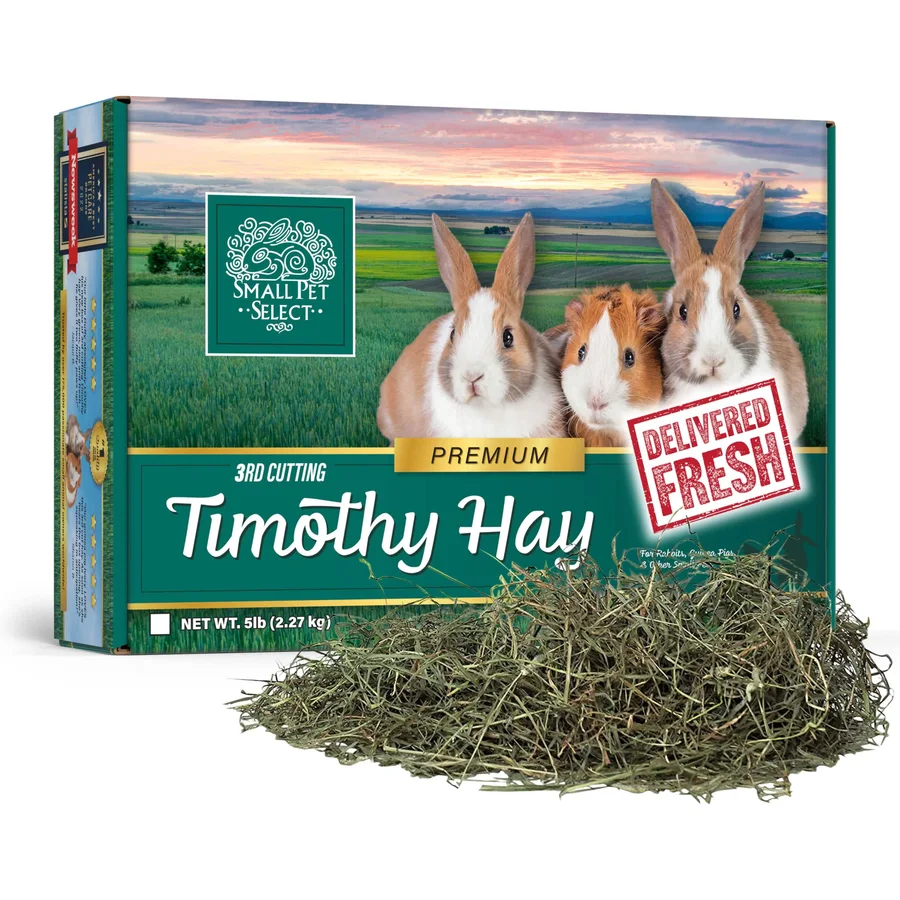
Very soft, leafy third-cut timothy with little stem, available in 2-, 5-, 10-, 20-, and 40-pound boxes. Small Pet Select describes it as richer than earlier cuts, so use individual veterinary guidance when weight or metabolic concerns matter.
Why we recommend it
The softest verified timothy option here, with box sizes from trial quantity to bulk.
Pros
Cons
Best for
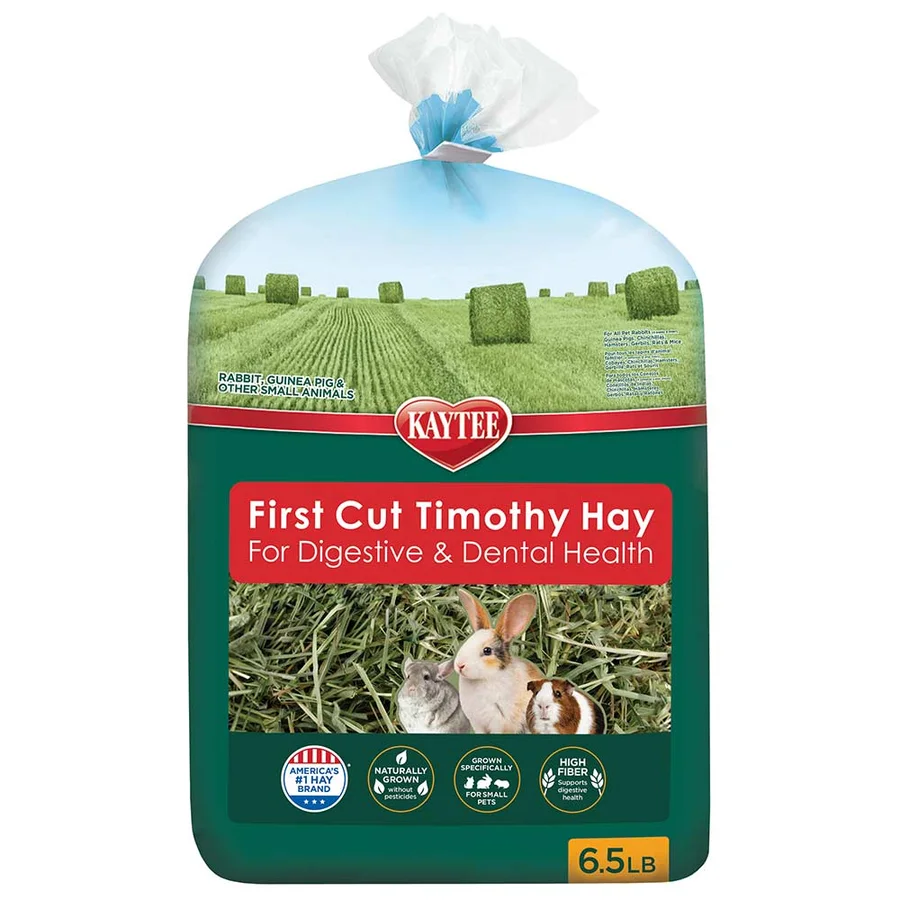
Long-strand first-cut timothy selected for a higher stem proportion and coarse texture. Kaytee states it is naturally grown without pesticides or artificial ingredients; inspect the actual bag because agricultural color and dust still vary.
Why we recommend it
A direct-manufacturer option for shoppers seeking first-cut texture through mainstream retail.
Pros
Cons
Best for
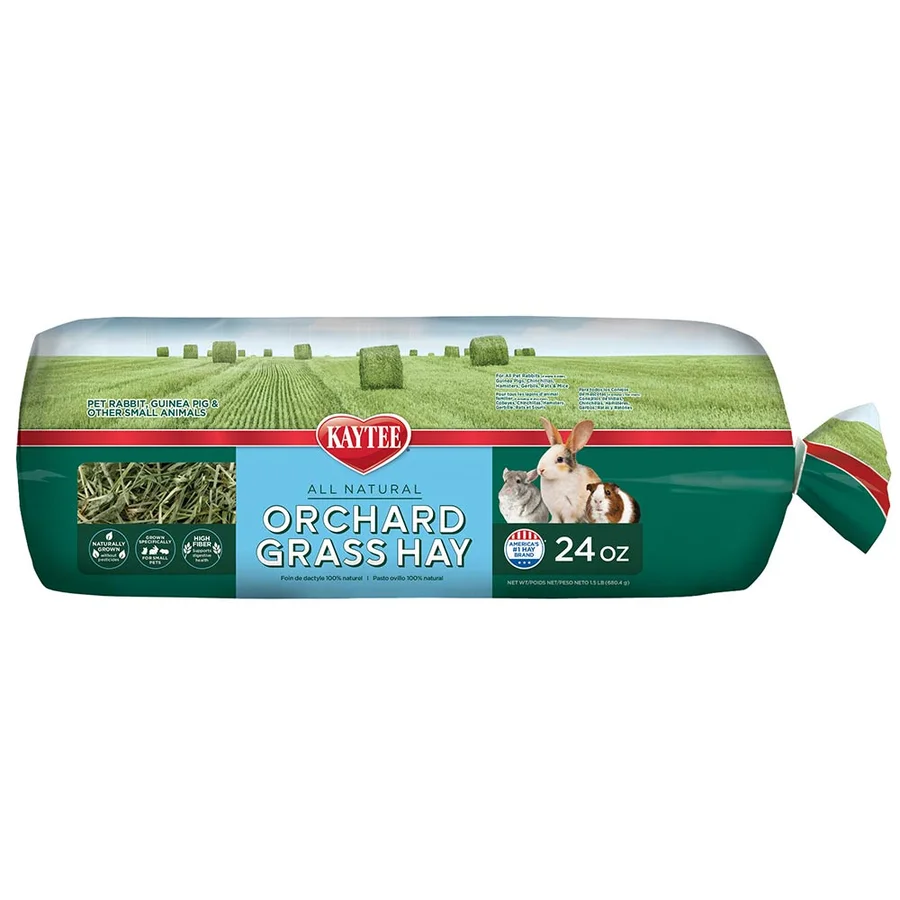
Straight orchard grass hay sold for rabbits and other small herbivores. Its softer, leafier material provides a non-timothy daily grass-hay option, though the bag should still be rejected if damp, moldy, or unusually dusty.
Why we recommend it
A mainstream orchard-only product with a stable direct manufacturer page.
Pros
Cons
Best for