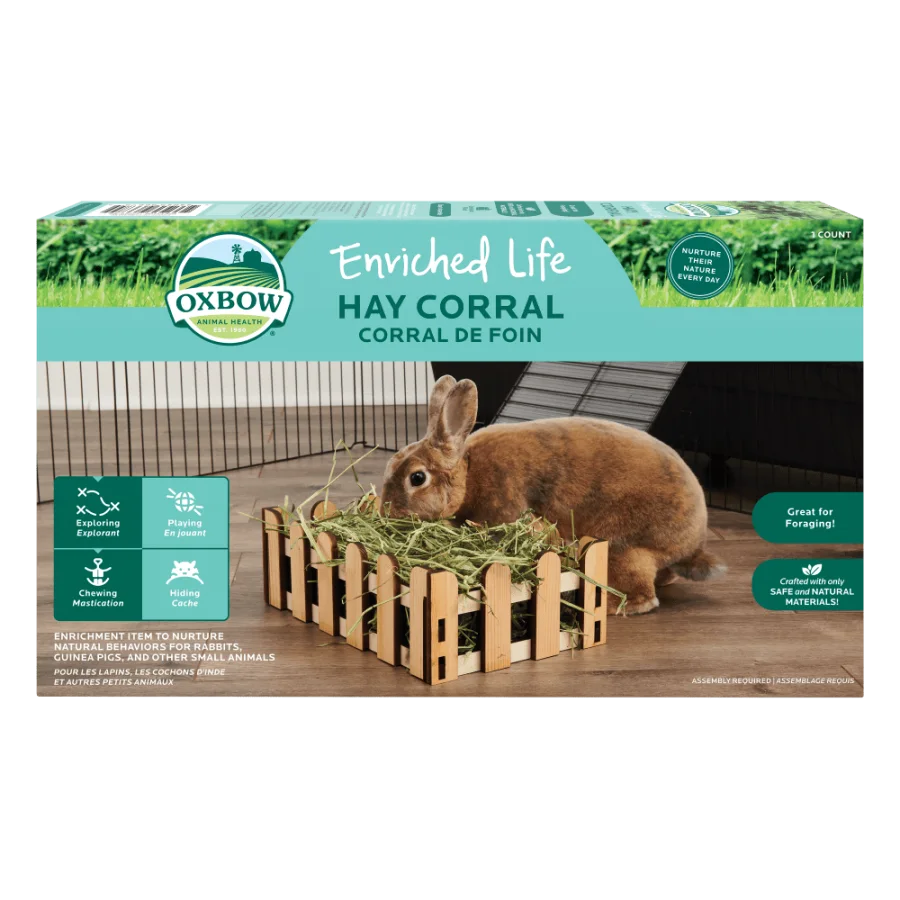
Oxbow Enriched Life Hay Corral
Choose the corral for freestanding placement, provided the wood stays dry and the rabbit cannot become trapped while climbing or feeding.

Compare three hay holders by feeding access, attachment, wood care, and the refill routine—not promises of mess-free feeding.
Last reviewed:
A rabbit hay feeder should make hay easier to reach, not harder to eat. This comparison separates a freestanding wooden corral, a mounted hay-and-food bin, and a mounted chewable feeder. Unlike a pellet bowl, a hay holder is not a portion-control tool: fresh hay needs to remain available around the clock. Start with the rabbit's eating posture and your litter-area layout, then decide whether containing some scatter is worth the extra cleaning and inspection. A loose hay pile is a valid alternative; none of these accessories is essential.
Some links on this page are affiliate links. We may earn a commission if you buy through them, at no extra cost to you. This never changes our research or which products we recommend.

Choose the corral for freestanding placement, provided the wood stays dry and the rabbit cannot become trapped while climbing or feeding.
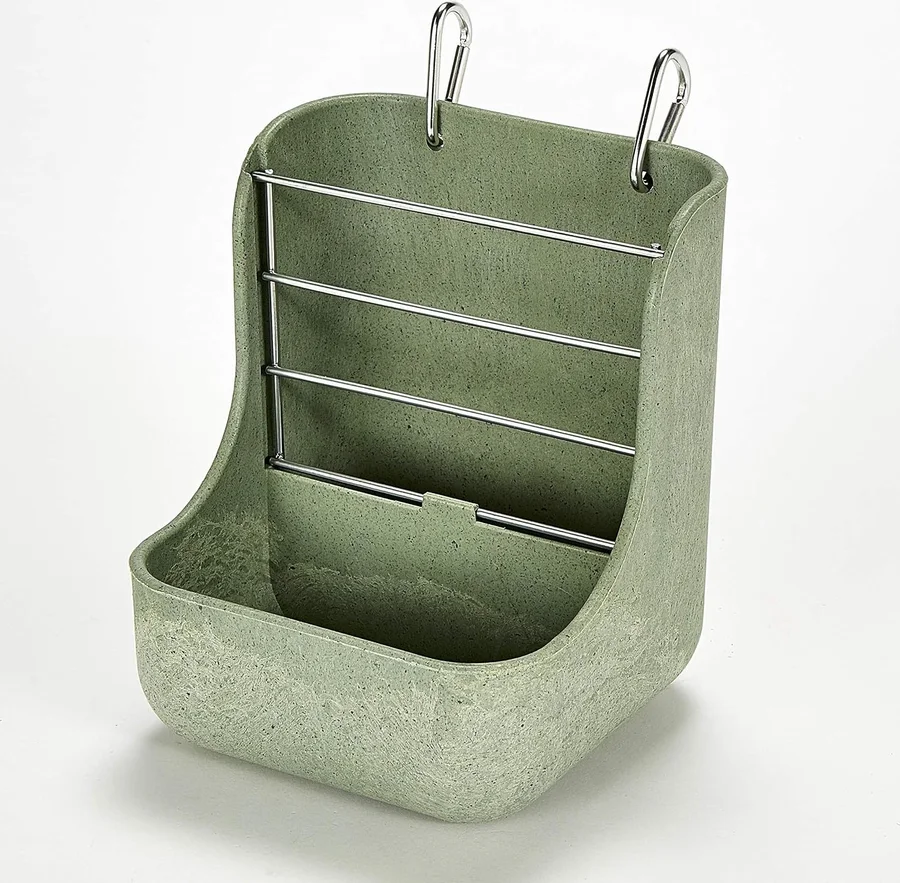
Choose the Kaytee bin for separate hay and measured-food compartments at a compatible mounted feeding station—not for an unverified price advantage.
Filter by feature:

Oxbow's untreated-wood Hay Corral can be placed wherever the rabbit eats hay, rather than requiring a bar-mounted feeding corner. It is a chewable holder, not a washable plastic bin. Check loaded stability, whether the rabbit climbs inside, and whether chewing creates unsafe gaps; discard damp or damaged wood.
Why we recommend it
The freestanding option for placing hay beside a litter tray without relying on compatible enclosure bars.
Pros
Cons
Best for

Kaytee documents separate hay and food compartments and included carabiner clips for hanging the Hay & Food Bin in a habitat. That makes it a compact mounted station, not an automatic hay dispenser. Verify the current attachment fit and feeding openings before use, keep pellets measured, and confirm the rabbit can pull hay without stretching or inserting its head.
Why we recommend it
The only selected feeder with manufacturer-documented separate hay and food compartments and included hanging clips.
Pros
Cons
Best for
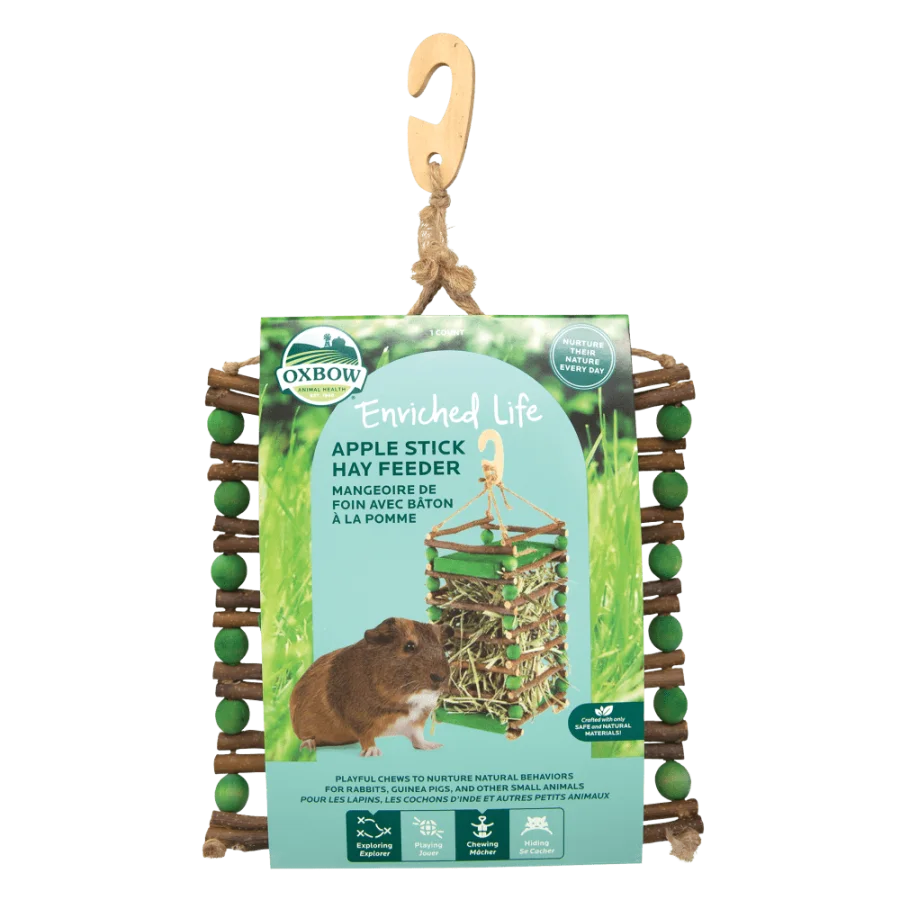
Oxbow specifies apple sticks and untreated wood for this habitat-attached hay feeder. It combines hay presentation with chewing enrichment, so its shape and openings can change in use. Treat it as an additional hay location rather than the only supply, inspect attachment hardware and worn sticks, and replace it if it becomes damp or damaged.
Why we recommend it
A mounted alternative to the freestanding corral when chewable enrichment matters more than easy washing.
Pros
Cons
Best for
Placement and hay access: A freestanding holder does not need pen bars, but it occupies floor space and must stay stable when nudged or climbed on. A mounted feeder can keep hay away from a wet floor, but requires compatible attachments and a low, comfortable feeding position. Watch the rabbit eat after installation. If pulling strands looks difficult, loosen the hay or offer it in a clean loose pile instead of expecting the rabbit to adapt.
Openings and climbing: Inspect every gap, exposed clip, sharp edge, and route onto or into the feeder. A head, jaw, or foot can become caught; an open top does not make a holder automatically safe. We have not verified opening measurements or tested entrapment resistance for these products. Avoid a setup that invites head insertion or climbing, and recheck after chewing or movement changes the gaps. Stop using a feeder that creates a trapping risk.
Cleaning versus chewable wood: Smooth, accessible surfaces generally make hay dust and residue easier to remove than porous timber, but we have not verified a dishwasher-safe or sterilizable option in this shortlist. Oxbow explicitly identifies untreated wood in both selected products. Keep it dry, remove soiled hay, and replace damaged, persistently dirty, or moldy parts rather than treating a chewable feeder like a washable bowl. Follow the exact maker's cleaning directions for the Kaytee bin rather than assuming its material tolerates soaking.
Capacity and multiple rabbits: No verified hay-weight capacity or hours-between-refills figure is available for this selection. Volume depends on hay cut and how tightly it is packed; stuffing it densely can reduce access. Provide several accessible hay locations for bonded rabbits so one cannot guard the only opening. Size your routine around consumption, not a claim that a bin lasts all day.
Refill routine: Check at least morning and evening and often enough between those checks that hay never runs out. Remove wet or soiled material, refresh the supply, and check hay remains reachable at the bottom of the holder. Keep hay available during washing. Reduced eating or fewer droppings warrants prompt advice from a rabbit-savvy vet, not just a different rack.
No. A clean loose hay pile can provide excellent access. Use a holder only if it improves your setup without reducing the rabbit's hay consumption or creating a trapping risk.
Freestanding holders offer placement flexibility but use floor space and can invite climbing. Mounted feeders require secure compatible bars or fittings and a comfortable feeding height. Observe the individual rabbit; neither design is universally safer.
Not automatically. A gap can catch a head, jaw, or foot, while a larger opening or open top may invite entry. Exact opening safety was not tested here. Check the rabbit's size, behavior, attachments, and changing gaps after chewing; use loose hay if the setup is questionable.
Do not assume so. Untreated wood is porous and can remain damp or retain contamination. Follow the maker's care directions, keep it dry, and replace damaged or persistently soiled wood. A chewable-wood tag is not an easy-clean claim.
There is no verified two-rabbit capacity rating for these products. Offer multiple hay locations with room for both rabbits to eat comfortably, and refill frequently enough that neither runs out. More stored hay does not solve a single guarded feeding opening.
Before hay runs out or becomes inaccessible, not on a fixed once-a-day schedule. Check morning and evening at minimum, more often as needed, remove wet hay, and keep an alternative supply available during cleaning.
Last reviewed:
This is a source-based comparison, not hands-on testing. We selected three existing rabbit-feeders catalog products by explicit ID and checked their manufacturer product pages for placement, attachment, compartment design, and documented wood construction. Oxbow's hay-feeding guidance and Rabbit.org's diet guidance inform the unrestricted-access advice. Tags describe verified formats; tiers express fit for those specific features, not measured feeding performance. We did not test cleaning, stability, chewing durability, opening safety, or hay intake, and do not infer exact capacity, refill intervals, current prices, or popularity. The dedicated Ware rack was not added simply to lengthen the list.