Lucky dressed in a rabbit costume

Rabbit Litter Boxes: Room to Turn, Comfortable Entry

Compare four named pans and litter systems by standing space, foot contact, cleanup and refill commitments—not a one-size-fits-all winner.

Last reviewed:

Overview

About Rabbit Litter Boxes

A useful rabbit litter box is a comfortable place to stand and eat hay, not merely a container that catches droppings. The footprint on a shop page may include a rim, sloped walls or a feeder, so it does not establish usable floor area. Start with a roomy, solid-bottom pan and rabbit-appropriate litter; consider raised waste-separation systems only after checking the individual rabbit's feet, movement and willingness to enter. This shortlist includes two no-grate alternatives and two systems with important limitations.

Some links on this page are affiliate links. We may earn a commission if you buy through them, at no extra cost to you. This never changes our research or which products we recommend.

Our Top Picks

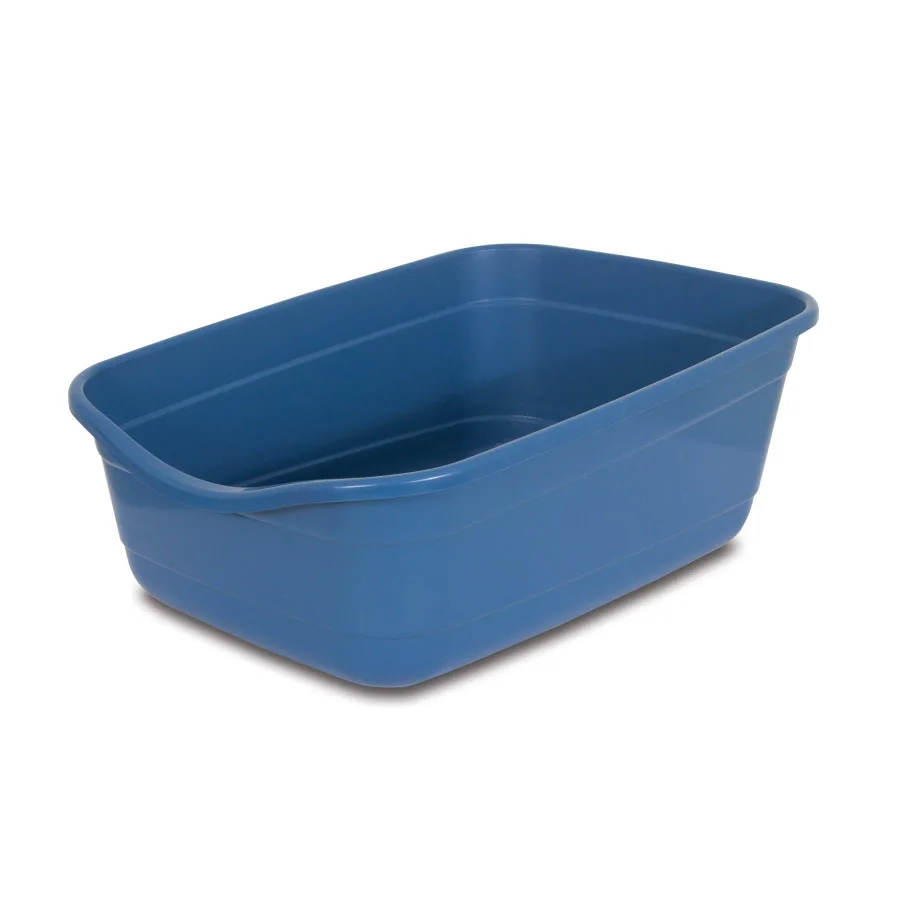
Petmate Giant Litter Box product image
Large no-grate alternative

Petmate Giant Litter Box

Editorial large-pan candidate: check the actual base and threshold before relying on it for a large rabbit or bonded pair.

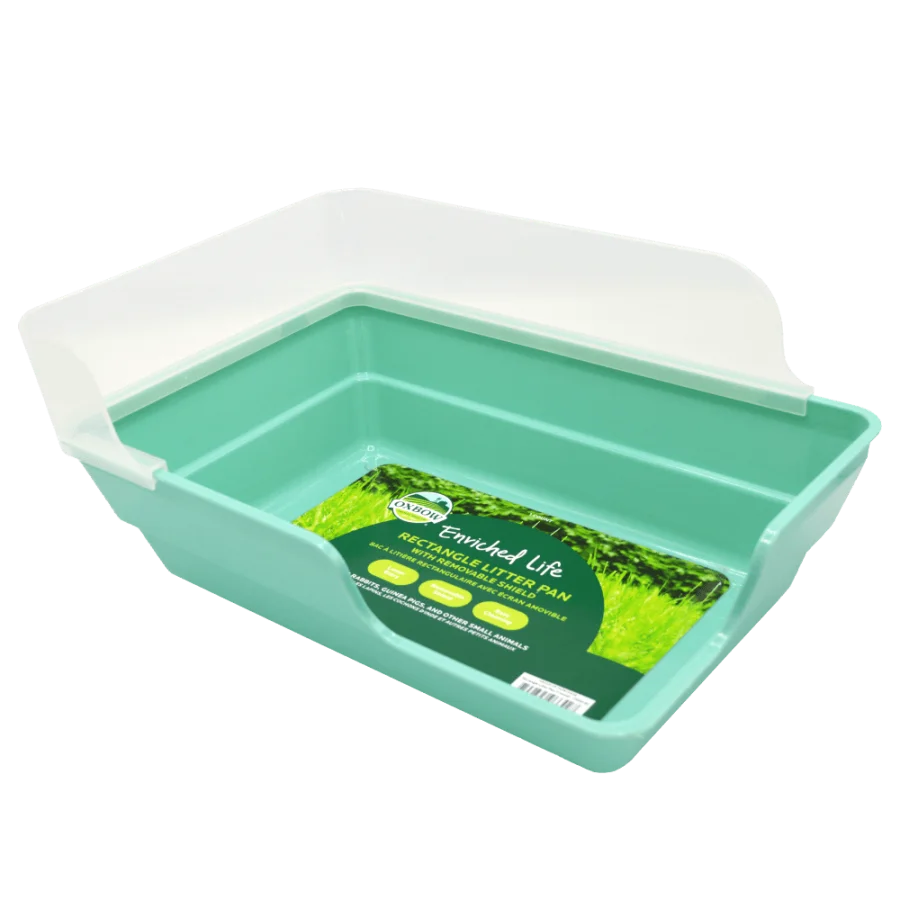
Oxbow Enriched Life Rectangle Litter Pan with Removable Shield product image
Lower-entry no-grate candidate

Oxbow Enriched Life Rectangle Litter Pan with Removable Shield

Editorial lower-entry candidate: a removable shield and solid floor keep the setup simpler, provided the pan is roomy enough.

Buying Guide

Solid pans versus perforated litter systems

Compare the surface the rabbit actually stands on, not just where the waste ends up.

Solid-bottom open panOxbow Rectangle or Petmate Giant with appropriate litterBest forA simple baseline with a rabbit-specific size and entry checkProsNo holes underfoot; flexible bedding and refill choicesConsUrine-soaked patches need prompt removal; litter and hay can scatter
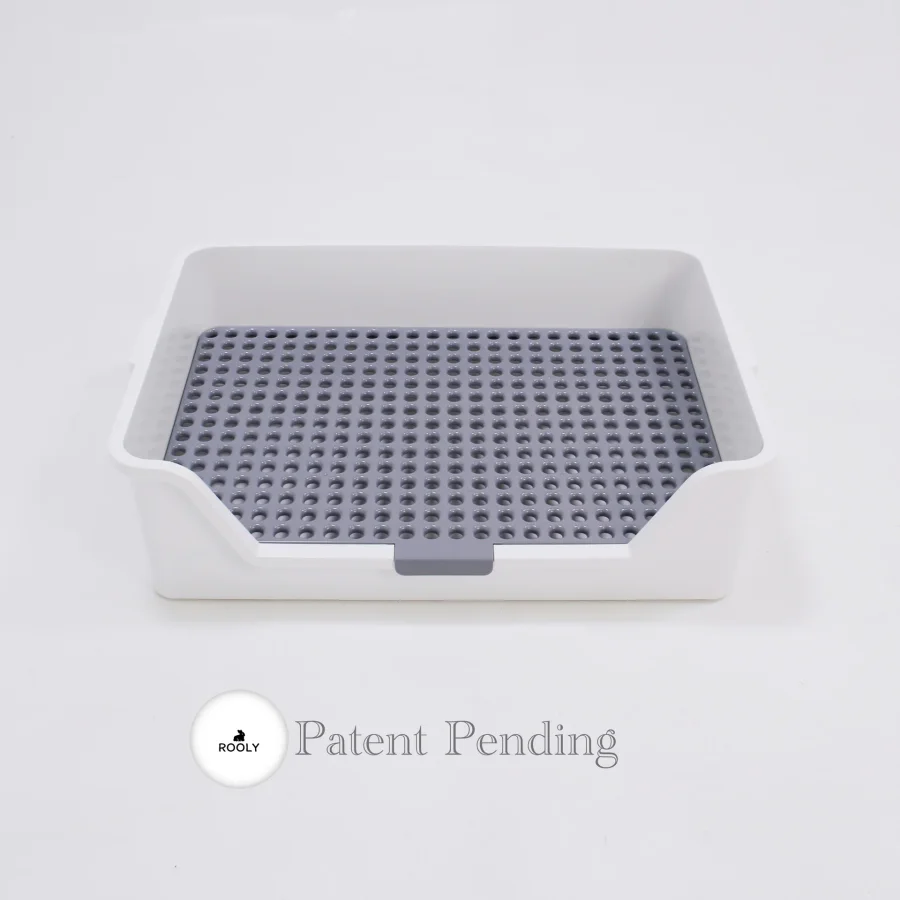
Reusable plastic grateROOLY with its specified grate variantBest forConditional comparison for healthy mobile adultsProsPublished opening sizes; waste collected below standing levelConsFoot fit, pressure and platform access need assessment; grate underside needs scrubbing
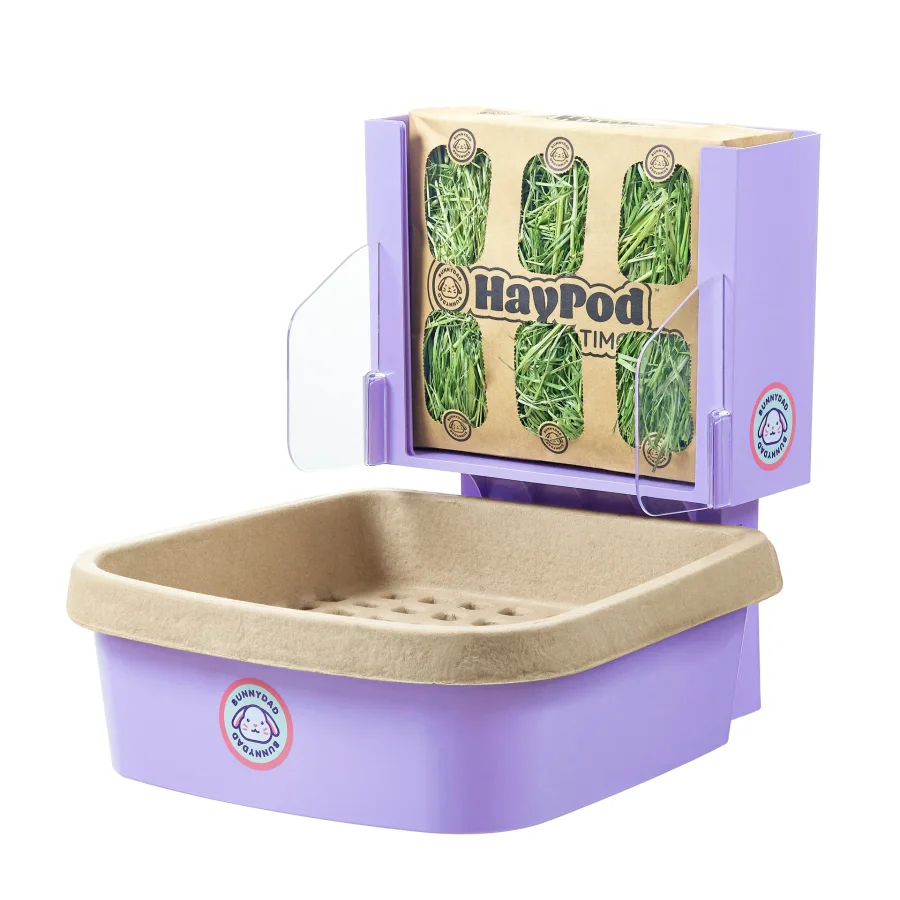
Disposable perforated trayBunnyLet Waffle Tray and fitted liner bagsBest forOwners accepting an ongoing fitted-refill workflowProsReplaceable waste-contact componentsConsRecurring cost and stock dependency; paper is not proof against sore hocks

A grate may separate some droppings from feet, but it also changes pressure, footing and access. A no-grate pan trades that separation for continuous bedding and more direct spot-cleaning.

Measure the usable base first. Ask for the flat inside width and depth at standing level, not the rim-to-rim dimensions. Reserve space for the hay that will actually occupy the box. The rabbit should be able to enter, turn and sit naturally without its hindquarters over the edge; an impressive external footprint is not enough if walls taper inward.

Treat entrance height as a separate measurement. A low-looking cutout may still require climbing onto a raised platform. Watch for hesitation, sliding or an awkward landing, and provide secure traction immediately outside the pan. An elderly rabbit or one that suddenly stops using its box needs a health assessment, not simply a taller mess-containment shield.

For bonded pairs, judge the setup with both rabbits present. Both need comfortable space and an unblocked way out; do not assume a manufacturer's two-rabbit claim covers every body size. Offer another accessible box if one partner blocks entry, monopolizes hay or crowds the other. Two undersized boxes do not solve the lack of an individually usable pan.

Compare the entire cleanup loop. Can you lift the filled box, empty it without spilling, and fit it in your washing area? A grate needs its holes, underside and supports cleaned as well as the reservoir. A removable shield creates additional joints to check. Remove wet litter and soiled hay promptly, inspect at least daily, and clean more often when output or sharing makes that necessary. Rinse cleaning residues and dry the pan before refilling; never mix cleaning chemicals.

Budget ongoing supplies separately from the box. Ordinary pans need rabbit-appropriate litter and replacement hay; ROOLY still needs collection material and cleaning below its grate. BunnyLet adds fitted Waffle Trays and liner bags. Estimate monthly cost from your observed replacement rate, not advertised seconds-per-clean claims. Keep bags and absorbent pads inaccessible to chewing, and replace any damaged plastic.

Filter by feature:

Oxbow Enriched Life Rectangle Litter Pan with Removable Shield product image
Lower-entry no-grate candidate

Oxbow Enriched Life Rectangle Litter Pan with Removable Shield

No-Grate PanLower Entry DesignMess Containment

Oxbow identifies a lower entry and removable shield on this rectangular pan. Its open, no-grate format lets you choose the litter and keep the standing surface visible. The official text does not establish a usable interior measurement or numerical entry height, so do not assume the rabbit branding guarantees room for a large adult or a pair.

Why we recommend it

An editorial starting point for a straightforward no-grate setup when the actual interior and threshold fit the rabbit.

Pros

  • Removable shield provides access for cleaning
  • Lower entry is an explicit manufacturer feature
  • No fitted disposable tray system required

Cons

  • Usable floor area and entry height need confirmation
  • Not automatically large enough for bonded pairs
  • Wet litter remains underfoot until removed

Best for

Owners comparing lower-entry open pansRabbits that fit comfortably after a measured size check
Petmate Giant Litter Box product image
Large no-grate alternative

Petmate Giant Litter Box

No-Grate PanMess ContainmentLarge Format

An oversized open cat pan repurposed here as a rabbit-box candidate, not as manufacturer-certified rabbit equipment. Petmate's official partner page describes high sides, a sloped entry and a rim for carrying. A broad open pan can leave more uninterrupted standing room than a compact corner tray, but check the narrower base and entrance rather than buying from the word Giant.

Why we recommend it

Worth measuring when smaller rabbit-branded pans leave too little room for turning or sharing; it avoids a standing grate.

Pros

  • Open solid-bottom format
  • High sides help contain scatter
  • No proprietary waste-separation refills

Cons

  • Cat-oriented entry is not a verified low-access rabbit entrance
  • Bulky pan needs a suitable washing area
  • Pair suitability depends on interior space and behavior

Best for

Large-pan comparisonsMobile rabbits needing an open no-grate layout
ROOLY Litter Box product image
Large grated system—conditional

ROOLY Litter Box

Raised Waste SeparationMess ContainmentLarge Format

ROOLY lists an overall 26.5-inch width, 19-inch depth and 7.5-inch height, with the heightened grate 3.5 inches above the floor. Those are not measured standing-area or entrance dimensions. The maker lists small openings of 0.51 by 0.59 inches and large openings of 0.59 by 1.38 inches; these are variants of one product, not separate picks. It excludes rabbits younger than 10 weeks and asks owners to assess individual fit.

Why we recommend it

Included to make the large-format grated option transparent, not to endorse the manufacturer's grate recommendation for every rabbit.

Pros

  • Manufacturer publishes grate opening sizes
  • Large overall footprint to evaluate for sharing
  • Manufacturer allows different bedding choices below the grate

Cons

  • Avoid grates for sore hocks or mobility problems unless a rabbit-savvy vet gives individualized advice
  • Large outside dimensions do not prove two rabbits can stand comfortably
  • Grate openings and underside add cleaning work

Best for

Owners specifically evaluating a raised system for healthy, mobile adult rabbits
BunnyDad BunnyLet Rabbit Litter Box + Hay Feeder System product image
Fitted-refill system—conditional

BunnyDad BunnyLet Rabbit Litter Box + Hay Feeder System

Raised Waste SeparationDedicated Refills

The BunnyLet product page describes paper-pulp Waffle Trays that allow waste to fall through, plus custom-fitted bamboo-charcoal liner bags. Paper pulp does not make a perforated standing platform equivalent to soft continuous bedding. Assess entrance height, tray stability, remaining standing area with hay present and access to liner edges before choosing this more integrated cleanup approach.

Why we recommend it

A comparison option for owners willing to manage fitted consumables; convenience claims do not establish foot safety or a fixed cleaning interval.

Pros

  • Clearly identified tray-and-liner refill system
  • Integrated hay-feeder format
  • Removable consumables provide a defined waste-handling workflow

Cons

  • Ongoing Waffle Tray and liner supply costs
  • Perforated platform is not a default for sore hocks or limited mobility
  • Exposed liner material must stay out of chewing reach

Best for

Households comparing dedicated refill systems with ordinary litter pans

Frequently Asked Questions

Can I use a large cat litter pan for rabbits?

Yes, a roomy open solid-bottom cat pan can be a candidate, but cat branding does not establish rabbit suitability. Check the actual base, entrance height and ability to turn with hay in place. Use rabbit-appropriate litter rather than assuming cat litter is suitable. The Petmate Giant is included as a no-grate alternative, not a universal low-entry solution.

Sources: Petmate Giant Litter Box Petmate, Arthritis in Rabbits: low-front trays and non-slip access Rabbit Welfare Association & Fund
How large should a litter box be for a bonded pair?

There is no single measurement that fits every pair. Evaluate usable standing area with both rabbits and the hay present; neither should need to crowd the other or block the exit. ROOLY's published overall footprint is not proof of usable pair space. Add another accessible box if access is contested.

Does a grate mean the box needs less cleaning?

Not necessarily. Droppings that fall through still accumulate underneath, urine still needs absorbing or removal, and holes can trap hay and waste. Inspect daily and clean the reservoir, platform and joints. Convenience does not outweigh foot comfort; avoid grates for sore hocks or mobility problems unless your vet advises otherwise for that rabbit.

Are BunnyLet Waffle Trays a no-grate option?

They are paper-pulp trays, but the maker describes holes that allow waste to fall through. We therefore compare BunnyLet as a perforated standing-surface system, not as a continuous no-grate bedding pan. Include fitted trays and liner bags in your ongoing supply budget.

What if my rabbit stops entering a previously suitable box?

Check for a slippery approach, a wet surface, a blocked entrance or a partner guarding the box. Stiffness, limping, soiling or painful feet warrant a rabbit-savvy veterinary assessment. A low-front no-grate tray may help access, but it does not treat the underlying condition.

Sources: Arthritis in Rabbits: low-front trays and non-slip access Rabbit Welfare Association & Fund, Sore Hocks: surfaces and warning signs Rabbit Welfare Association & Fund
Methodology

How We Reviewed This

Last reviewed:

Desk research reviewed on September 10, 2026. We checked first-party product pages for four distinct products and RWAF guidance for foot health and accessible trays. ROOLY grate sizes and bundles are not counted as additional products. Dimensions are identified as external where that is all the maker supplies; unverified usable areas, prices, review scores and cleaning-time claims are omitted. These are editorial use-case comparisons, not hands-on tests, veterinary endorsements, popularity rankings or a claim that any pan fits every rabbit.

Related categories

Guides that help with this decision