Premium Choice
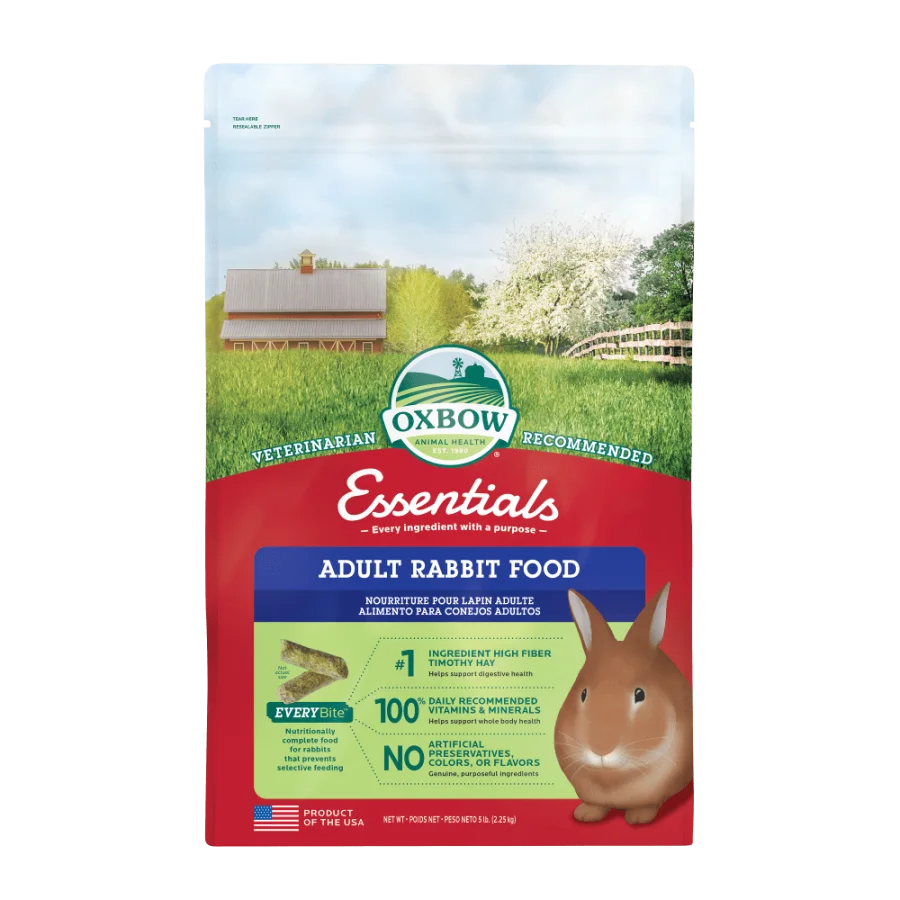
Oxbow Essentials Adult Rabbit Food
Oxbow Essentials Adult Rabbit Food is the clearest premium reference pellet for healthy adults because it is plain, widely available, and easy to replace consistently.
Compare products using researched specifications, features, and retailer information.
Last reviewed:

Overview
Rabbit pellets are a supplement, not the whole diet: most healthy adult rabbits do best with unlimited grass hay, measured plain pellets, and fresh greens. These picks focus on well-known pellet lines with clear use cases such as adult timothy formulas, young-rabbit alfalfa formulas, soy-free options, or larger-bag formats for multi-rabbit homes. Rather than naming one universal best food, we looked for products that fit common husbandry scenarios and that are easy to compare by ingredient style, bag format, and availability.
Oxbow Essentials Adult Rabbit Food is the clearest premium reference pellet for healthy adults because it is plain, widely available, and easy to replace consistently.
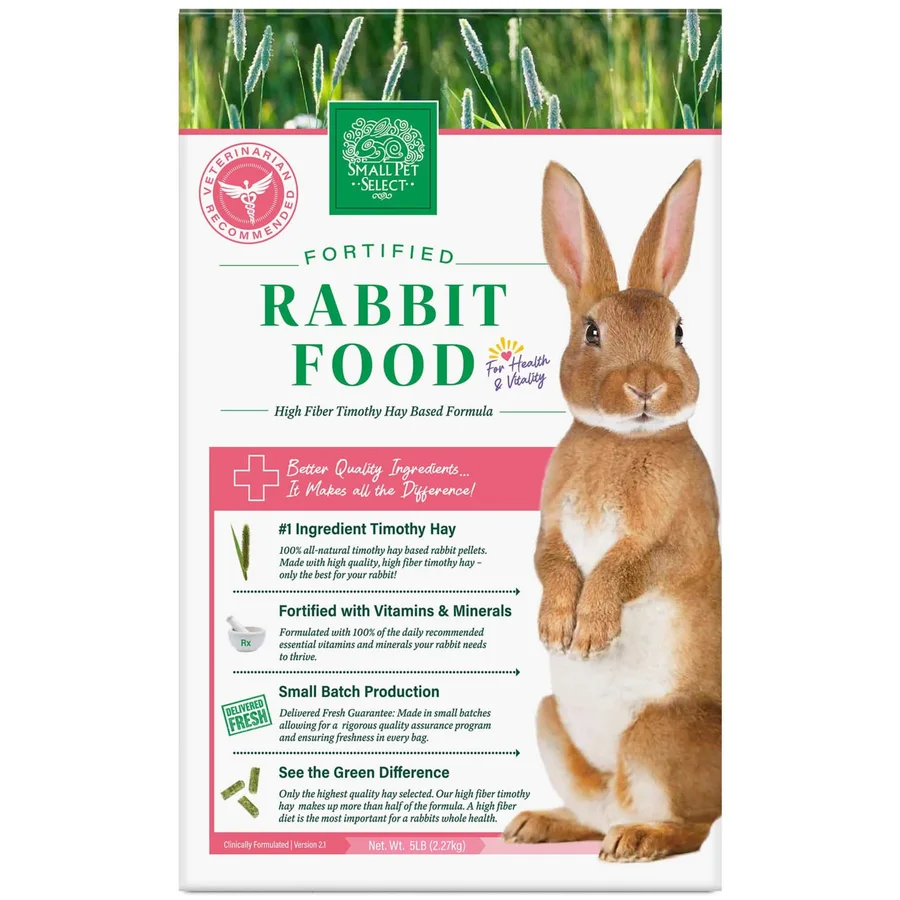
Small Pet Select Adult Rabbit Food Pellets make sense for homes that use pellets steadily and want a rabbit-focused brand in practical online bag sizes.
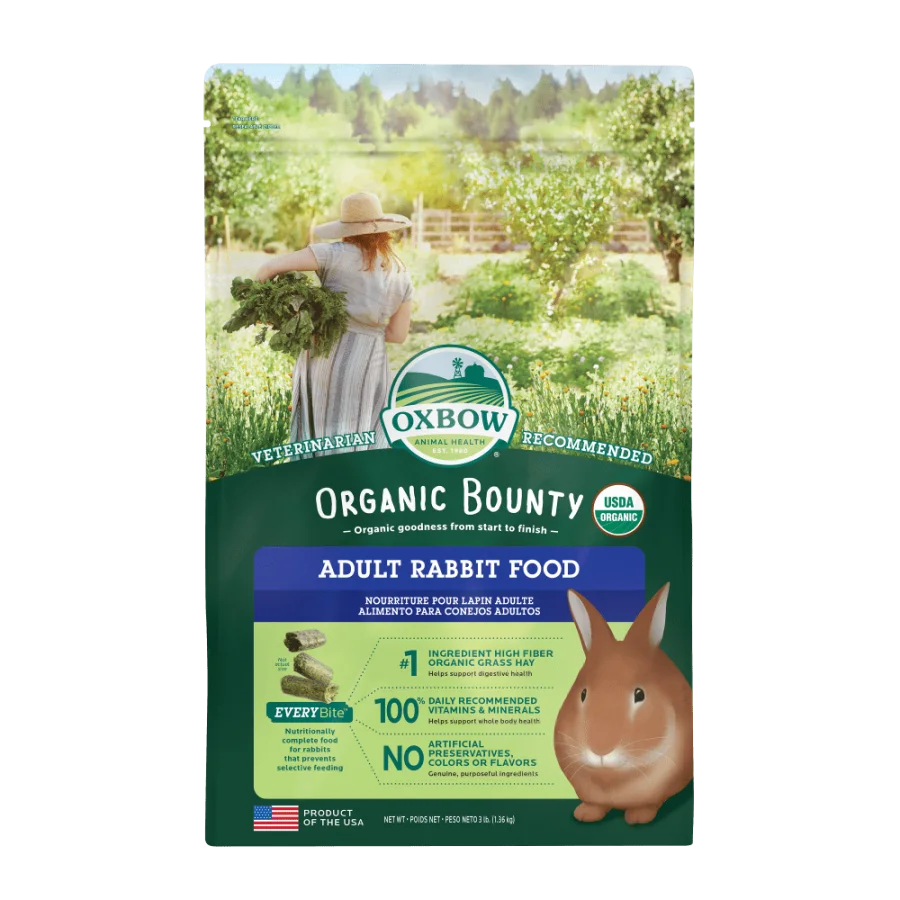
Oxbow Organic Bounty is a clearly documented uniform adult pellet for households specifically seeking certified-organic ingredients.
Add your pet for personalized picks.
Loading pet details...
Filter by feature:
A plain adult-rabbit pellet line built around timothy grass meal and sold in several bag sizes through veterinary and pet retailers. The uniform pellets help limit selective feeding compared with seed-and-colored-piece mixes, but portions still need to stay measured because hay should remain the main calorie source. Ingredient percentages and bag art can change, so check the current label if your rabbit has a veterinary diet plan.
Why we recommend it
A dependable reference choice for healthy adults that need a widely available plain pellet instead of a novelty mix.
Pros
Cons
Best for
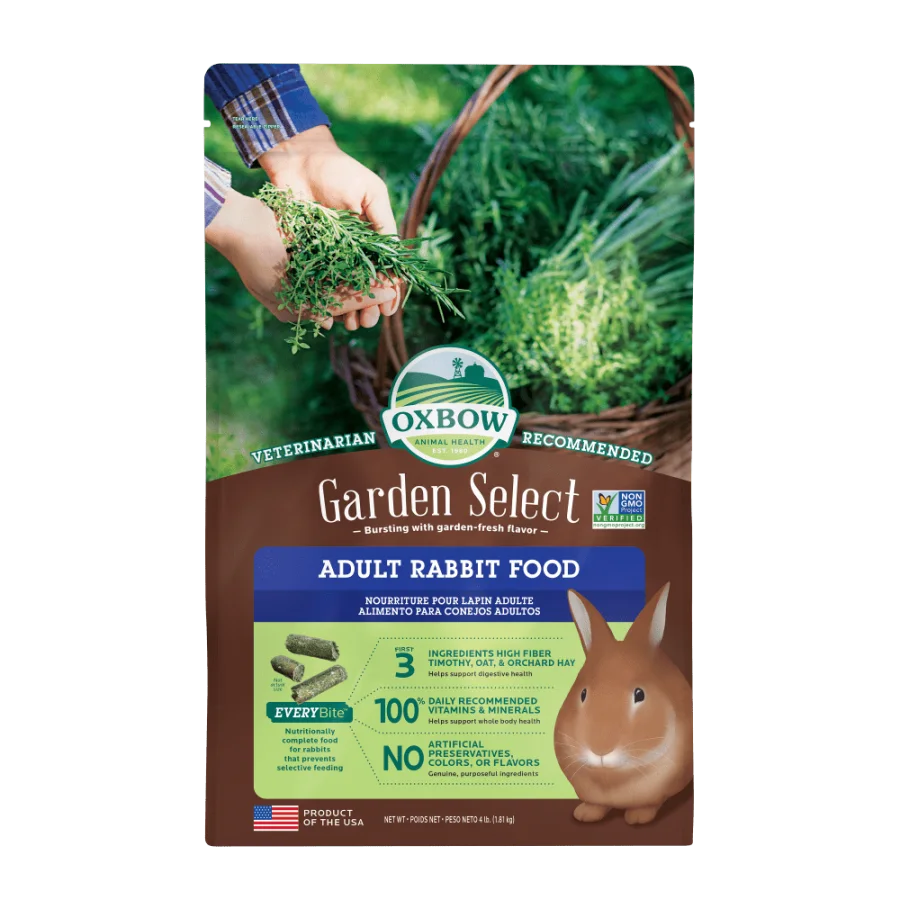
An adult pellet line marketed with garden-inspired ingredients alongside grass-hay fiber. It stays in a uniform pellet format rather than a muesli mix, which can be useful for rabbits that pick around blended feeds. Package size availability varies by retailer, so confirm the current bag and transition slowly if changing from another pellet.
Why we recommend it
Useful for owners who want an adult pellet from a mainstream rabbit brand but prefer the Garden Select line over the standard Essentials bag.
Pros
Cons
Best for
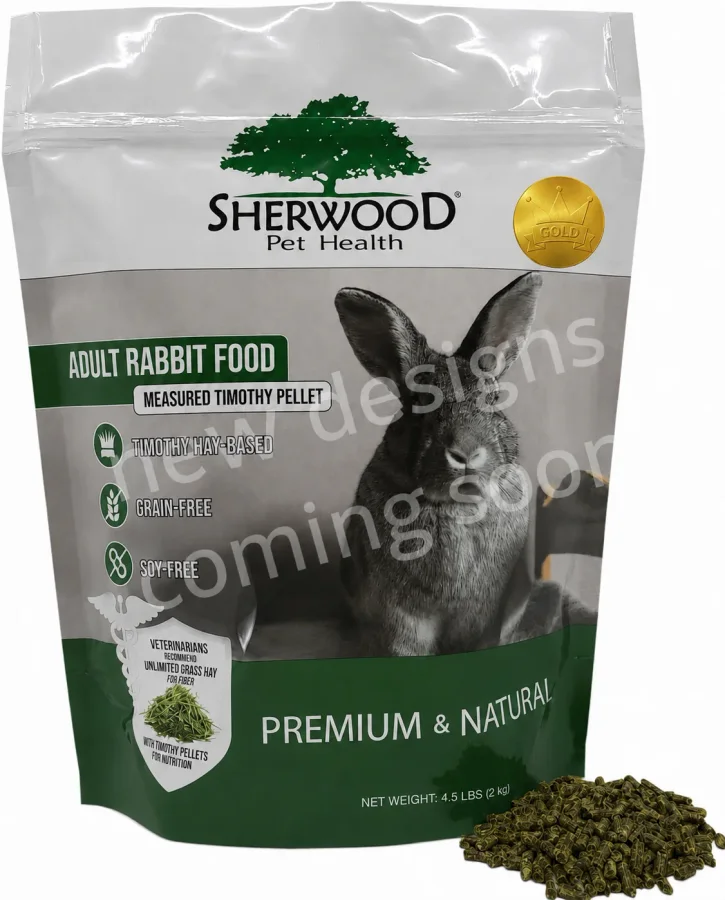
A premium adult formula sold online in plain pellet form and often chosen by owners wanting a soy-free line. Sherwood has multiple adult formulas and feeding approaches, so double-check the exact listing and instructions before reordering. As with any rich pellet, it works best when the rabbit is already eating abundant hay and passing normal droppings.
Why we recommend it
Best suited to adults whose caregivers specifically want a soy-free specialty pellet and are comfortable ordering online.
Pros
Cons
Best for
A timothy-based adult pellet sold mostly through e-commerce and commonly offered in medium to large bags. The line is straightforward for households that want a simple pellet without colorful extras, but freshness and storage matter more when ordering larger sizes. Confirm the current bag size and use-by guidance on arrival.
Why we recommend it
A strong value choice for homes that go through pellets steadily and want a rabbit-centric brand without paying for the smallest bags repeatedly.
Pros
Cons
Best for
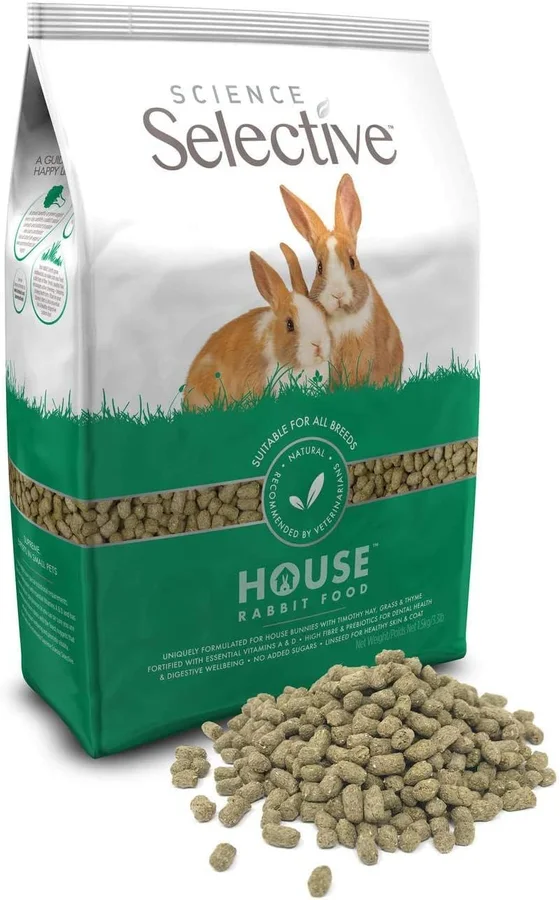
A uniform adult rabbit pellet from the Selective family, sold in bag sizes that work for single- and multi-rabbit homes. Because the pellets are all one shape, rabbits are less able to sort out preferred pieces than with mixed-texture feeds. The exact 'House Rabbit' wording and package graphics can vary by market, so compare the current label before switching.
Why we recommend it
A good fit for owners who want a uniform pellet from a long-established small-animal food brand and need a smaller starter bag before committing in bulk.
Pros
Cons
Best for
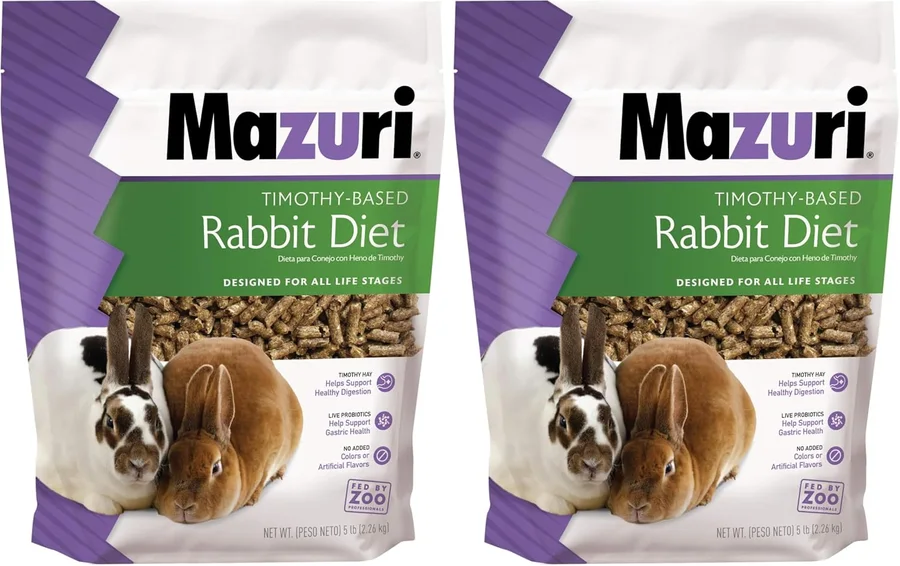
A timothy-based pellet with a strong following among breeders, rescues, and multi-rabbit households that buy larger bags. The larger pack sizes can be practical when a home goes through pellets steadily, but they need cool, dry storage after opening. Verify the current formula and bag size because Mazuri periodically refreshes packaging.
Why we recommend it
Most compelling for higher-volume homes that want a straightforward timothy pellet and already rotate through larger bags quickly.
Pros
Cons
Best for
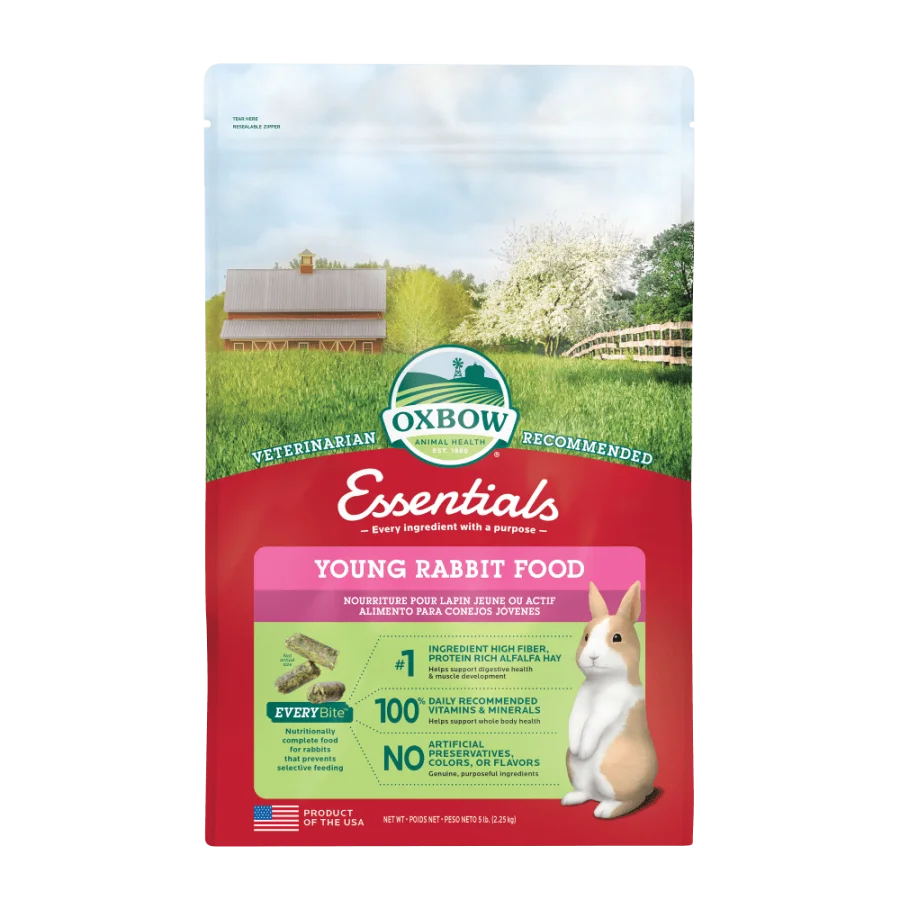
A younger-rabbit formula built around alfalfa and intended for growth, pregnancy, or nursing rather than routine healthy-adult feeding. The pellets are uniform and easy to portion, but adult rabbits usually need a different calcium and calorie profile. Confirm the life-stage on the bag because Oxbow's adult and young-rabbit lines look similar on shelf.
Why we recommend it
The clearest mainstream pick when a growing rabbit genuinely needs a young-rabbit pellet rather than an adult maintenance formula.
Pros
Cons
Best for
A certified-organic adult maintenance pellet with organic grass hay as the first listed ingredient and a uniform shape that prevents selective feeding. It is intended as a measured supplement to unlimited grass hay, not a replacement for hay or fresh water. Availability is more specialized than Oxbow Essentials, so transition gradually and confirm the current label.
Why we recommend it
A credible specialty alternative for adult-rabbit households that specifically prioritize a certified-organic uniform pellet.
Pros
Cons
Best for
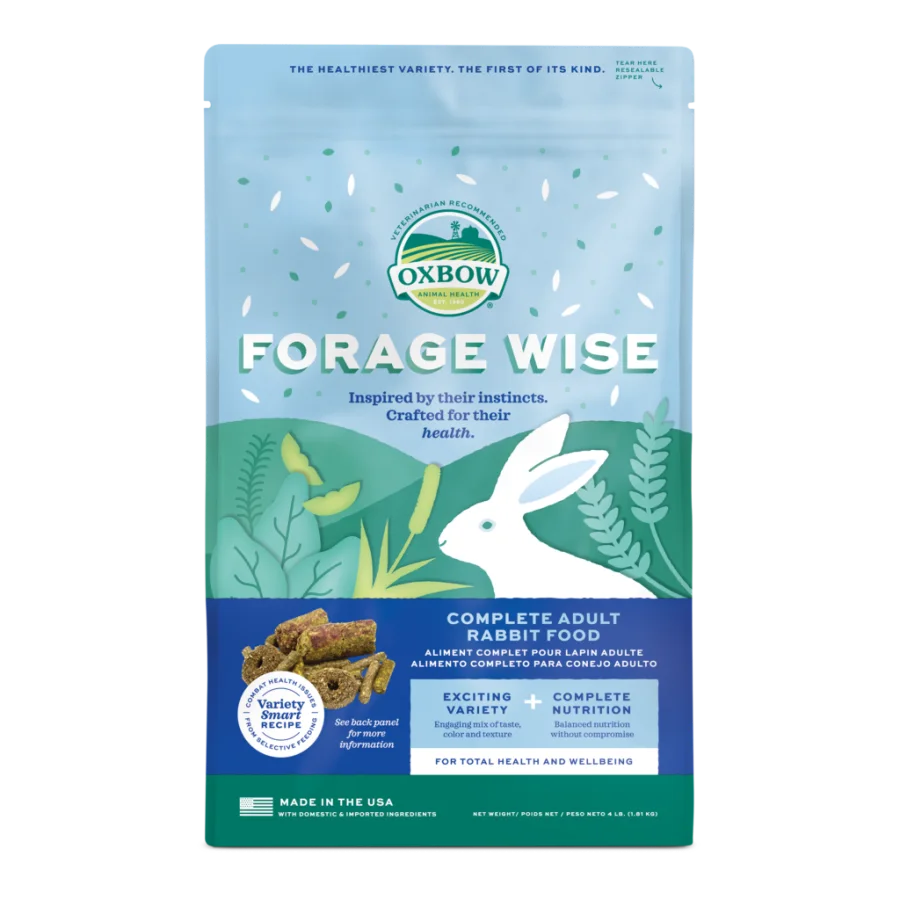
An adult uniform pellet blending several grass hays with listed whole-food ingredients that include spinach, kale, parsley, and rosemary. The recipe offers garden-style variety without loose seeds or colorful pieces that a rabbit can sort. It remains a measured supplement, and any switch should be gradual while hay intake and droppings are monitored.
Why we recommend it
A garden-ingredient adult option for owners who want one uniform pellet rather than a selective-feeding mix.
Pros
Cons
Best for
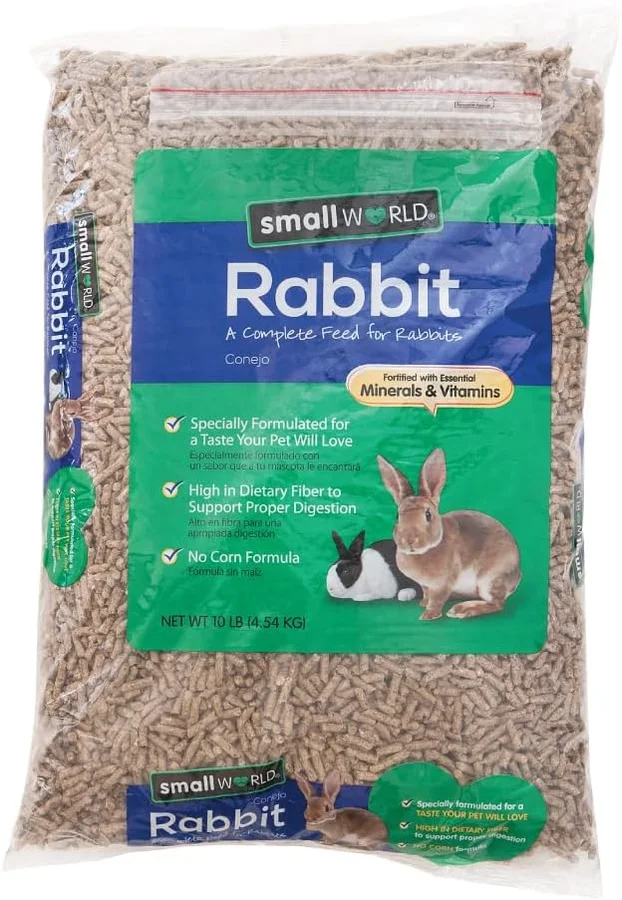
A mass-market uniform rabbit pellet sold in large bags through feed-store channels. Its current manufacturer ingredient list includes wheat middlings, dehydrated alfalfa meal, soybean hulls, and soybean meal, so it is neither timothy-based nor soy-free and may not fit an adult house rabbit's diet plan. Use only with informed veterinary guidance, inspect freshness, and store the opened bag carefully.
Why we recommend it
A clearly labeled large-bag feed-store option to compare cautiously when price and local availability matter, not a hay replacement or a default soy-free choice.
Pros
Cons
Best for
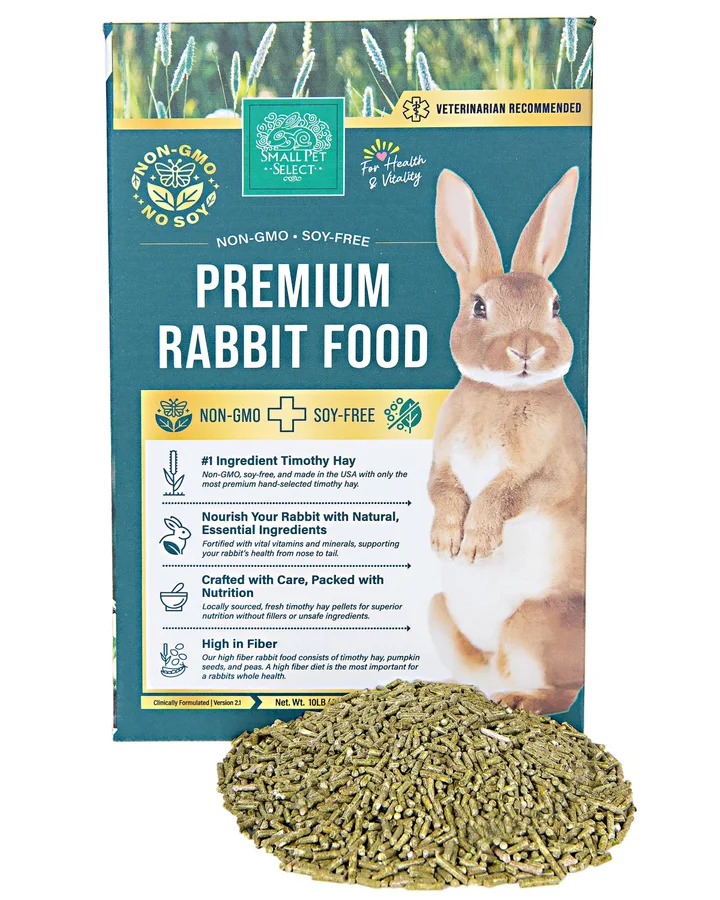
A timothy-based uniform pellet whose current manufacturer listing explicitly identifies it as non-GMO and soy-free. It is sold primarily through Small Pet Select online and is meant to complement abundant grass hay, fresh water, and appropriate greens. Confirm the current ingredient panel if avoiding soy is medically important, and transition slowly.
Why we recommend it
The clearest second soy-free option because the exact manufacturer page states the claim rather than leaving it to ingredient-list inference.
Pros
Cons
Best for
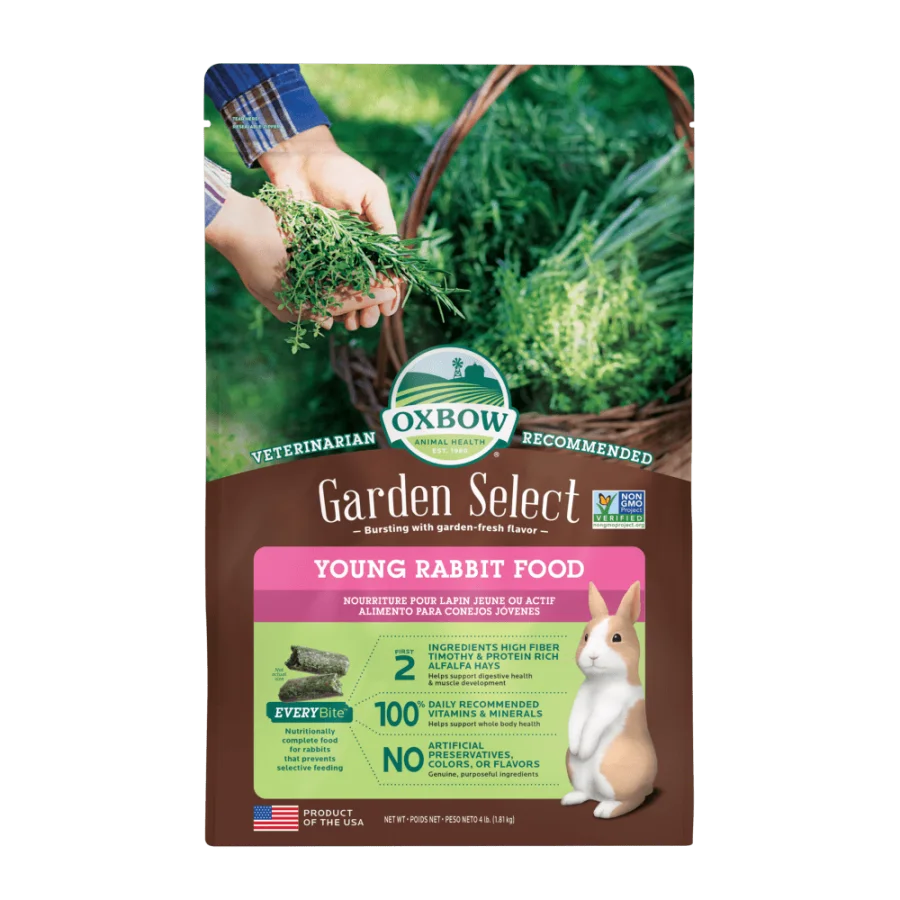
A uniform growth formula whose current ingredient list includes dehydrated alfalfa meal plus thyme and rosemary. It is labeled for young rabbits and is richer than adult maintenance food, so it should not be chosen for a healthy adult merely for flavor variety. Confirm life-stage needs with a rabbit-savvy veterinarian and transition gradually.
Why we recommend it
A well-documented second young-rabbit and alfalfa option that also closes the garden-ingredient gap with named herbs on the manufacturer label.
Pros
Cons
Best for
Buying Guide
Start with life stage and hay intake. Healthy adults are usually fed a plain timothy-based pellet in measured portions, while growing rabbits, pregnant does, or nursing does may need an alfalfa-based young-rabbit formula instead. Pellets should support, not replace, unlimited grass hay, because rabbits need constant fiber and chewing time to keep the gut and teeth working normally.
Prefer uniform pellets over colorful mixes with seeds, nuts, or dried bits that invite selective feeding. A rabbit that picks out tastier pieces may end up with a less balanced intake even if the bag says complete nutrition. If you are changing brands, do it gradually over at least several days while watching appetite, droppings, and willingness to eat hay.
Bag size matters more than it seems. Single-rabbit homes often do better with smaller bags that are used up promptly, while rescues or bonded pairs may save money with larger bags if they can store them cool, dry, and pest-free. Check the current ingredient panel, life-stage wording, and feeding directions because packaging and retailer photos can lag behind formula updates.
A rabbit that suddenly eats fewer pellets, ignores hay, produces smaller droppings, or stops eating entirely needs urgent rabbit-savvy veterinary attention rather than a casual food experiment. Rabbits are prey animals that may hide illness until they are quite sick, and reduced appetite or stool output can signal GI stasis or another medical problem.
The exact amount depends on body size, hay intake, greens, and any medical needs, but pellets are usually a measured side item rather than free-choice food for healthy adults. Ask a rabbit-savvy veterinarian for a portion that matches your rabbit's weight and body condition.
They are often less ideal than plain pellets because rabbits may selectively eat the tastier pieces and leave the rest behind. A uniform pellet makes intake easier to judge when the rabbit is also eating unlimited hay.
Alfalfa-based pellets are usually reserved for young, growing rabbits or a specific veterinary reason. Most healthy adults need a timothy-based maintenance pellet instead.
Treat that as urgent. Reduced appetite, fewer droppings, or hiding with a tense posture can signal GI stasis or another serious problem, and a rabbit-savvy veterinarian should be contacted promptly.
Methodology
Last reviewed:
We compared established rabbit pellet lines by life-stage target, ingredient style, plain-pellet versus mix presentation, availability, and bag-format practicality. We favored products that are easy to identify on current retailer shelves or rabbit-focused online stores, and we treated hay-first feeding as the baseline husbandry standard. Prices, stock, package art, and exact guaranteed analyses change too often to present as fixed data, so those details should be checked on the current listing before purchase.
We may earn a commission through these links, at no extra cost to you. Terms of Service