Premium Choice
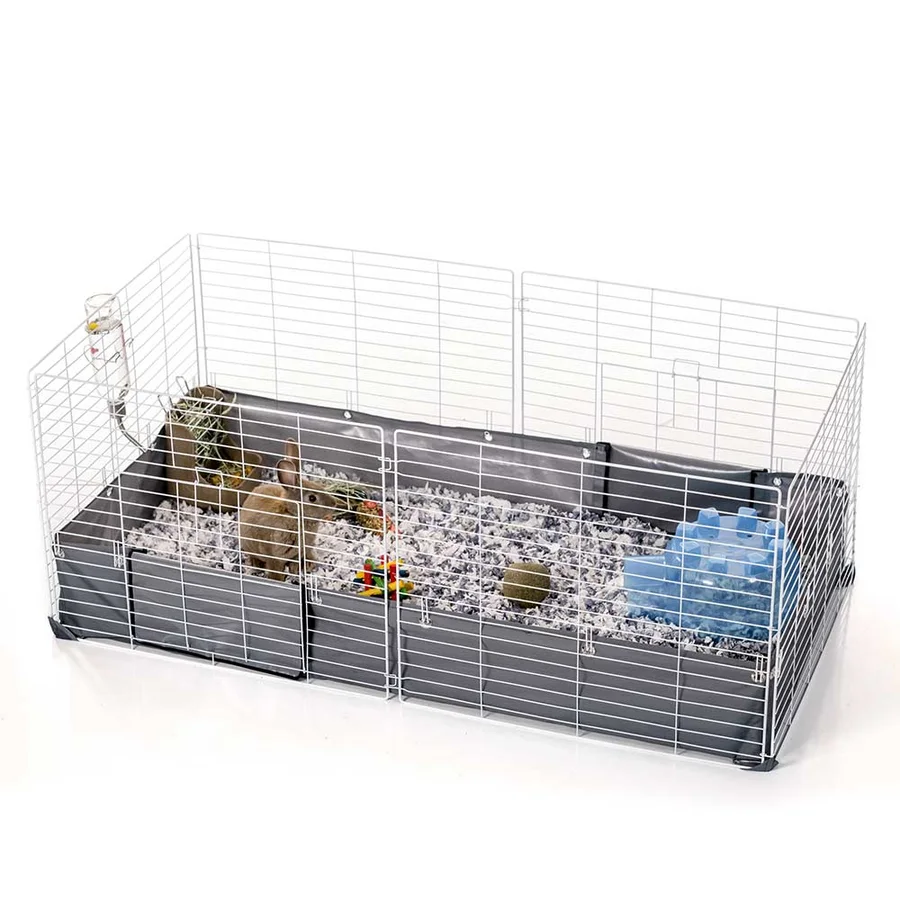
Kaytee Open Living Habitat — 60 × 30 Inch
The 60-by-30-inch variant provides 12.5 documented square feet, a waterproof liner, and expansion.
Compare products using researched specifications, features, and retailer information.
Last reviewed:

Overview
A hutch or cage must never be a rabbit's sole confinement. Companion rabbits need generous usable floor space, nonslip solid footing, hiding and litter areas, social contact, and daily opportunities for natural movement. X-pens and open habitats often make better indoor basecamps than compact cages; traditional hutches require the closest scrutiny.
The 60-by-30-inch variant provides 12.5 documented square feet, a waterproof liner, and expansion.
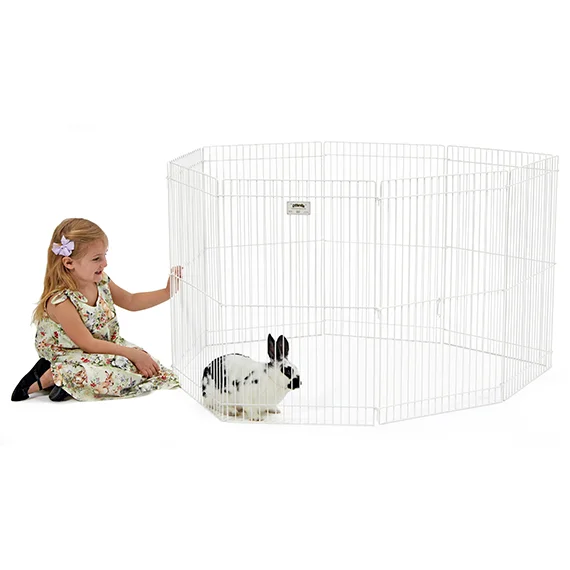
More than 10 square feet from eight folding panels is a practical start for an indoor basecamp.
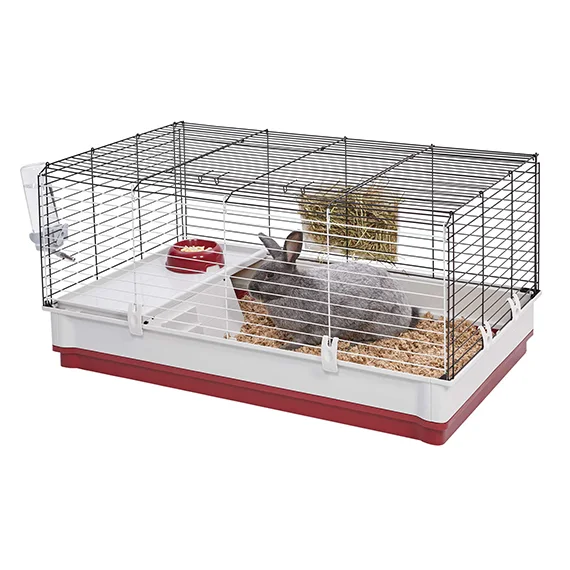
A familiar rabbit-specific base with a 5.5-inch pan and supported extensions, provided it connects to more space.
Add your pet for personalized picks.
Loading pet details...
Filter by feature:
Eight epoxy-coated panels create more than 10 square feet, with 1-inch bar spacing and extra-tall sides. MidWest identifies rabbits and indoor/outdoor use. Add a solid nonslip floor, litter area, hide, and weather-safe supervision; the pen alone is not a furnished habitat.
Why we recommend it
A rabbit-marked pen with verified floor area, panel count, and bar spacing.
Pros
Cons
Best for
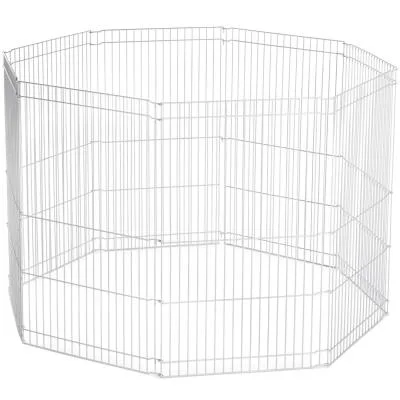
A powder-coated steel playpen with 29-inch-high panels, 1-inch wire spacing, and 10 square feet of documented interior space. Prevue permits indoor or outdoor use for rabbits, ferrets, and guinea pigs; it still needs solid flooring and supervision.
Why we recommend it
Exact height, spacing, area, material, and intended species are all published by the manufacturer.
Pros
Cons
Best for
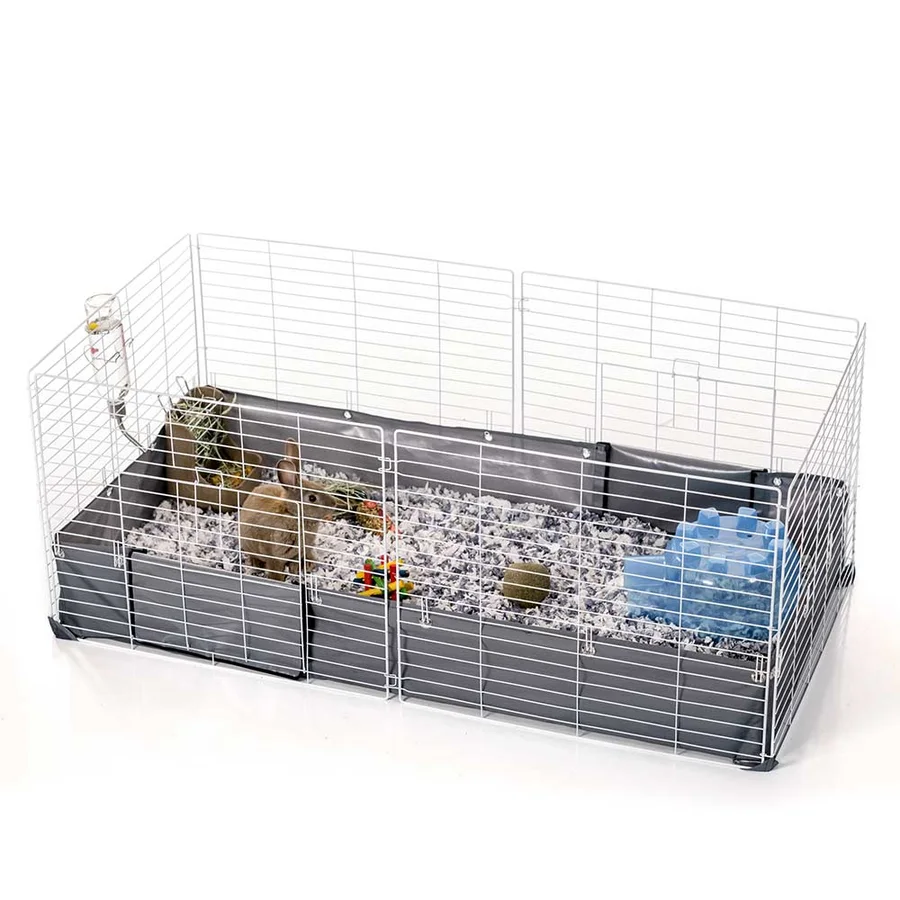
The 48-by-24-inch Open Living variant provides 8 square feet with a removable waterproof clip-on liner and connectable wire frame. It is open-top; Kaytee recommends the separately sold roof around rabbits, other pets, or small children.
Why we recommend it
A verified 8-square-foot indoor basecamp with a cleanable liner and genuine expansion path.
Pros
Cons
Best for
The larger 60-by-30-inch Open Living variant provides 12.5 square feet and the same removable waterproof liner and connectable frame system. Its open top requires household-specific escape and predator planning; the optional roof is sold separately.
Why we recommend it
The best documented floor area among the indoor kits here, with liner cleanup and modular expansion.
Pros
Cons
Best for
A powder-coated wire-top habitat over a 5.5-inch-deep cleanable plastic pan with full-width side and top access. Two optional extensions are documented. Use it as a basecamp connected to substantially more exercise space, not sole confinement.
Why we recommend it
A rabbit-specific enclosed base with a deep pan and manufacturer-supported extensions.
Pros
Cons
Best for
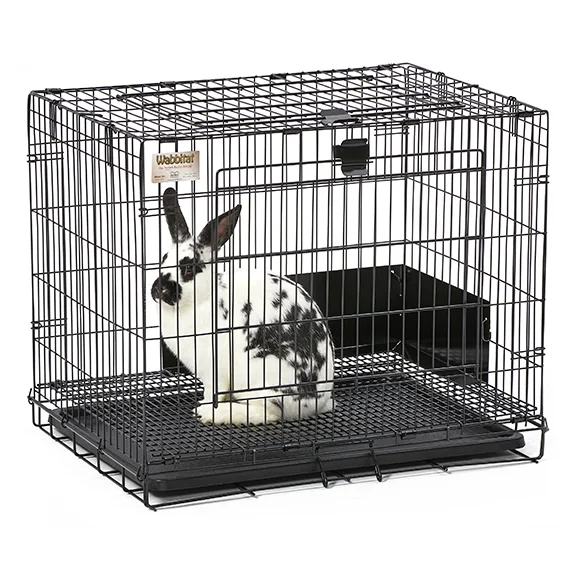
A folding wire rabbit home with top and front doors, slide latches, urine guard, and a front-slide plastic pan. MidWest also lists a 0.5-inch mesh floor; cover all standing area with a secure solid nonslip surface to protect feet, and use the unit only within a larger living plan.
Why we recommend it
A portable clean-out-pan option, included with an explicit correction for its wire-floor design.
Pros
Cons
Best for
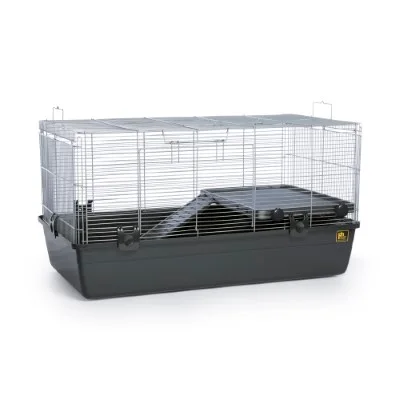
A 32.5-by-19-by-17.5-inch wire-top home with 3/8-inch spacing and a 6.25-inch-deep plastic base. Prevue identifies it for small rabbits and provides front and roof doors. Its roughly 4.3-square-foot footprint makes it a temporary or basecamp enclosure only.
Why we recommend it
Unusually complete dimension, spacing, material, and access documentation for a compact cage.
Pros
Cons
Best for
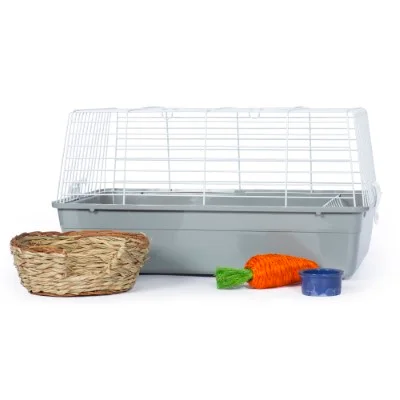
A 27.25-by-17.375-by-14-inch plastic-base cage with welded wire top, 1-inch spacing, and a large top door. The footprint is only about 3.3 square feet, so despite the rabbit label it is suitable only for transport-adjacent, recovery, or other short-term roles with veterinary guidance.
Why we recommend it
Transparent dimensions make its narrow temporary role clear instead of overselling it as permanent housing.
Pros
Cons
Best for
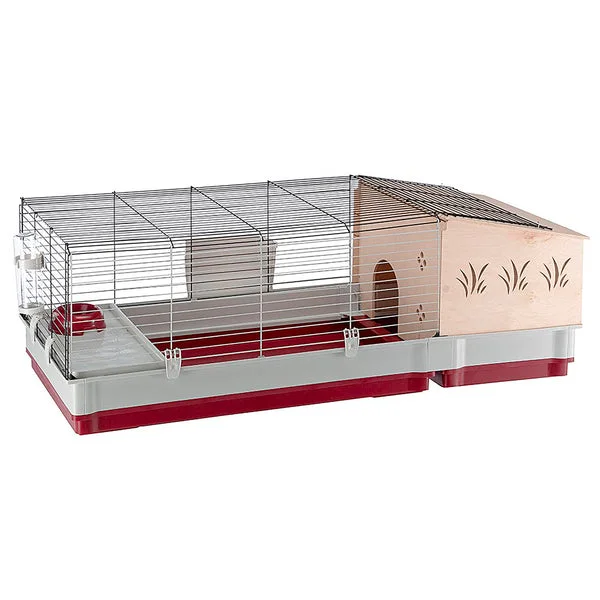
A wire-net habitat over a detachable plastic base with a removable 40-centimeter extension and wood house. Front and side openings support cleaning. Even with the extension, it should function as an indoor base connected to generous exercise space.
Why we recommend it
A true manufacturer-documented extension system rather than a vague claim of modularity.
Pros
Cons
Best for
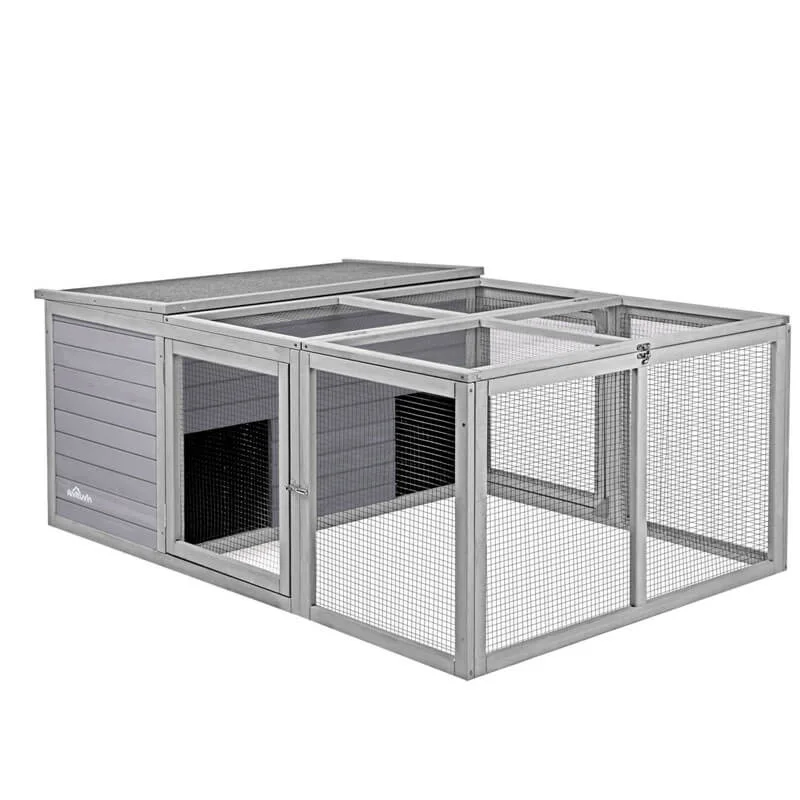
A wood hutch-and-run measuring 61.42 by 40.94 by 26.02 inches with 17.46 square feet stated by the maker, a waterproof PVC floor layer, open roof, side doors, spring latches, and reinforced hinges. It is not safe sole confinement: climate, digging predators, shade, drainage, and additional exercise all require planning.
Why we recommend it
The largest documented hutch-and-run footprint here, with exact dimensions and access details.
Pros
Cons
Best for
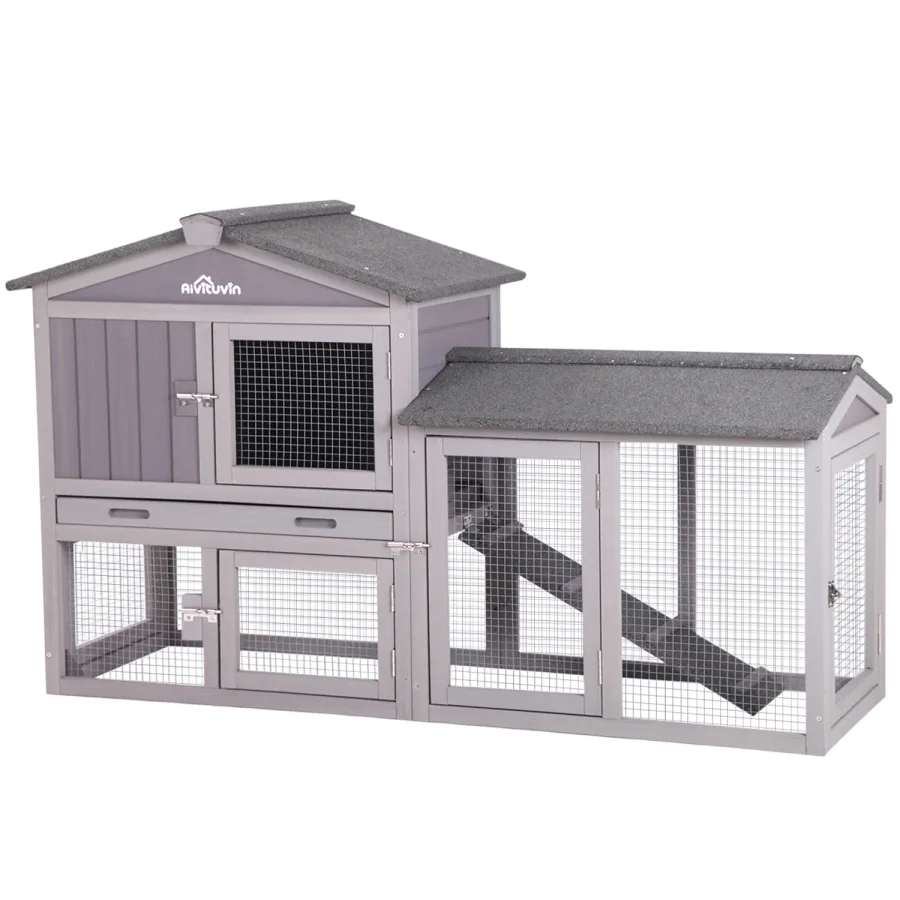
A 56.7-by-21.3-by-33.4-inch wood hutch with 10.4 square feet stated by Aivituvin, an extra-deep pull-out tray, five doors, asphalt roof, and detachable sides that allow two units to connect. Treat it as a shelter/base within a larger protected area, never the rabbit's whole world.
Why we recommend it
Exact dimensions, five access doors, and a real two-unit connection method support its tags.
Pros
Cons
Best for
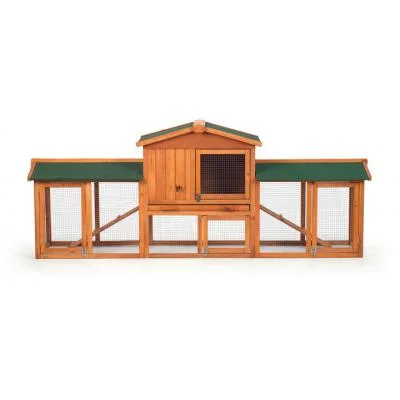
An 81-by-17.375-by-33.5-inch wood-and-wire structure with an elevated shelter, double run, four bolt-latched doors, 0.5-inch wire spacing, and removable hutch tray. Its 17.375-inch depth is narrow: it is not suitable as sole confinement despite the 7-foot length.
Why we recommend it
A directly documented double-run structure whose exact dimensions allow an honest warning about narrow usable width.
Pros
Cons
Best for
Buying Guide
Start with measured floor area, not product labels. A rabbit should stretch fully, stand, turn, and take repeated hops after the litter box, hay, water, and hides are installed. Compact wire-top cages in this list have clearly limited temporary roles. Cover every exposed wire floor with a secure solid nonslip surface.
For outdoor-capable products, a weatherproof roof is not enough. Assess heat, cold, damp, insects, digging and reaching predators, toxic plants, drainage, locks, and the ability to monitor appetite and droppings. A hutch-and-run still needs more protected exercise space and should not isolate a companion rabbit.
Ramps need grip and a safe angle; seniors may need a single-level layout. Sudden reluctance to move, hunched posture, appetite loss, or fewer droppings requires prompt rabbit-savvy veterinary care, not merely a housing change.
No. A hutch or cage should never be sole confinement; rabbits need substantially more usable exercise and living space.
No. It only reflects the maker's placement claim. Real outdoor safety depends on climate, shade, drainage, locks, mesh, digging protection, and supervision.
Rabbits should stand and move on solid nonslip flooring. Fully cover exposed mesh and keep the cover dry and secure.
Methodology
Last reviewed:
We verified exact manufacturer PDPs for overall dimensions, stated floor area, panel or wire spacing, floor and tray construction, access, and included versus optional runs. X-pen tags require at least 8 documented square feet; run-included tags require a run in the exact product. Every hutch is framed as a base, shelter, temporary enclosure, or supervised run—not sole confinement.
We may earn a commission through these links, at no extra cost to you. Terms of Service