Premium Choice
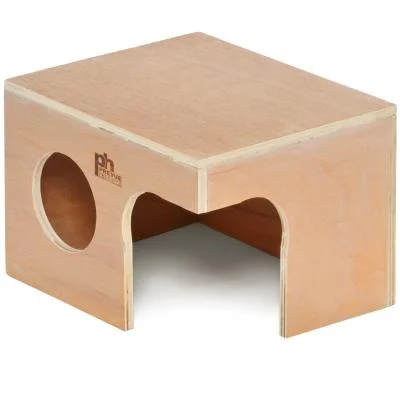
Prevue Pet Products Wood Rabbit Hut 1123
Its pet-safe plywood, two openings, flat roof, and exact dimensions are all directly documented.
Compare products using researched specifications, features, and retailer information.
Last reviewed:

Overview
Rabbits need places to retreat because they are prey animals, and many feel safer when a shelter offers more than one exit. This catalog separates edible, wood, washable, and tunnel structures and records dimensions where the manufacturer publishes them. A hide must be large enough to enter, turn, and rest without squeezing.
Its pet-safe plywood, two openings, flat roof, and exact dimensions are all directly documented.
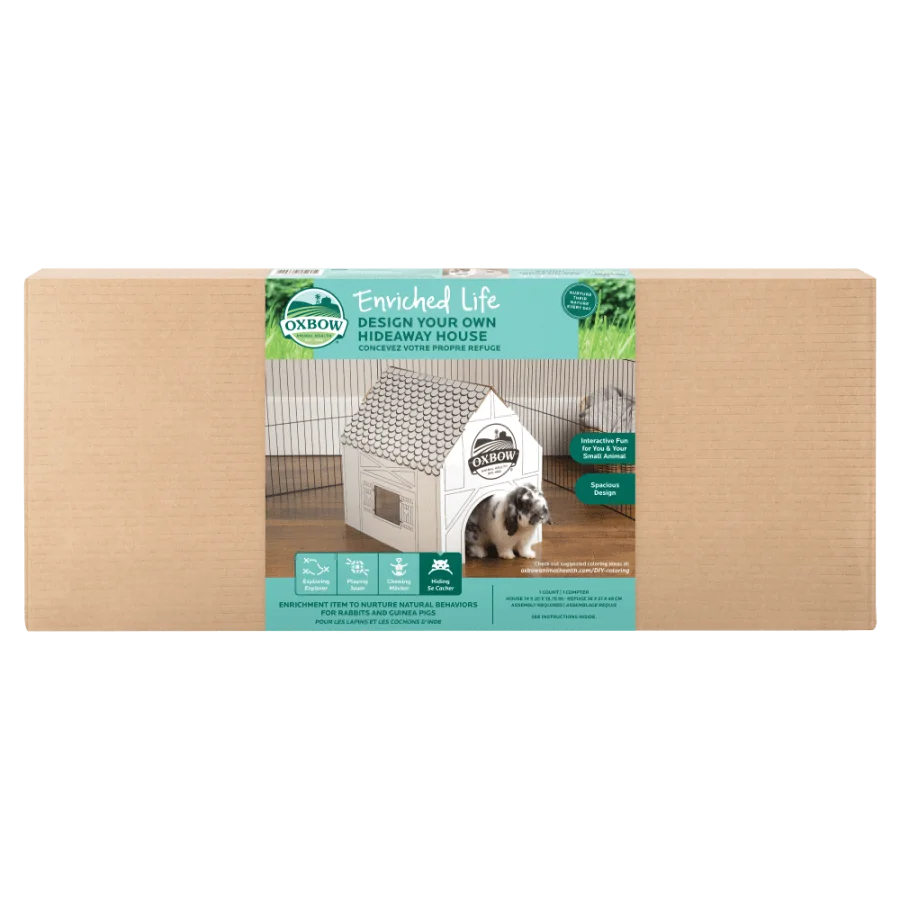
A simple corrugated starter hide that is easy to inspect and replace.
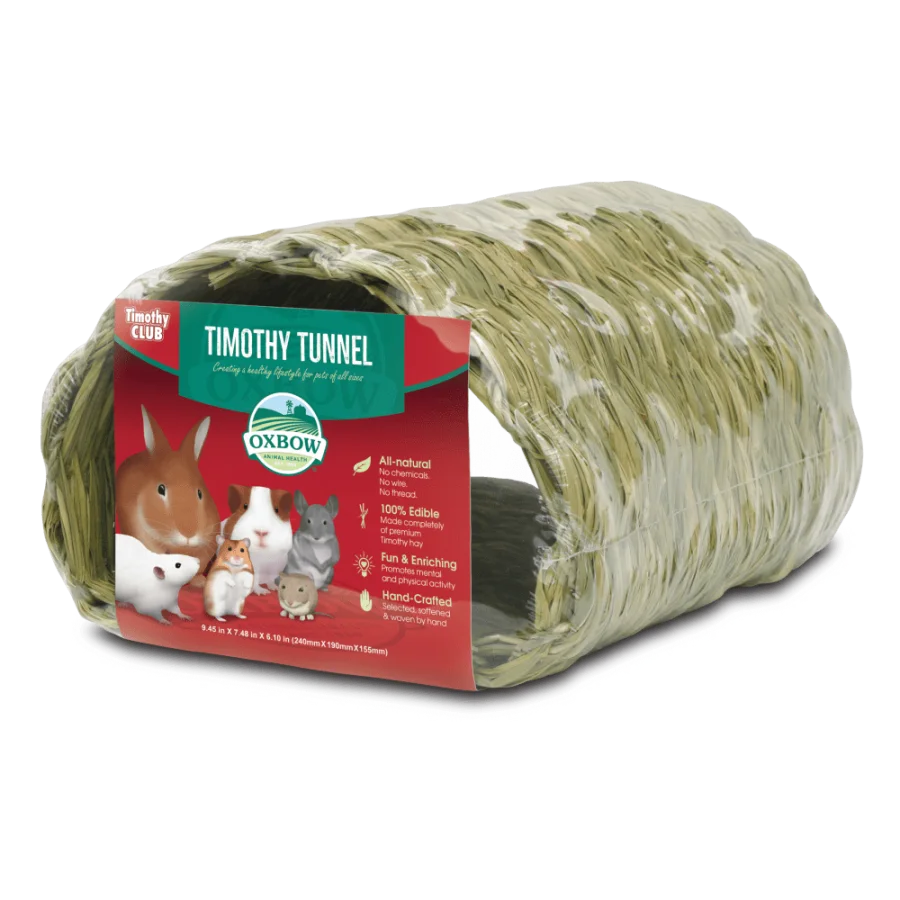
A 100-percent edible timothy tunnel provides two exits plus chew enrichment.
Add your pet for personalized picks.
Loading pet details...
Filter by feature:
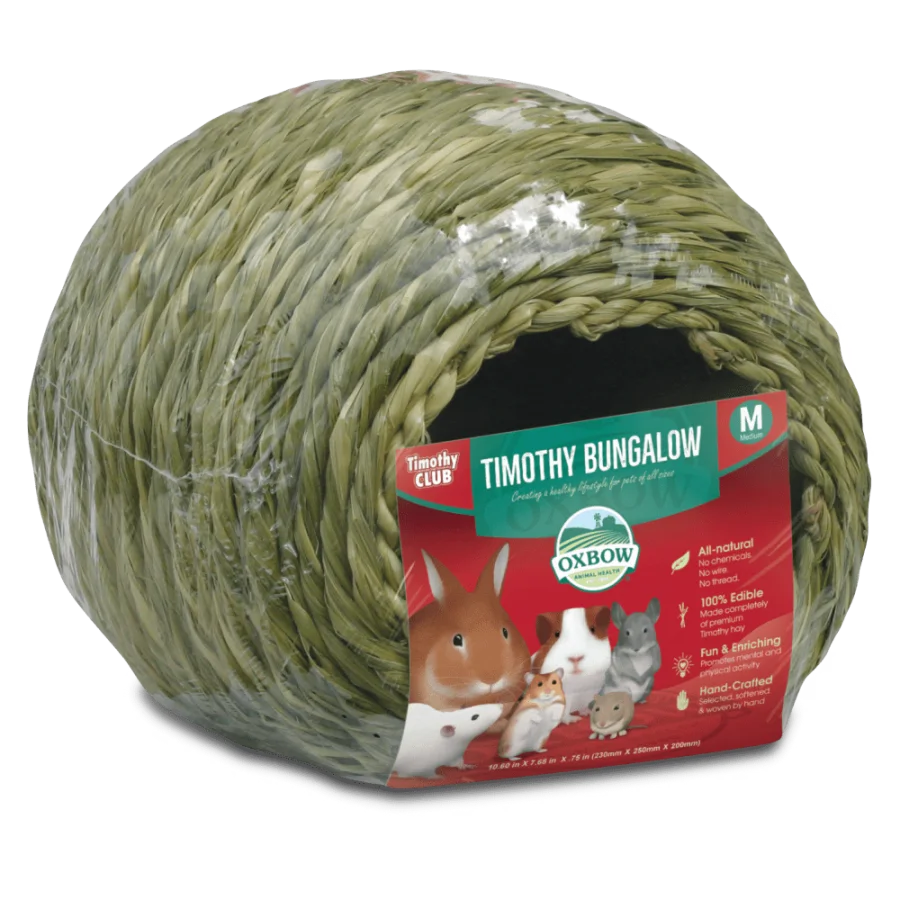
A hand-woven, 100-percent edible timothy-hay bungalow for rabbits, guinea pigs, and chinchillas. Its broad roof can become a perch, but the structure should be replaced when chewed unstable, damp, or soiled.
Why we recommend it
A directly documented edible hide that provides cover, chewing, and a low roof in one object.
Pros
Cons
Best for
A hand-woven, 100-percent edible timothy-hay tunnel with an open end on each side. It supports pass-through hiding and chewing but should be removed once its cylindrical structure collapses or remains wet.
Why we recommend it
The strongest edible pass-through option, with material and intended species verified by Oxbow.
Pros
Cons
Best for
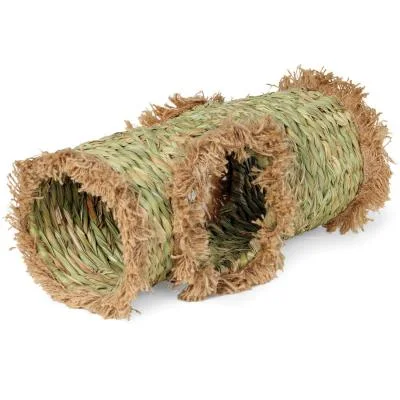
A hand-woven tunnel measuring 13.5 inches long by 6 inches in diameter. Prevue lists 98% couch grass, 1% plant cane, 0.5% burlap, and 0.5% sisal rope, and identifies it for dwarf rabbits, guinea pigs, and ferrets.
Why we recommend it
Exact dimensions and a full material breakdown make fit and chew expectations unusually clear.
Pros
Cons
Best for
An unvarnished pet-safe plywood hut measuring 14 by 9.75 by 8.25 inches. It has one round crawl hole plus a larger corner opening and a flat roof; compare both openings and the interior with the rabbit, not just the medium-animal label.
Why we recommend it
The best documented wood hide here, with dimensions, materials, and two entrances on the manufacturer page.
Pros
Cons
Best for
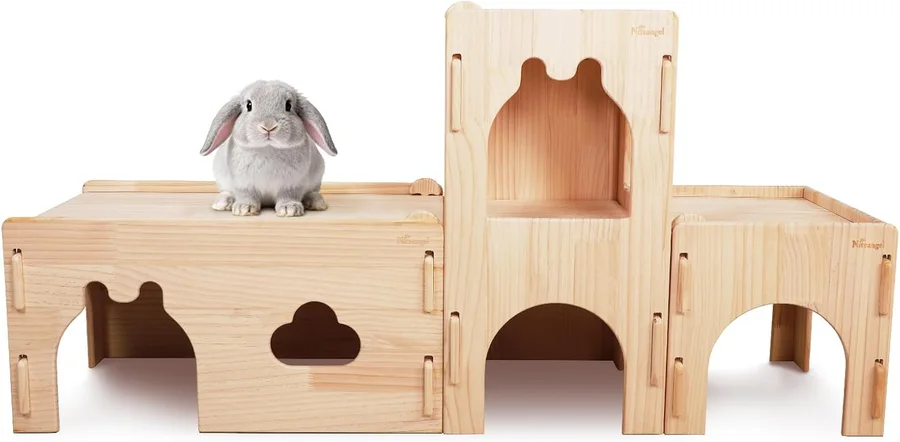
A modular wooden full-castle set sold specifically as an indoor rabbit, chinchilla, and guinea-pig hideout. The exact listing states 30-by-30-by-30-inch product dimensions and a 15-pound weight, so it needs substantially more room than a single box hide.
Why we recommend it
A rabbit-marked wood system with unusually clear overall dimensions on the exact PDP.
Pros
Cons
Best for
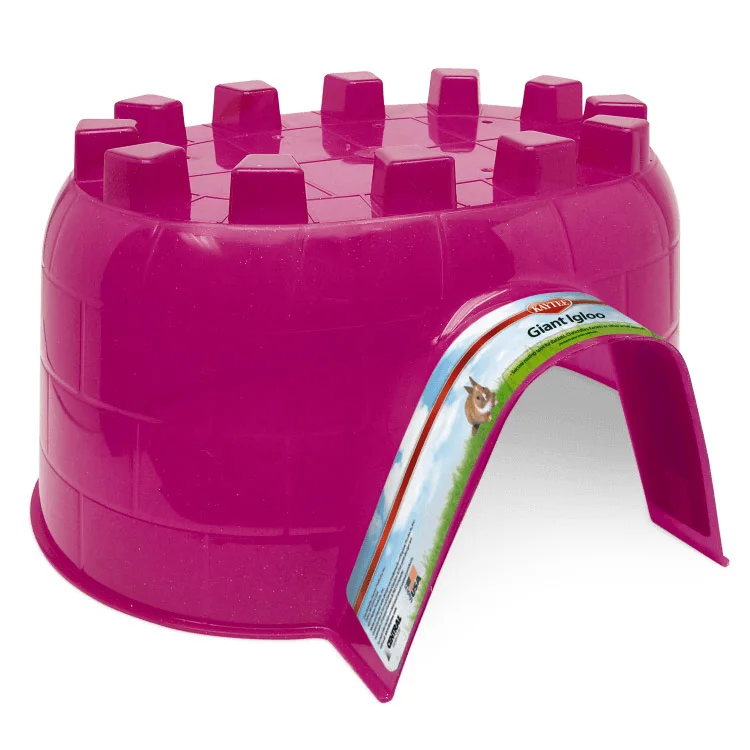
A one-piece translucent plastic igloo with a single front entrance. The hard shell is easy to wash and inspect, but 'Giant' is a model name rather than proof of rabbit fit; verify the current opening and interior dimensions before purchase.
Why we recommend it
A simple durable shell for rabbits that quickly soil cardboard or woven shelters.
Pros
Cons
Best for
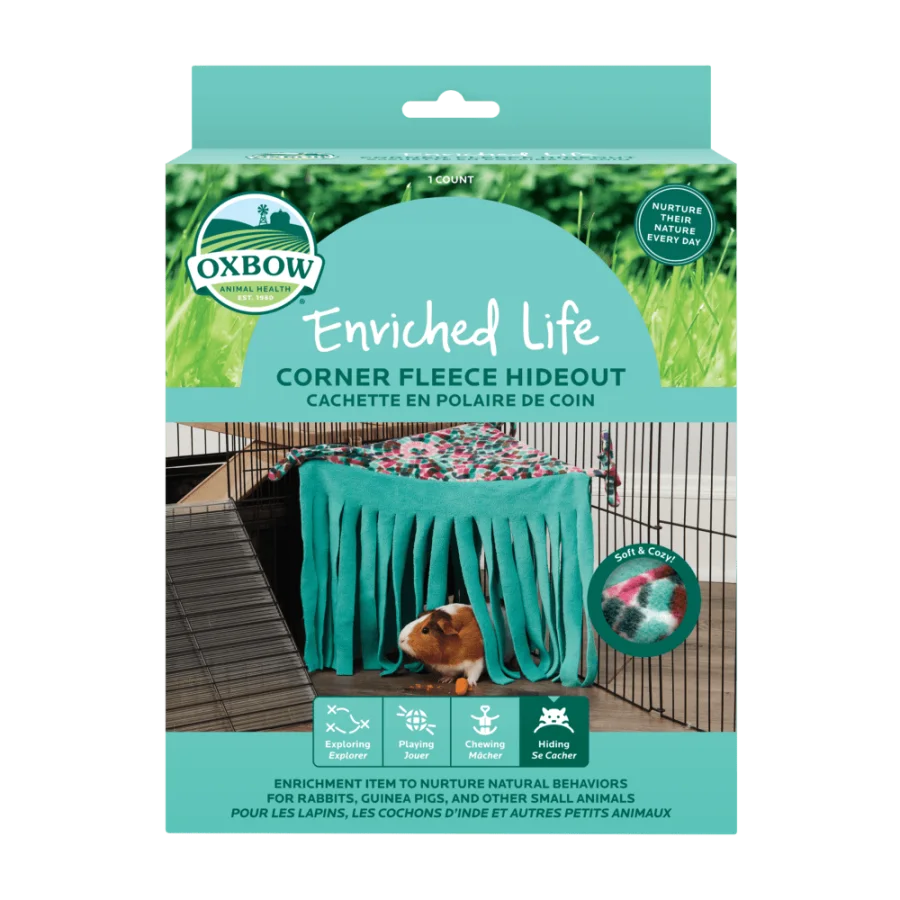
A soft corner shelter that attaches to a habitat and is explicitly machine washable. Oxbow lists it for rabbits as well as smaller species; inspect seams after every wash and place it where chewing fabric can be monitored.
Why we recommend it
A verified machine-washable alternative to hard plastic for a dry indoor corner.
Pros
Cons
Best for
A corrugated-cardboard hideaway with a large opening, tool-free assembly, and a roof suitable only for rabbits light enough to use it without bowing. Corrugate is replaceable enrichment, not a washable permanent house.
Why we recommend it
An accessible starter shelter with safe corrugate construction documented by Oxbow.
Pros
Cons
Best for
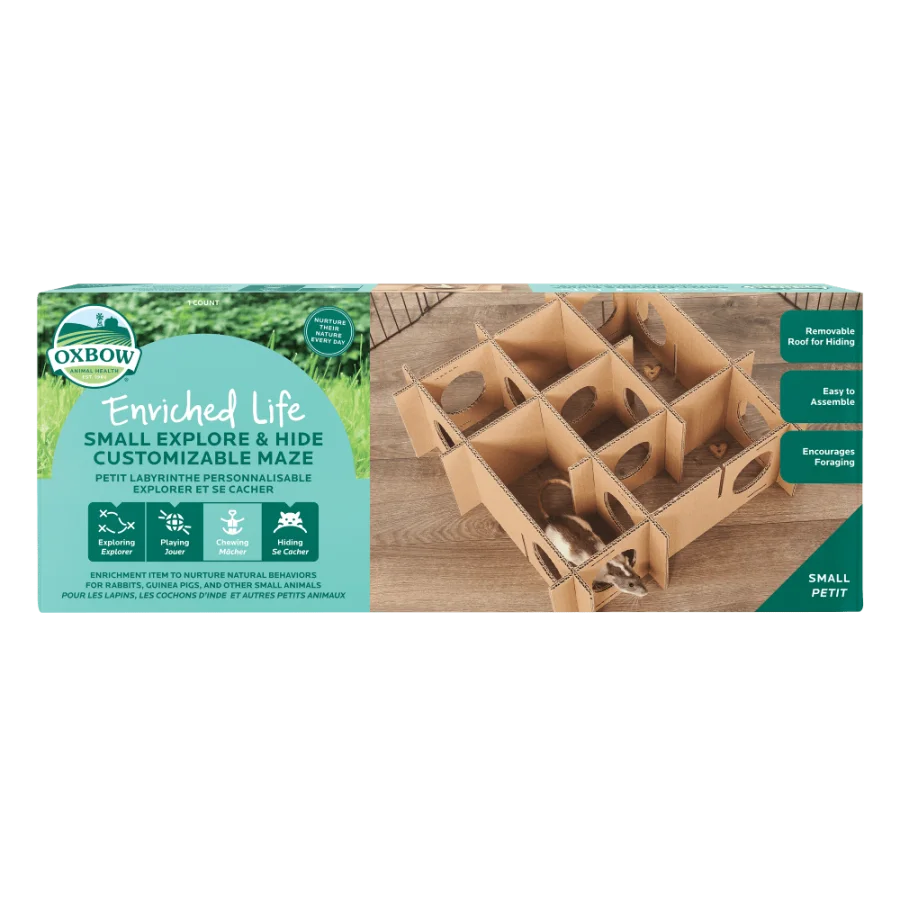
A configurable corrugated maze that creates several pass-through routes and covered sections rather than one dead-end box. Reconfigure it for exploration, then recycle and replace it when panels become wet, crushed, or heavily chewed.
Why we recommend it
A multi-route cardboard hide that supports choice and movement better than a single-entry carton.
Pros
Cons
Best for
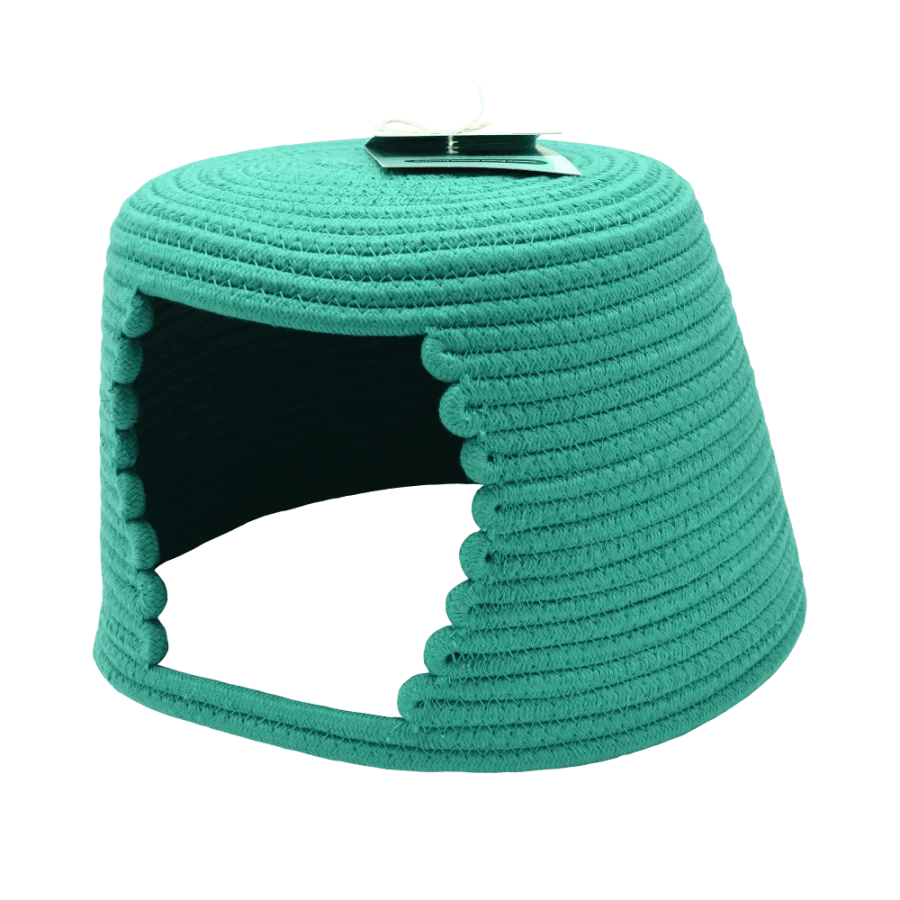
A natural-material woven shelter sold by Oxbow for rabbits and other small animals. Treat it as consumable enrichment: inspect the weave, remove sharp or loose structural pieces, and replace it after urine saturation or collapse.
Why we recommend it
A lightweight natural starter hide from a manufacturer that identifies the intended species.
Pros
Cons
Best for
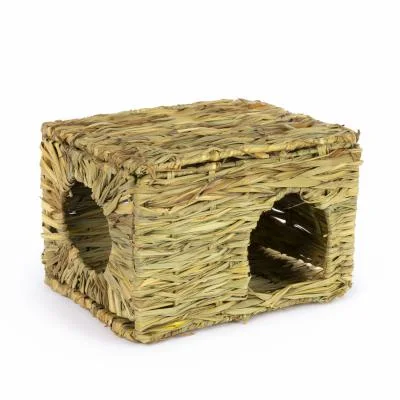
A large woven-grass hut in Prevue's Nature's Hideaway line. It provides plant-fiber cover and nesting texture, but fit must be checked against the exact current overall and doorway measurements and the hut should remain in a dry area.
Why we recommend it
A directly documented large grass-hut alternative to Oxbow's timothy structures.
Pros
Cons
Best for
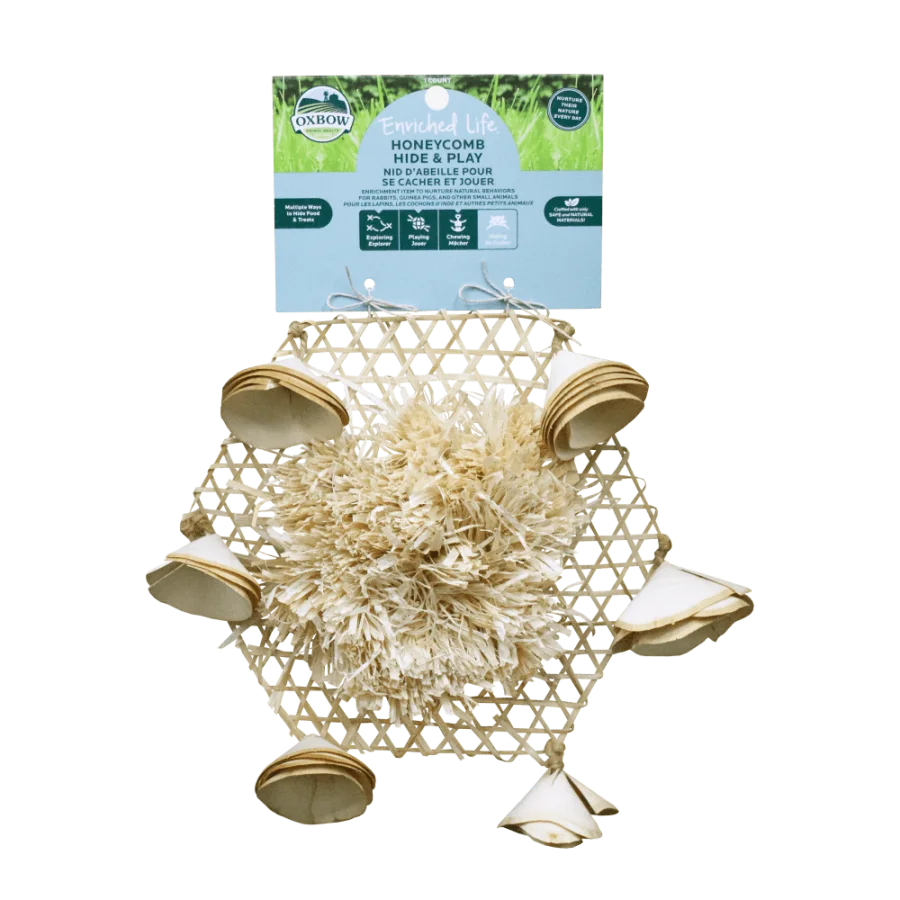
A natural-material honeycomb structure with multiple cells for hiding, foraging, and passing through. It is an enrichment object rather than a private sleeping box, and its openings must be checked against the rabbit before unsupervised access.
Why we recommend it
A multi-opening play hide that adds routes and forage opportunities without claiming to replace a full shelter.
Pros
Cons
Best for
Buying Guide
Measure the rabbit and every opening. Marketing terms such as giant, large, or rabbit hut do not prove fit. Multi-entry shelters are especially useful for bonded rabbits and nervous animals because one rabbit is less likely to block the only exit. Provide more than one hide when rabbits share space.
Grass, hay, and corrugate add chewing enrichment but are replaceable. Wood lasts longer but absorbs urine; plastic washes easily but is less enriching; washable fleece needs seam and chewing checks. Put every hide on nonslip flooring and discard anything moldy, splintered, soaked, crushed, or unstable.
A sudden increase in hiding, reduced exploration, appetite loss, or fewer droppings can signal pain or illness rather than a product preference and warrants prompt rabbit-savvy veterinary advice.
They let a rabbit leave without backing past another rabbit or feeling cornered, although each opening still must be safely sized.
No. Plastic and washable fleece simplify cleanup, while hay, grass, cardboard, and wood offer different chewing and resting behavior.
Replace it when soaked, moldy, splintered, crushed, unstable, or chewed into pieces that could trap or injure the rabbit.
Methodology
Last reviewed:
We verified exact manufacturer or retailer PDPs for material, openings, cleaning instructions, dimensions, and intended species. Washable tags require explicit machine-wash or wipe-clean evidence; multi-entry tags require documented separate openings or pass-through construction. We excluded decorative products with no credible fit information and omitted prices.
We may earn a commission through these links, at no extra cost to you. Terms of Service